

Connect with us

Gist

Breaking: Nigeria’s Fuel Tanker Explosions Claim Lives Amidst Rampant Regulatory Lapses

Published

on

WhatsApp Image 2025 02 22 at 11.39.13 e1740220894192 696x530 1

Breaking: Nigeria’s Fuel Tanker Explosions Claim Lives Amidst Rampant Regulatory Lapses

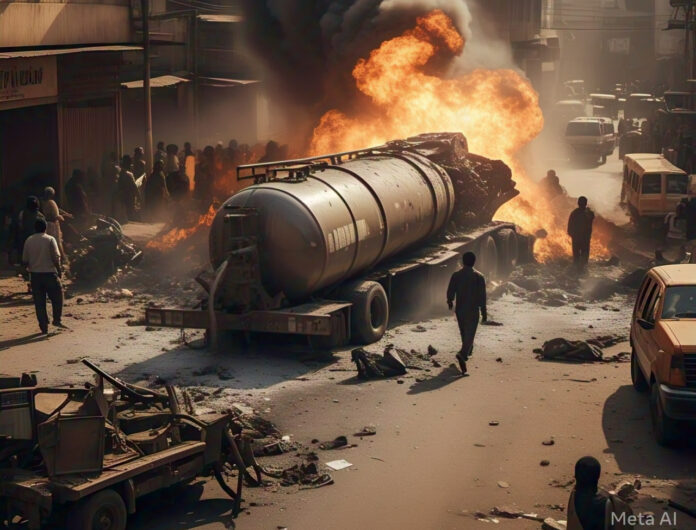
On January 20, 2025, a tragic gasoline tanker accident near the Suleja area of Niger State resulted in an explosion that claimed at least 86 lives. The accident occurred when the tanker overturned, spilling fuel, and exploded moments later as people began attempting to scoop the fuel.……..READ MORE 

The National Emergency Management Agency (NEMA) reported that 52 people sustained severe burns, and 15 shops were destroyed in the blast. Kumar Tsukwam, Sector Commander of the Federal Road Safety Corps (FRSC) in Niger State, explained that people rushed to collect the spilled petrol after the truck overturned, leading to a fiery explosion that engulfed another tanker.

Niger State Governor Mohammed Bago confirmed the incident, calling the explosion “worrisome, heartbreaking, and unfortunate,” as many lives were lost in the resulting blaze.

Advertisement

Such accidents have become increasingly common in Nigeria, where fuel tanker explosions have claimed numerous lives and caused widespread destruction in recent years. Experts point to systemic regulatory failures and economic pressures as key factors contributing to the frequent occurrence of these incidents.

The country has seen fuel prices rise over 400% in the past 18 months, driven by policies under President Bola Tinubu, including the removal of fuel subsidies. This has pushed many Nigerians into desperate situations, causing some to resort to dangerous acts like scooping spilled fuel after accidents.

The Petrol Tanker Drivers Association has attributed these accidents to poor road conditions and a lack of enforcement of safety measures. Augustine Egbon, chairman of the association, warned that accidents are more likely to lead to explosions when people gather around an overturned tanker.

Public affairs analyst Ambali Abdulkabeer attributed the problem to both human factors, such as driver recklessness, and infrastructural issues like deteriorating roads unfit for fuel tankers. He stressed the need for government action to improve safety regulations, enforce proper vehicle maintenance, and reduce the frequency of fuel scooping incidents driven by economic hardship.

Advertisement

Meanwhile, government efforts to address these accidents have been ongoing. Vice President Kashim Shettima stated that it is time to end such tragedies, and President Tinubu has directed relevant agencies to take decisive action. The Federal Road Safety Corps (FRSC) continues to push for better safety standards, though the sheer volume of fuel tankers on Nigeria’s roads presents a considerable challenge.

Advertisement
Click to comment
Subscribe
Notify of
guest
0 Comments
Oldest
Newest Most Voted
Inline Feedbacks
View all comments

Trending

0
Would love your thoughts, please comment.x
()
x