


Sanusi Questions El-Rufai’s Trial, Asks: ‘Is This Really A Fight Against Corruption?
 Follow us on Google News
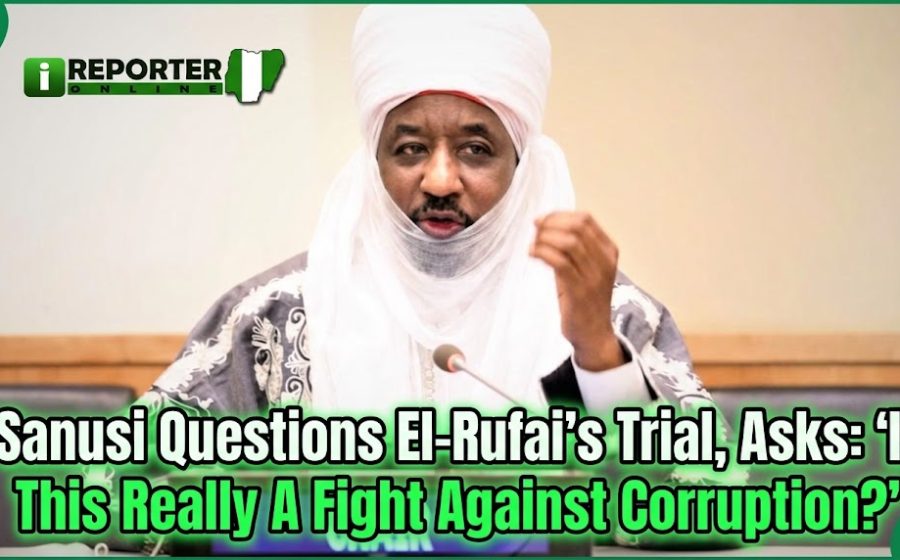
The Emir of Kano, Muhammadu Sanusi II, has raised concerns over the influence of political connections on the prosecution of corruption cases in Nigeria, questioning whether some legal proceedings could be driven by political considerations.
According to Ireporter Online, Sanusi spoke during an interview with Channels Television in Lagos at the public presentation of “Unexplained Wealth: A Trilogy of Nigerian Financial Law,” a three-volume book authored by anti-corruption lawyer Dr Wahab Shittu (SAN).
The Emir acknowledged that Nigeria has laws, institutions and courts established to investigate and prosecute corruption, but argued that the effectiveness of those mechanisms could be undermined when political considerations influence the process.
Sanusi alleged that some individuals facing corruption charges have had their cases dropped because of their political connections or affiliations. He also questioned whether certain legal proceedings were genuinely focused on fighting corruption or had become part of wider political disputes.
He cited the ongoing legal cases involving former Kaduna State Governor, Nasir El-Rufai, as an example of the concerns he was raising. Sanusi questioned the circumstances surrounding El-Rufai’s prolonged detention and legal proceedings.
However, available court records show that El-Rufai has been granted bail in one of the cases against him, while his legal proceedings remain ongoing. In April 2026, the Federal High Court in Kaduna granted him ₦200 million bail in an alleged financial misconduct case. He has denied the allegations.
In a separate wiretapping case, El-Rufai remains on ₦100 million bail after the court declined to vary the conditions. The Federal High Court in Abuja has scheduled October 26, 2026, to rule on his no-case submission. El-Rufai has pleaded not guilty to the charges.
Sanusi argued that situations in which people are prosecuted or detained under circumstances that generate questions about political influence could weaken public confidence in the fight against corruption.
He said the laws themselves were only one part of the solution, stressing that the institutions responsible for enforcing them must also operate effectively and independently.
Sanusi further called on political leaders, public office holders and members of the judiciary to ensure that laws are applied for the purposes for which they were established.
He maintained that reviewing Nigeria’s laws was important but argued that strengthening institutions responsible for implementing those laws was equally necessary.
The Emir’s comments come amid ongoing legal proceedings involving El-Rufai, who continues to face allegations in separate cases. The allegations against the former governor have not been established by a final court judgment.




Comments
0 comments