

Kenyan Presidential Candidate Challenges Dangote’s $16bn Refinery Plan, Backs Local Investors
 Follow us on Google News
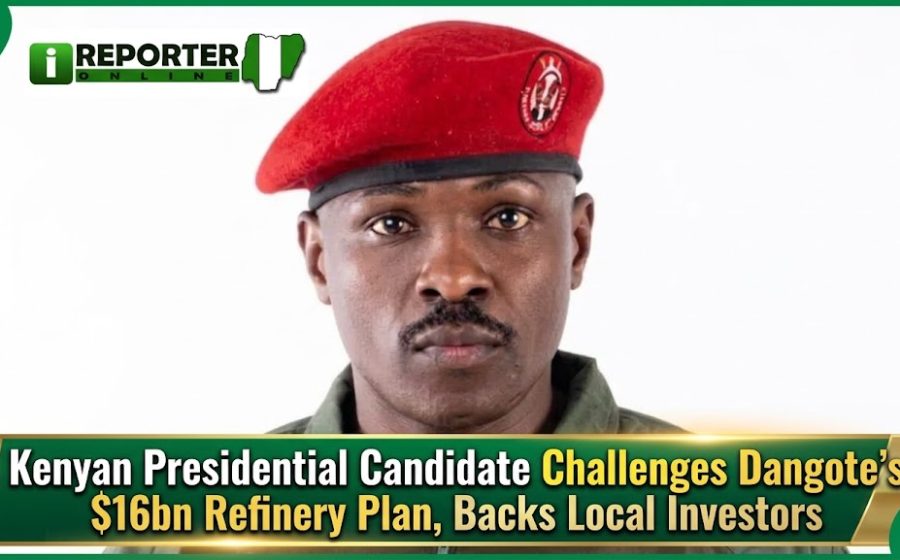
Kenyan presidential hopeful Patrick Osoi has opposed Nigerian billionaire Aliko Dangote’s proposed $16 billion oil refinery project in Kenya, insisting that local investors have the capacity to undertake the development without relying on the Nigerian industrialist.
According to reports, Osoi made his position known while addressing supporters at a Lions Movement event, where he argued that Kenyan businesspeople possess the financial resources and expertise required to establish an oil refinery.
The presidential candidate urged Dangote to delay the project, warning that he would prioritise local investors and businesses if elected president in the 2027 general election.
Osoi said Kenya should rely on its domestic entrepreneurs to develop the refinery rather than depend on foreign investors for such a major industrial project.
“I want to tell Aliko Dangote, please don’t rush to start the refinery because, when I’m sworn in as President of Kenya next year, you will be heading back to Nigeria,” he said.
He added that Kenyan businesspeople could handle the project, describing the position as part of the principles his political movement intends to promote.
Osoi’s remarks come amid plans by Dangote to establish a $16 billion oil refinery in Lamu, a coastal region of Kenya. The proposed facility is expected to process 700,000 barrels of crude oil daily and supply petroleum products to Kenya and other countries in East Africa.
The project is also expected to expand the region’s refining capacity and reduce its dependence on imported petroleum products.
Dangote and Kenyan President William Ruto reportedly launched the project with a groundbreaking ceremony on September 30, 2026. Construction is expected to take approximately 40 months to complete.
If delivered as planned, the refinery would become a major addition to Africa’s petroleum processing industry, potentially increasing the availability of refined products across East Africa.
Osoi’s comments have brought renewed attention to the debate over local participation in large-scale industrial investments, particularly the balance between attracting foreign capital and giving domestic businesses a leading role in strategic sectors.
His warning reflects his stated position on the project ahead of the 2027 election. The proposal’s future under any administration would depend on the relevant investment arrangements, regulatory approvals and decisions by the parties involved.




Comments
0 comments