

CBN Unveils New Regulations For Stablecoin Operators In Nigeria
 Follow us on Google News
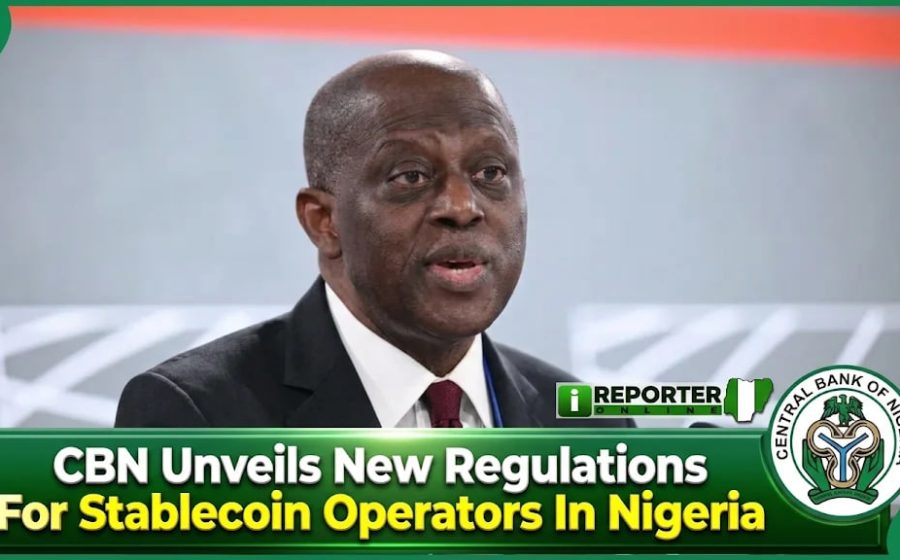
The Central Bank of Nigeria (CBN) has introduced new regulatory requirements for stablecoin operators in the country, directing companies issuing naira-backed and foreign currency-backed digital currencies to maintain minimum paid-up capital of ₦10 billion and ₦15 billion, respectively.
The new regulations form part of the apex bank’s efforts to strengthen oversight of Nigeria’s growing virtual asset market, improve financial stability and address potential risks associated with digital currency transactions.
According to a circular dated November 5, 2026, and signed by the Director of Payments Systems Policy, Musa Jimoh, companies issuing naira-backed stablecoins must maintain a minimum paid-up capital of ₦10 billion, while operators issuing foreign currency-backed stablecoins, including those pegged to the US dollar, are required to have at least ₦15 billion.
The CBN stressed that the capital requirements must be maintained throughout the operational period of the companies and not merely fulfilled at the point of obtaining regulatory approval.
The bank also clarified that foreign-based stablecoin issuers are not exempted from Nigeria’s incorporation, licensing and minimum capital requirements if they intend to operate within the country’s regulatory framework.
Under the guidelines, Class 1 licensed issuers are required to maintain a minimum capital of ₦10 billion, while Class 2 licensed issuers must have at least ₦15 billion or any higher amount that may subsequently be prescribed by the apex bank.
The CBN explained that Class 1 stablecoins are digital currencies designed to maintain a stable value against the Nigerian naira, while Class 2 stablecoins are backed by foreign currencies such as the United States dollar.
The regulatory framework also extends to other digital tokens used for payments, money transfers and financial transactions, including Deposit Money Tokens and activities carried out by Virtual Asset Service Providers (VASPs).
Explaining the rationale behind the new measures, the apex bank acknowledged that virtual assets and stablecoins could improve payment systems, international remittances, business transactions and access to financial services.
However, it warned that the increasing adoption of digital currencies could also expose the financial system to risks involving monetary stability, consumer protection, money laundering, terrorism financing and foreign exchange management.
The bank maintained that the new guidelines were introduced to strengthen its supervisory responsibilities and provide a comprehensive regulatory structure for companies operating within Nigeria’s non-security virtual asset sector.
In addition to the capital requirements, the CBN has introduced stricter measures targeting peer-to-peer (P2P) cryptocurrency trading activities.
Under the new directives, virtual asset service providers are required to identify customers who regularly engage in P2P transactions as a commercial activity.
Operators are expected to consider factors such as transaction volume, frequency, the number of individuals involved and whether customers publicly advertise exchange rates when determining those engaged in regular P2P trading businesses.
The apex bank further directed virtual asset platforms to subject identified traders to enhanced due diligence, stricter transaction monitoring and appropriate transaction limits.
Such activities must also be reported to the CBN in accordance with the reporting obligations outlined in the new regulatory framework.
The bank emphasised that being identified as a regular P2P trader does not automatically authorise an individual to operate a regulated digital asset business.
It explained that individuals whose activities require regulatory approval must obtain the appropriate licence, discontinue the activity or operate as authorised agents of licensed providers, where applicable.
The CBN said the measures were necessary to prevent digital asset platforms from being exploited for illicit financial activities, particularly money laundering and terrorism financing.
The latest development signals a more stringent regulatory approach to Nigeria’s digital currency industry, with stablecoin issuers and virtual asset service providers expected to comply with the new requirements to continue operating within the country’s financial system.







Comments
0 comments