

Fire Disaster Hits Abuja Market, Destroys Goods Worth Millions, Affects 45 Traders
 Follow us on Google News
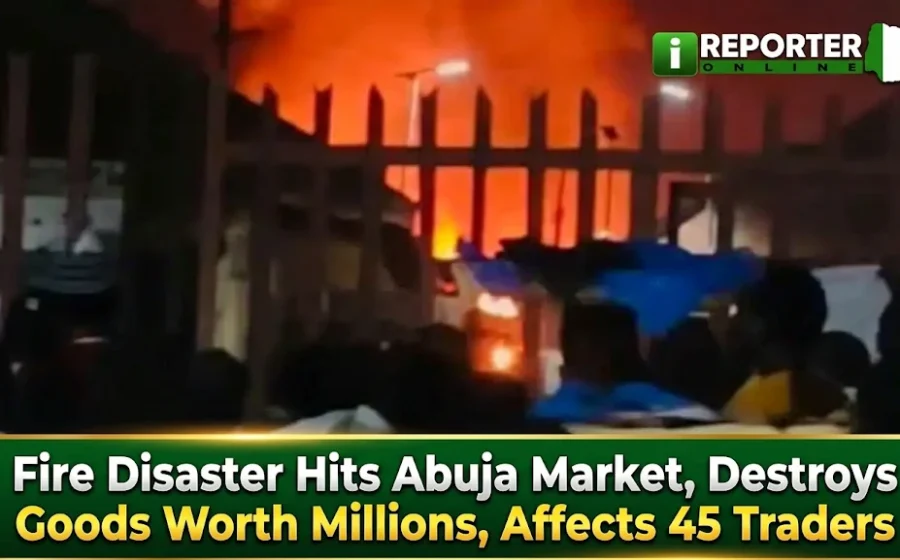
A fire outbreak at Gwagwalada International Market in the Federal Capital Territory (FCT), Abuja, has affected approximately 45 traders and destroyed 30 shops, leaving several business owners counting their losses.
The Federal Capital Territory Emergency Management Department (FEMD) disclosed this on Monday, November 16, following an assessment of the affected market by its Director, Muhammad Dikko, alongside officials of the National Emergency Management Agency (NEMA).
The incident reportedly occurred at about 7 p.m. on Saturday, with the inferno destroying 28 open stalls and two lock-up shops.
Although the exact cause of the fire remains unknown, the Chairman of the Market Association, Aminu Lawal Bakinruwa, told the assessment team that security personnel first noticed smoke coming from one of the shops approximately 20 minutes after electricity supply was restored by the Abuja Electricity Distribution Company.
The fire reportedly destroyed several goods, including clothing materials, herbal medicines and beverages, resulting in significant financial losses for the affected traders.
One of the victims, Salome Israel, disclosed that she lost goods estimated at N400,000, comprising yams, tomatoes and peppers, to the inferno.
Speaking during the assessment exercise, FEMD Director, Muhammad Dikko, urged traders to adopt better fire safety practices by ensuring that electrical appliances are switched off before leaving their shops.
He also encouraged business owners to obtain insurance coverage for their businesses to minimise financial losses in the event of unforeseen disasters.
Dikko further emphasised the need for adequate firefighting equipment within the market to guarantee prompt intervention during emergencies. He also appealed to the Market Board of Trustees and leaders of the traders’ union to provide support for those affected by the incident.
Meanwhile, a representative of NEMA, Mariam Dantanko, explained that the agency’s disaster response assistance was primarily provided through relief materials rather than direct cash payments.
According to her, possible interventions could include the distribution of food items and building materials, depending on the outcome of the assessment and approval from the agency’s headquarters.
The FEMD’s Relief and Rehabilitation Division has also conducted a needs assessment to establish the immediate requirements of the affected traders and determine the appropriate form of assistance.
The department subsequently called on market authorities to ensure regular inspections of electrical installations, intensify fire safety awareness campaigns and provide functional firefighting equipment to prevent similar incidents in the future.





Comments
0 comments