

Dollar Hits ₦1,468 Against Naira On Black Market as Exchange Rate Gap Widens
 Follow us on Google News
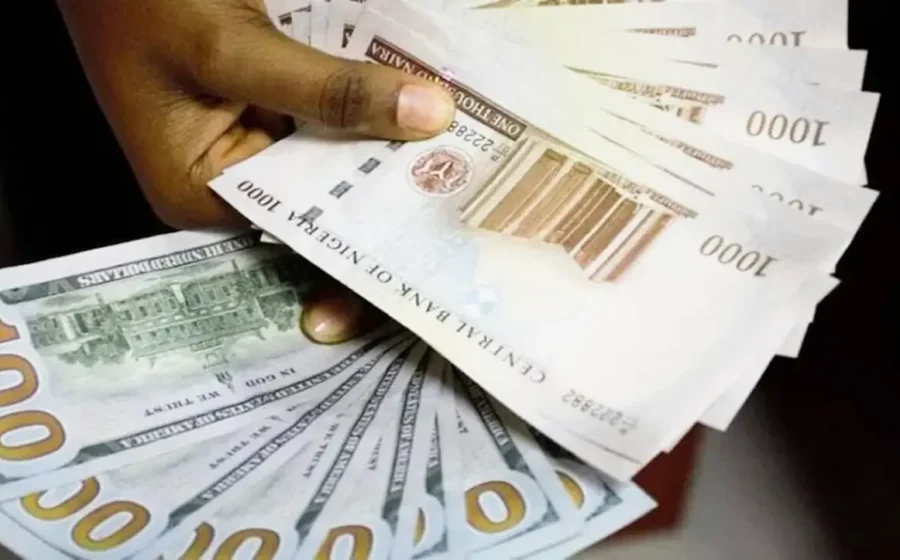
The US dollar exchanged for as high as ₦1,468 in Nigeria’s parallel foreign exchange market on Thursday, November 19, 2026, as sustained demand for foreign currency continued to put pressure on the naira.
The development came despite a slight improvement in the local currency’s performance at the official foreign exchange market, where the dollar traded at approximately ₦1,350.50 during early morning transactions.
Market checks indicated that the considerable difference between the official and parallel market rates reflects persistent challenges in meeting the foreign currency needs of individuals and businesses across the country.
According to reports from currency dealers, Bureau De Change (BDC) operators in major cities, including Lagos and Abuja, quoted varying exchange rates depending on location, availability of dollars and transaction volumes.
The dollar was reportedly sold between ₦1,445 and ₦1,468, while buying rates ranged from ₦1,435 to ₦1,455.
The latest quotations followed Wednesday’s trading session, when the greenback reportedly exchanged between ₦1,453 and ₦1,468 in the parallel market.
At the highest selling rate of ₦1,468, individuals seeking to purchase $100 would require approximately ₦146,800, while acquiring $1,000 would cost about ₦1.468 million.
Meanwhile, the naira recorded a modest appreciation in the official Nigerian Foreign Exchange Market (NFEM).
Available figures showed that the dollar traded at ₦1,350.50, compared with its opening rate of ₦1,351.81, representing an approximately 0.10 per cent improvement in the value of the local currency.
This performance followed Wednesday’s volume-weighted closing rate of ₦1,363.23 per dollar, according to figures published by the Central Bank of Nigeria (CBN).
Financial analysts have attributed the persistent gap between the official and parallel market exchange rates to fluctuations in dollar supply and sustained demand from businesses and individuals.
Some of the factors reportedly contributing to the pressure include seasonal import requirements, corporate foreign exchange obligations and a moderation in autonomous foreign currency inflows.
There were also indications that weekly foreign exchange inflows declined to approximately $807.6 million, amid a more cautious approach by offshore portfolio investors towards the Nigerian market.
Nigeria’s external reserves have equally come under pressure following recent liquidity interventions by the CBN to support foreign exchange market stability.
Available figures indicated that the country’s reserves declined by approximately $390 million from their late-October peak of $55.26 billion.
Despite the recent reduction, Nigeria’s external reserves remain significantly higher than the $43.54 billion recorded during the corresponding period in 2025, representing an increase of more than 26 per cent.
Looking ahead, financial institutions expect the apex bank to sustain targeted interventions aimed at improving dollar liquidity in the official market.
Projections suggest that the naira could trade within the ₦1,350 to ₦1,365 range in the near term, although developments in foreign currency supply and demand will remain critical to its performance.
However, the parallel market could continue to experience pressure if demand for the US dollar remains above available supply, potentially sustaining the wide difference between both exchange windows.






Comments
0 comments