

Latest News
Read How 130 Dubai Assets Were Traced To Nigerian Ex-Governors, Senators

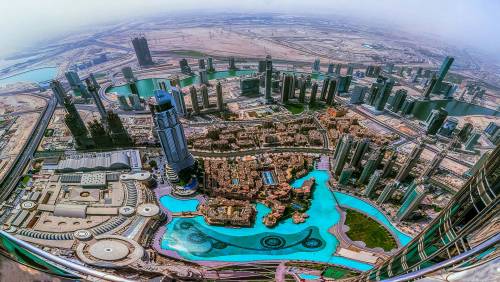
More than 130 choice assets bought with looted funds in Dubai, United Arab Emirates, have been traced to former governors, ministers and serving senators in Nigeria.
These assets are among the over 800 traceable to Nigerians in the UAE, including top security and military officers.
According to Nation, these highlights are part of a report on the “UAE component of the three country (Nigeria, UAE and the UK) comparative study of fixing Illicit Financial Flows,” which was submitted to the Executive Chairman of the Economic and Financial Crimes Commission, Mr. Abdulrasheed Bawa last Wednesday in Abuja.
The report, which was commissioned by an anti-corruption group, Human and Environmental Development Agenda, was researched and compiled by Prof. Gbenga Oduntan of Kent University.
Although the report did not reveal the identity of the Politically Exposed Persons with the assets in Dubai, Chairman of HEDA, Olanrewaju Suraj, said, “We have left it to EFCC to unravel them. It is so sad that our funds are being looted and stashed abroad. We are not even talking of assets in the UAE identified with some military officers.”
The report claimed that Nigerian Politically Exposed Persons and other corrupt public officers took advantage of UAE’s soft system to launder funds.
The report said, “The sheer recklessness of a system which allows Politically Exposed Persons (PEPs) including 34 Nigerian ex-governors to own 71 properties, seven senators to own 33 properties, and thirteen Federal ministers to buy and own 26 properties is apparent. In the circumstances this is a case of res ipsaloquitor- the facts speak for itself.
“A 2012 report stated that Nigerians had invested up to $6 billion in real estate in Dubai over three years, including whole floors of apartment blocks.61 As bad as things are with respect to dirty money being funnelled into properties in the UK particularly in London, Dubai is qualitatively worse.”
The report attributed the rush to stash funds in the UAE by top Nigerians to the weak financial system and its openness to investors.
The report said, “The finding reached is that the shortcomings in the practices of financial and professional bodies of the UAE are deep, substantive and troubling.
“Corrupt Nigerian elites have managed to evade detection and massively invested into the UAE property market particularly in Dubai. As argued by Barnaby Pace, “We know that the criminal and corrupt set up bolt-holes around the world in which to stash their dirty cash, with Dubai being a favoured spot for many.”
“Dubai is also a preferred destination for trade-based money laundering (TBML –IFF) and political corruption money laundering from Nigeria, precisely because the city is seen as a soft touch for PEPs and their associates.
“There is deliberate orchestration to make Dubai an Eldorado for property investors looking for a place to store wealth considering that construction and real estate sectors in the UAE contributed 20% to GDP as of 2016.”
The report quoted a study as saying “There are not the same checks on the sources of money coming into Dubai as there are in London and elsewhere”
“The lack of qualitative and mandatory beneficial ownership reporting system exacerbates the UAE’s significant shortcomings in relation to the interaction between luxury property market and “Dubai and other Emirates in the UAE operate a more laissez faire philosophy and the UAE generally has shaped itself into a vast bohemian desert investment space.
“Bribery, corruption, illegal resource exploitation, and tax evasion are the main channels of IFFs especially in relation to Nigeria- UK relationship in the country’s extractive industries. Much more damage is done to Nigeria’s financial interest by other countries as well.
“Indeed Nigeria’s oil and gas sector contributes 92.9 per cent of the total amount of IFFs the country records yearly through companies and persons operating in the highly porous yet important sector.
“In stolen crude oil deals alone Nigeria suffered more than $12 billion in losses to the US between 2011 and 2014. Another $3 billion was lost to China and $839.5 million to Norway in the same period.
“The damage done from within by bureaucratic mischief is very significant as well. Unfortunately, there is also under-reporting of production volumes and oil lifting by the NNPC and Department of Petroleum Resources (DPR).
“For instance, it has for long been known that the effective lobbying by oil companies is a large aspect of the stalled progress of the Petroleum Industry Bill (PIB) for nearly 20 years now because “the oil majors have been particularly vocal on potentially losing tax exemptions as a result of this law”.
The report made some recommendations including a generation of PEPs annually by the Federal Government with their data shared with some international agencies and development partners.
Source: Sahara Reporters

-

 Latest News5 days ago
Tinubu Announces New Appointment, Sends Nominee To Senate For Confirmation
-

 Latest News2 weeks ago
Presidency Moves Against VDM Over Fake Tinubu Audio Allegation
-
 Latest News1 week ago
Shake-Up At CBN: Deputy Governors Redeployed, Full List Released
-

 Politics2 weeks ago
Wike’s PDP Camp Unveils 2027 Presidential Candidate
-

 Politics6 days ago
June 12: Tinubu Set For Nationwide Broadcast, NASS Address
-
 Politics4 days ago
Wike Clears Air On Chinda, Says INEC Candidate List Drops In July
-
 Education2 weeks ago
NELFUND Refutes Claims Of Suspending Students’ Upkeep Allowance
-
 Latest News15 hours ago
INEC Drops Final List Of Candidates For June 2026 Bye-Elections
-

 Politics1 week ago
Ganduje Fires At Kwankwaso: “He Was Once My Political Boy
-
 Latest News2 weeks ago
Jibrin Breaks Silence On Dumping Kwankwaso For Tinubu: “It Wasn’t Betrayal
-

 Politics1 week ago
2027: Kwankwaso Breaks Silence After Being Named Peter Obi’s Running Mate
-
 Latest News5 days ago
Police Provide Fresh Update On Release Of Abducted Oyo Pupils, Teachers