
Atiku, Kwankwaso Jostle to Fill Political Void Left by Buhari’s Death
 Follow us on Google News
Following the passing of former Nigerian President Muhammadu Buhari on July 13, 2025, in London after a prolonged undisclosed illness, a significant political vacuum has emerged in Northern Nigeria. As his remains were interred in Daura amid tributes from high-profile dignitaries and ordinary citizens alike, the discourse swiftly turned to who might inherit his towering political influence in the region.
According to political analysts and insiders interviewed across Kano and beyond, Buhari’s departure has left a unique leadership void. Known for his mass appeal, integrity-driven politics, and deep religious resonance among Northern voters, Buhari commanded a cult-like following that many say will be difficult—if not impossible—to replicate.
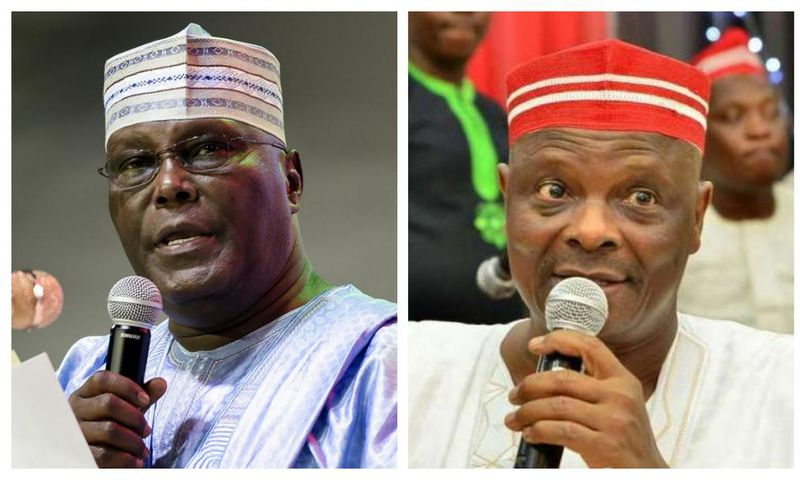
However, two names have emerged prominently in the race to assume the mantle of Northern political leadership: former Vice President Atiku Abubakar and former Kano Governor Rabiu Musa Kwankwaso. The debate has exposed clear ideological and strategic differences between both men and their camps.
Supporters of Atiku argue that his political reach, national structure, and experience position him as the most viable successor to Buhari’s political dynasty. Many within the Peoples Democratic Party (PDP) note that Atiku has maintained political relevance for decades, and his network extends far beyond the confines of any single Northern state. “Atiku is the only Northern politician with a formidable structure across the 19 northern states,” a PDP source claimed.
Conversely, Kwankwaso’s followers assert that their leader has something Atiku lacks—mass grassroots appeal. Known for his populist style and the fervent loyalty of his “Kwankwasiyya” movement, Kwankwaso is perceived by many as closer in persona to Buhari, particularly in his ability to connect with the Northern poor and defend the region’s interests vocally and consistently.
Recently, Kwankwaso drew widespread attention for criticizing the Federal Government’s neglect of Northern infrastructure, citing deteriorating roads and uneven budgetary allocations favoring the South. These remarks have earned him praise from Northern advocacy groups who see him as a regional champion.
Still, critics of Kwankwaso argue that his appeal remains largely limited to Kano State and that his performance in the 2023 presidential elections, where he failed to secure significant votes outside his stronghold, highlights his lack of national traction.
On the other hand, Atiku’s detractors point to his elite background, perceived capitalist leanings, and alleged disconnect from the grassroots. Some also claim that Atiku is driven primarily by personal ambition and lacks the ideological clarity that endeared Buhari to the average Northern voter.
Despite this, many political observers believe that the death of Buhari may clear the path for Atiku to reclaim lost ground in the North, particularly as the so-called “Buhari 12 million votes” bloc now appears fragmented and up for grabs.
Talks have also intensified around a possible alliance between Kwankwaso and President Bola Tinubu, with speculation that the former Kano governor might rejoin the All Progressives Congress (APC) ahead of 2027, potentially even emerging as Tinubu’s new running mate—a move that could reshape the Northern political equation entirely.
In the absence of Buhari’s unifying presence, the North now stands at a crossroads, with its political future poised between two vastly different styles of leadership: Atiku’s strategic, pan-Nigerian reach versus Kwankwaso’s populist, regionally rooted activism.





Comments
0 comments