


Fresh Revelations Surface On The Exit Of Former Defence Minister, Badaru
 Follow us on Google News
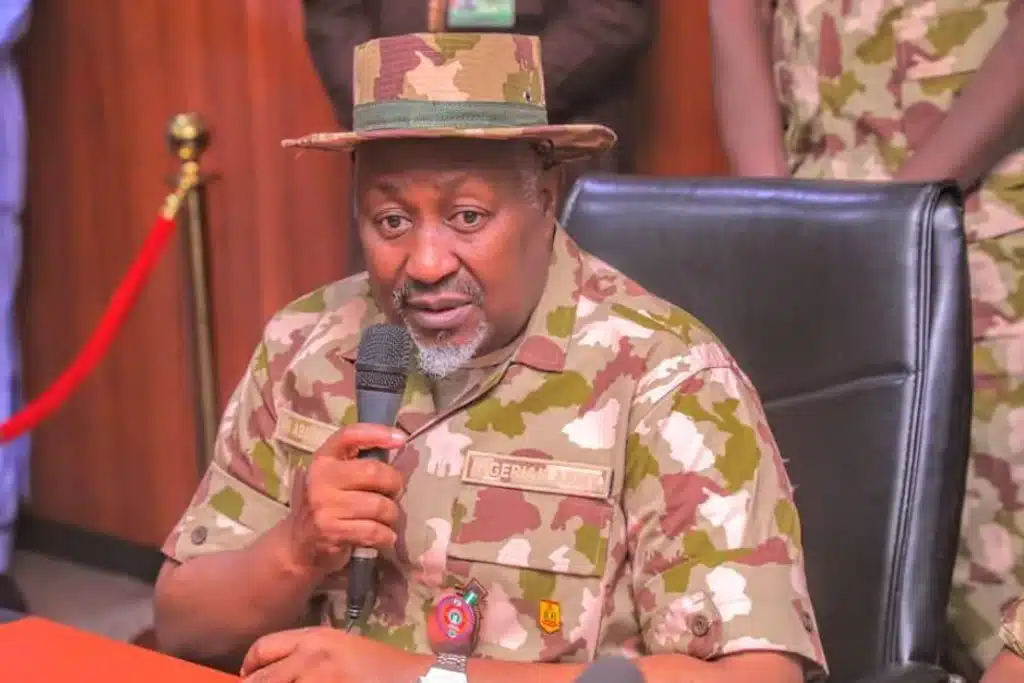
According to Ireporter Online, fresh details have surfaced surrounding the sudden resignation of former Minister of Defence, Badaru Abubakar, barely two years after assuming office. While the former minister publicly attributed his decision to health challenges, sources within the defence circle reveal that deep-rooted internal tensions played a major role in his exit.
Badaru officially stepped down on Monday, prompting President Bola Tinubu to immediately appoint retired General Christopher Musa, a former Chief of Defence Staff, as his replacement. The President’s Special Adviser on Information and Strategy, Bayo Onanuga, confirmed that the resignation was based on health grounds.
However, investigative findings suggest that the resignation was largely influenced by a prolonged power struggle between Badaru and the Minister of State for Defence, Bello Matawalle. Badaru, who took office on August 21, 2023, after serving two terms as governor of Jigawa State, was appointed primarily for his administrative capacity and political influence in the North-West, a region heavily plagued by banditry and terrorism.
His tenure was expected to prioritize military modernization, intelligence reforms, and counter-terrorism strategies, with Matawalle appointed the same day to assist in implementing defence policies. Yet, insiders disclosed that relations between both officials deteriorated significantly as insecurity worsened nationwide.
The renewed wave of bandit attacks, terrorism, and mass abductions of schoolchildren intensified pressure on the Defence Ministry amid heightened local and international scrutiny. This pressure escalated after President Tinubu declared a nationwide security emergency. The situation drew further global attention in late October when the United States reportedly redesignated Nigeria as a “Country of Particular Concern” over alleged mass killings linked to insurgency.
With growing public outrage and calls for accountability, pressure mounted on Badaru, eventually leading to his resignation on December 1, with health issues cited as the official reason.
Multiple military sources revealed that the relationship between Badaru and Matawalle had long been strained despite their calm public appearances. One official, who spoke anonymously, disclosed that their private interactions were marked by persistent tension, which reportedly affected internal operations, including media coordination within the ministry.
Another source further alleged that Matawalle enjoys strong political backing from the presidency and is widely seen as a strategic political asset, particularly within the North-West ahead of the 2027 elections. The source added that Matawalle’s influence within the ruling party placed him in a dominant position, while Badaru allegedly lacked similar political leverage, weakening his standing within the administration.






Comments
0 comments