


Islam Does Not Force Conversion, Sultan Of Sokoto Tells Muslims
 Follow us on Google News
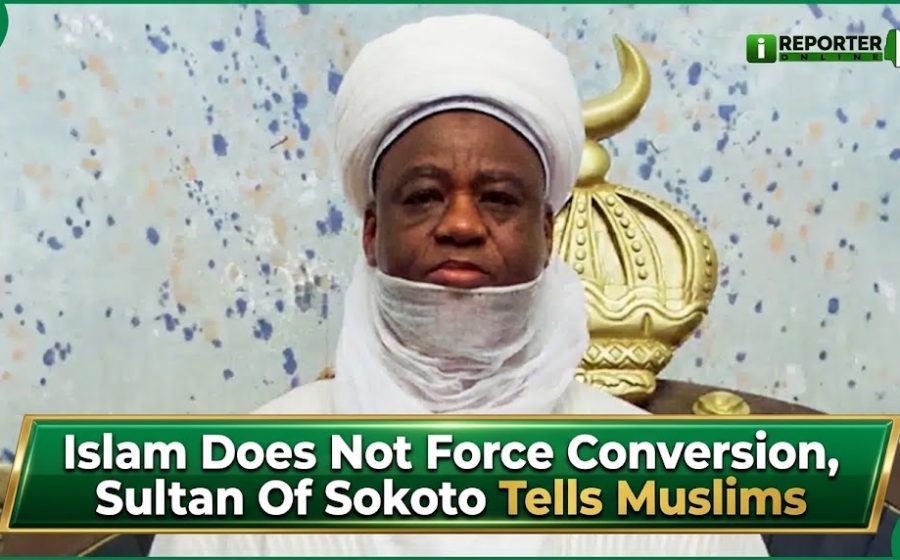
The Sultan of Sokoto, Muhammadu Sa’ad Abubakar III, has called on Muslims to desist from forcing people to embrace Islam, declaring that the religion does not support coercion or forced conversion.
The Sultan stressed the importance of religious tolerance, peaceful coexistence and demonstrating the true values of Islam through good conduct, particularly in interactions with people of different religious backgrounds.
He made the remarks on Monday in Sokoto during the closing ceremony of activities commemorating his 20th anniversary on the throne and the 13th Sheikh Usmanu Bin Fodiyo Week.
According to reports from the event, the Sultan, who also serves as the President-General of the Nigeria Supreme Council for Islamic Affairs, described himself as a soldier of Islam and peace, noting that much of his responsibilities as a traditional and religious leader had involved resolving conflicts and promoting harmony within communities.
He said his commitment to peace had remained central to his leadership, adding that Muslims must demonstrate the teachings of their faith through actions rather than compelling others to accept their religious beliefs.
The monarch also urged Nigerians to draw inspiration from the founding principles of the Sokoto Caliphate, particularly its emphasis on human dignity, good governance, justice, strong human relations and devotion to God.
According to him, these values played significant roles in building a peaceful and organised society and remain relevant in addressing Nigeria’s present-day social, economic and political challenges.
The Sultan further criticised the legacy of British colonial administration, arguing that colonial structures introduced systems that continued to undermine Africa’s efforts to overcome colonial mentality and recover its traditional values.
He maintained that the Sokoto Caliphate demonstrated the ability of African scholars and leaders to establish a functional society, government and economy founded on the rule of law.
Abubakar added that the historical achievements of the caliphate offered important lessons for Africa’s development, urging Muslim scholars to promote the spirit of brotherhood taught by Prophet Muhammad and educate younger generations about the caliphate’s contributions to unity among different ethnic communities.
Meanwhile, Zamfara State Governor, Dauda Lawal, congratulated the Sultan on his 20th anniversary on the throne, describing his reign as one characterised by humility, stability, religious tolerance, unity and national cohesion.
Lawal acknowledged the Sultan’s contributions to national development, noting that his counsel and interventions had remained valuable in addressing Nigeria’s numerous economic, social and security challenges.
The governor also appealed to Islamic scholars, traditional rulers, community leaders and youth organisations to intensify efforts towards promoting peaceful coexistence, discouraging extremism and restoring essential moral values, including honesty, compassion and respect for human life.
He emphasised that achieving lasting peace required more than security operations, stressing the importance of quality education, economic opportunities, moral upbringing and active community participation.
Similarly, Sokoto State Governor, Ahmed Aliyu, represented by his deputy, Idris Gobir, commended the Sultan for his contributions to religious tolerance, peaceful coexistence and national development.
Aliyu noted that the anniversary offered an opportunity for Nigerians to reflect on the intellectual and historical contributions of the Sokoto Caliphate, particularly the teachings of Sheikh Usmanu Bin Fodiyo, Abdullahi Fodio and Sheikh Muhammad Bello.
He highlighted their emphasis on scholarship, moral discipline, social responsibility, justice, accountability and good governance, describing these principles as important foundations for building a peaceful and progressive society.







Comments
0 comments