

Nigeria Partners EU To Boost Medicine Production, Strengthen Reproductive Health
 Follow us on Google News
According to Ireporter Online, the Federal Government of Nigeria has entered into three landmark agreements with the European Union (EU) aimed at boosting local pharmaceutical manufacturing, attracting foreign investments, and advancing reproductive health across West Africa.
The agreements, part of the EU’s Global Gateway Manufacturing and Access to Vaccines, Medicines, and Health Technologies (MAV+) initiative and Sexual and Reproductive Health and Rights (SRHR) flagships, are designed to empower local innovators and producers in building a stronger, more resilient healthcare system.
The three projects include Enabling Local Manufacturing of Health, Immunisation and Nutrition Commodities in Nigeria (ELM-N), Quality Uplift for Advancing Local Industry in Medicine Standards (Qualimeds Nigeria), and Strengthening Reproductive Health and Rights (SRHR) in West Africa.
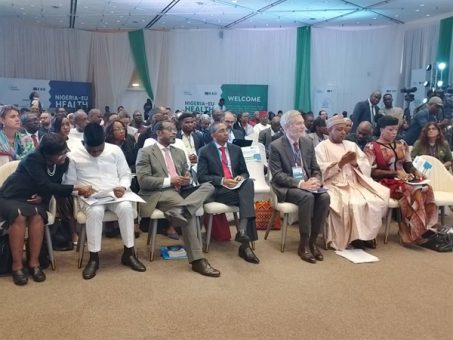
Speaking at the Nigeria–EU Health Investment Forum in Abuja, Vice President Kashim Shettima reaffirmed the government’s commitment to an innovation-driven health economy. Represented by his Senior Special Assistant on Public Health, Dr. Uju Rochas, Shettima noted that President Bola Tinubu’s Executive Order on local pharmaceutical and medical device production marks a turning point for Nigeria’s health sector.
He explained that through the Presidential Initiative for Unlocking the Healthcare Value Chain (PVAC) and other complementary frameworks, the administration is strengthening governance, attracting investment, and promoting indigenous manufacturing.
“Our message is clear—Nigeria is open for health investment, innovation, and impact,” Shettima said, emphasizing that the country’s health transformation would be driven by government ownership, accountability, and innovation “made in Nigeria, for Nigerians, and by Nigerians.”
He commended the EU, PVAC, and other development partners for their roles in improving health security and supporting industrialization, describing the partnership as a new era of shared prosperity and collaboration.
EU Ambassador to Nigeria and ECOWAS, Gautier Mignot, stated that the forum demonstrates “Team Europe’s” collective effort to strengthen health systems through strategic investments. He reaffirmed the EU’s longstanding support for Nigeria and ECOWAS, highlighting projects worth €45 million in Nigeria and €25 million in West Africa focused on reproductive, maternal, and child health.
According to Mignot, the EU is committed to transitioning from traditional aid models to investment-driven partnerships, with upcoming initiatives in digital and public health systems designed to reinforce local resilience.
Minister of Budget and Economic Planning, Senator Abubakar Bagudu, lauded the timing of the agreements, noting that Nigeria is currently implementing reforms to make healthcare more accessible and affordable. He described the collaboration as a win-win, citing the nation’s vast absorptive capacity and the administration’s political will to achieve sustainable economic growth.
The Coordinating Minister of Health and Social Welfare, Professor Ali Pate, represented by Dr. Olubunmi Aribeana, emphasized that the Renewed Hope Health Agenda is focused on strengthening local production, expanding access to essential medicines, and improving reproductive health and rights. He noted that boosting local production is not only an economic decision but also a matter of national health security.







Comments
0 comments