


Nigeria Poised For Historic Boost In Women’s Representation With 156 Reserved Parliamentary Seats
 Follow us on Google News
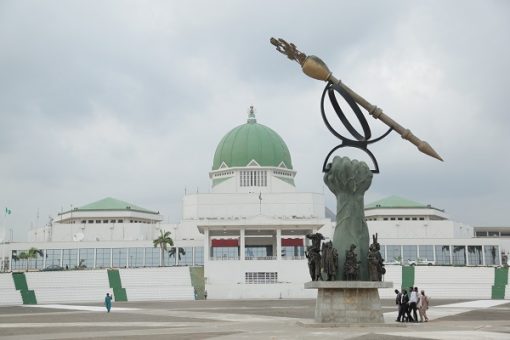
According to Ireporter Online, Nigerian women are poised to gain 156 additional parliamentary seats across federal and state legislatures if the Reserved Seats for Women Bill currently before the National Assembly is passed and signed into law.
The bill, which seeks to amend the 1999 Constitution to create dedicated seats for women in the National Assembly and state Houses of Assembly, is being promoted by gender advocates as a temporary and strategic measure to address decades of female underrepresentation in governance.
The proposal recommends one reserved seat for women in both the House of Representatives and the Senate from each state, as well as three seats per state assembly. However, reports indicate that the Senate is considering one reserved seat per geopolitical zone in the upper chamber.
Speaking during a training session for members of the House of Representatives Press Corps, the Special Adviser to the Deputy Speaker on Legislative Matters, Chidozie Aja, dismissed claims that the bill is intended to displace men from elected positions. He emphasized that the reserved seats would expand representation rather than replace existing ones, and that political parties would field only female candidates for these positions.
Aja noted that the measure is temporary, initially designed to last for four election cycles or 16 years, though ongoing adjustments could extend or remove the sunset clause. The bill seeks to amend Sections 48, 49, 71, 77, 91, and 117 of the Constitution, with recent recommendations to alter Section 42 as well.
Highlighting global examples, he pointed out that Rwanda, now a global leader with 61% women in Parliament, has successfully implemented similar measures. Other countries employing comparable approaches include Tanzania, Uganda, Kenya, Burkina Faso, and Senegal.
Even if 74 additional seats are granted in the Senate and House of Representatives, bringing the total to 543, women would account for just 13.6% of the national parliament—a modest but significant improvement. Studies show that countries with structural gender quotas experience stronger representation, better governance, and improved development outcomes.
Aja further stressed that the bill would deepen democracy by ensuring all voices are heard. Research indicates that female participation leads to better health policies, more education-focused legislation, stronger social protection frameworks, and more community-driven development initiatives. Women also play critical roles in peacebuilding and conflict reduction at the grassroots level.
Economic projections by the McKinsey Global Institute suggest that Nigeria’s GDP could increase substantially if women were fully included in political and economic life, estimating a potential gain of US$22.9 billion and overall GDP growth of 23% by 2025.







Comments
0 comments