

NILDS Convocation: Akpabio, Abbas Hail Education As Cornerstone Of Democratic Growth
 Follow us on Google News
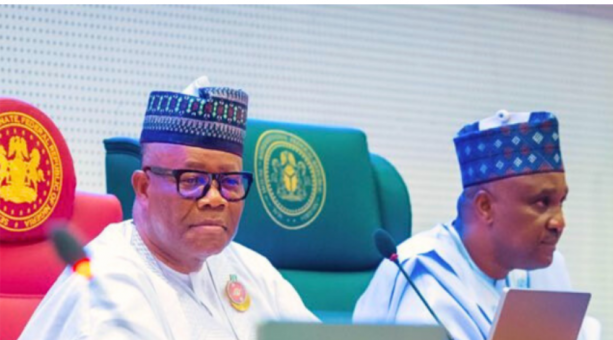
According to Ireporter Online, the leadership of Nigeria’s National Assembly has reiterated its unwavering commitment to advancing democracy through education, research, and institutional development.
Senate President Godswill Akpabio and Speaker of the House of Representatives Tajudeen Abbas made this known during the ninth convocation ceremony of the National Institute for Legislative and Democratic Studies (NILDS), where they emphasized that education—particularly in legislative and democratic studies—remains vital to fostering accountable governance, improving service delivery, and sustaining the nation’s democratic growth.
Akpabio, who also chairs the NILDS Governing Board, underscored the need to strengthen Nigeria’s legal frameworks and oversight mechanisms to promote transparency and equitable distribution of public resources. He assured that the National Assembly would continue to deploy its legislative and oversight powers to enhance transparency, boost revenue generation, and improve service delivery across all sectors.
“As members of the 10th Senate, we will continue to strengthen existing laws and intensify our oversight of public institutions to ensure effective governance,” Akpabio stated, noting that recent legislative efforts have contributed to higher revenue inflows into the Consolidated Revenue Fund, benefiting both federal and state governments.
He further urged state assemblies to complement the federal legislature’s efforts by holding governors accountable for the judicious use of public funds, especially given the increased allocations to subnational entities.
Speaker Tajudeen Abbas, represented by House Leader Prof. Julius Ihonvbere, commended the NILDS-UNIBEN partnership for its consistent contribution to academic excellence and the production of professionals equipped to tackle Nigeria’s governance and institutional challenges.
He praised President Bola Tinubu’s ongoing reforms, noting that key economic indicators were showing signs of improvement. “Although experiences differ, it is clear that our economy is now on a better growth path than it would have been under a business-as-usual scenario,” Abbas remarked. He cited a decline in inflation to below 20 percent and the strengthening of the naira as outcomes of sound fiscal and tax reforms.
The Speaker also restated the commitment of the 10th House of Representatives to reforming the national budget process to ensure timely preparation, passage, and implementation, in line with global best practices.
Director-General of NILDS, Prof. Abubakar Sulaiman, highlighted that the institute’s academic programmes were tailored to close knowledge and capacity gaps within Nigeria’s democratic institutions. He revealed that a total of 79 students graduated from various programmes—19 from Higher National Diploma (HND), nine from Postgraduate Diploma (PGD), and 51 from Master’s degree courses in Legislative and Democratic Studies.
Sulaiman called on both federal and state governments to prioritize education funding in the 2026 fiscal year, warning that inadequate funding would continue to hinder the nation’s human capital development. “Low funding directly affects the quality of our graduates and overall institutional performance,” he cautioned.
He also urged the government to resolve the persistent Academic Staff Union of Universities (ASUU) strikes that have disrupted the university system.
The NILDS Director-General appreciated the University of Benin’s management, led by Vice-Chancellor Prof. Edoba Bright Omoregie (SAN), as well as the National Board for Technical Education (NBTE), for their support and collaboration in maintaining the institute’s high academic standards. He further disclosed that admissions for the 2025/2026 academic session were ongoing, with programmes including Master’s degrees in Elections and Party Politics, Legislative Studies, Parliamentary Administration, and Constitutional Law and Development.
The event brought together key stakeholders who reflected on the critical role of legislative institutions in consolidating Nigeria’s democracy. Consensus among participants emphasized that education and capacity building remain indispensable for enhancing governance outcomes and strengthening public trust in democratic institutions.






Comments
0 comments