


Revolution In The Operating Room: Experts Push FG To Embrace Keyhole Surgery Nationwide!
 Follow us on Google News
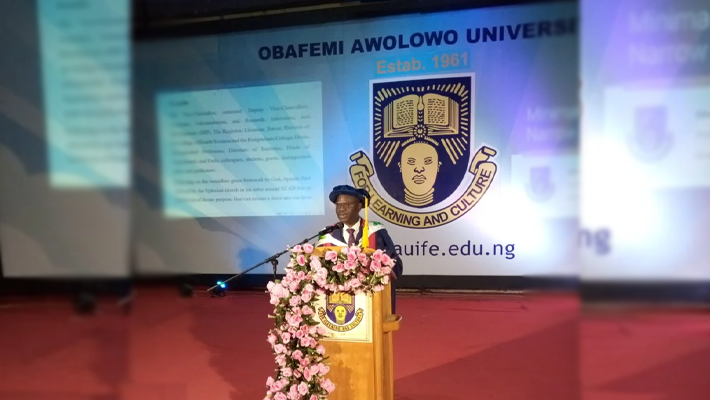
Professor Adewale Adisa, a seasoned Professor of Surgery at Obafemi Awolowo University, Ile-Ife, has made a passionate appeal to the Federal Government to integrate Minimal Access Surgery (MAS)—popularly known as keyhole surgery—into Nigeria’s national health policy.
Speaking during the university’s 402nd Inaugural Lecture titled “Minimal Access Surgery: Narrow is the Way”, held at Oduduwa Hall, Adisa emphasized the superiority of keyhole surgery over traditional open procedures.
He noted that ACCORDING TO IREPORTER ONLINE, the method brings a host of patient benefits including reduced pain, quicker recovery, shorter hospital stays, minimal scarring, and lower risk of infection.
Adisa stressed that keyhole surgery could significantly alleviate poverty if made accessible to the poor, stating, “It is more important for a poor person to have a keyhole operation than a rich person,” adding that early recovery and return to work can prevent loss of income for self-employed individuals.
He lamented that many affluent Nigerians travel abroad for medical tourism while the poor remain trapped in outdated systems. ACCORDING TO IREPORTER ONLINE, Adisa and his team have been performing keyhole surgeries since 2008 at OAUTHC using a combination of locally made and imported instruments.
Over 1,400 procedures have been carried out, including operations for appendicitis, gallbladder removal, colon cancer, and pancreatic tumors.
Despite its proven success and cost-effectiveness, Adisa pointed out that limited electricity, high costs, absence of dedicated suppliers, and the exclusion of laparoscopic surgery from the National Health Insurance Authority (NHIA) scheme have stalled widespread adoption in Nigeria.
He warned that countries like Angola and Rwanda have moved ahead with robotic surgeries, and Nigeria risks falling further behind unless swift action is taken. “The time to invest in robotic surgery training and infrastructure is now,” he insisted.
Furthermore, he mentioned that research involving wearable sensors for post-surgical care is already underway at OAUTHC in collaboration with the Global Surgery Unit of the National Institute of Health Research—demonstrating that Nigeria has the talent and potential to lead if adequately supported.
”IREPORTER REPORTS”







Comments
0 comments