


RMAFC Accused of Covering Up Public Looting Amid Senators’ Salary Controversy
 Follow us on Google News
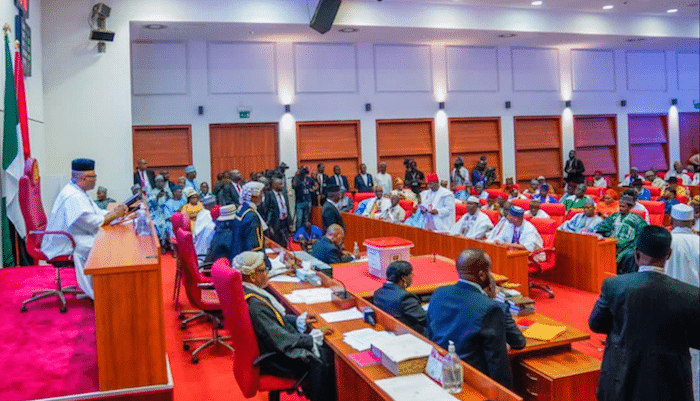
Controversy has erupted regarding the salaries and allowances of Nigerian Senators, with accusations that the Revenue Mobilisation, Allocation and Fiscal Commission (RMAFC) is concealing the true extent of public officials’ earnings. This comes after RMAFC Chairman Muhammed Bello Shehu disclosed figures suggesting that each Senator receives a total monthly salary and allowances amounting to ₦1,063,860.00.
In a statement issued on Tuesday, Shehu outlined the breakdown of this figure: Basic Salary at ₦168,866.70, Motor Vehicle Fuelling and Maintenance Allowance at ₦126,650.00, Personal Assistant at ₦42,216.66, Domestic Staff at ₦126,650.00, Entertainment at ₦50,660.00, Utilities at ₦50,660.00, Newspapers/Periodicals at ₦25,330.00, Wardrobe at ₦42,216.66, House Maintenance at ₦8,443.33, and Constituency Allowance at ₦422,166.66.
However, these figures have been disputed by Senator Abdurrahman Kawu Sumaila, the Chairman of the Senate Committee on Sports. Speaking on BBC Hausa Service, Sumaila revealed that he actually earns ₦21 million in allowances monthly, in addition to a monthly salary of about ₦1 million. He stated, “My monthly salary is less than ₦1 million. After deductions, the figure comes down to a little over ₦600,000. Given the increase in the Senate, each senator gets ₦21 million every month as running cost.”
The discrepancy has sparked outrage, with an anonymous official from the Nigeria Labour Congress (NLC) accusing RMAFC of complicity in covering up the lavish earnings of public officials. The NLC official told Vanguard, “Is there anything new in this issue of outrageous pay for National Assembly members? Perhaps, the only fresh thing is the fact that RMAFC is shamelessly covering up for public office holders in the looting of public coffers in Nigeria.”
This latest revelation adds fuel to the ongoing debate about transparency and accountability in Nigerian public offices, as citizens demand more accurate reporting and stricter oversight of public officials’ remuneration.




Comments
0 comments