

Latest News
Can BRICS Create A New World Order? – Here Is What You Need To Know

Can BRICS Create A New World Order? – Here Is What You Need To Know
A collection of major economies, boasting large populations and ambitious aspirations, are converging for a three-day summit beginning on Tuesday.
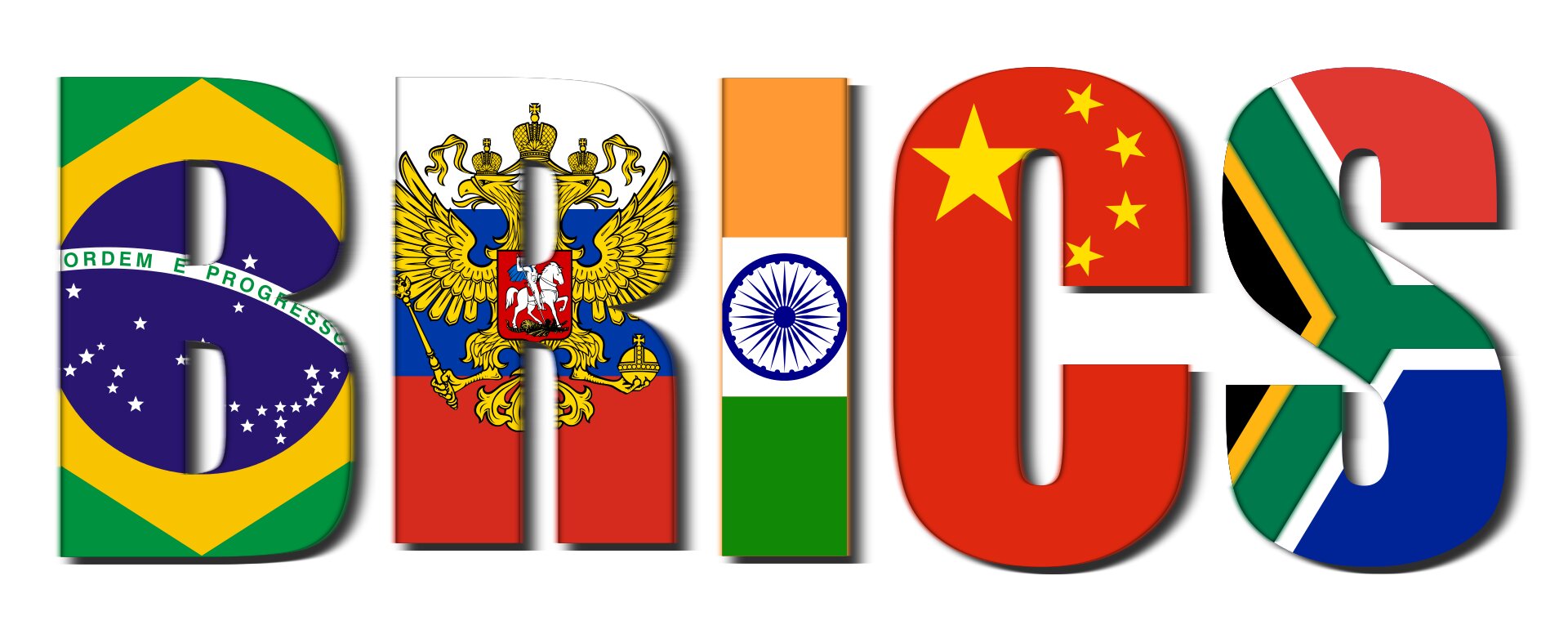
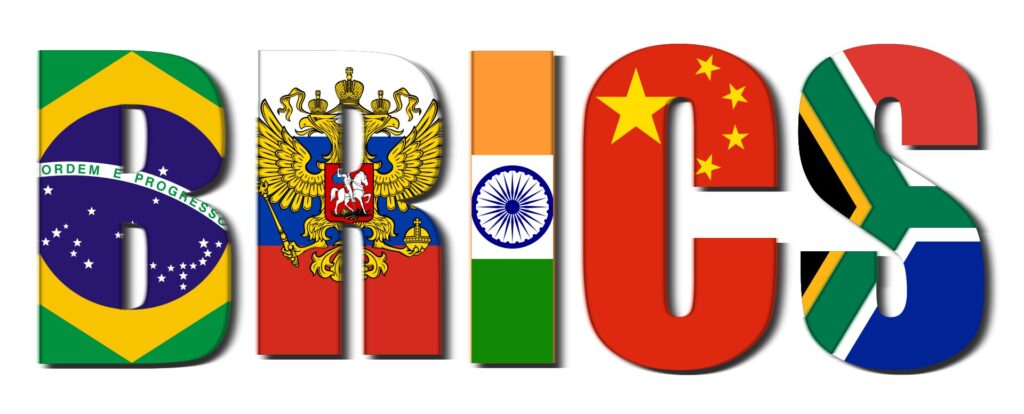
This assemblage, known as BRICS, encompasses Brazil, Russia, India, China, and South Africa. The event is expected to attract significant attention from capitals around the world.
Notably, Russian President Vladimir Putin will not be physically present at the August 22-24 meeting in Johannesburg, South Africa. Instead, he will participate via a video conference to avoid the potential embarrassment of hosting a leader with an International Criminal Court (ICC) warrant related to Moscow’s involvement in the Ukraine conflict.
As a member of the ICC, South Africa would have been legally obligated to arrest Putin had he visited in person.
While the backdrop of the summit involves the Ukraine conflict and escalating geopolitical tensions between the United States and China, the BRICS meeting is poised to emphasize the coalition’s growing influence as a counterbalance to the long-standing Washington-led world order.
Read Also See Striking Moon PHOTOS And VIDEO Captured By India’s Lunar Lander During Its Approach
A major focus of the summit is likely to be the expansion of the BRICS group. The demand to join is notable, with approximately 40 countries expressing interest in becoming members, spanning from Algeria to Argentina.
The allure of the group is underpinned by its increasing economic prowess. The combined gross domestic product (GDP) of the five BRICS nations now surpasses that of the G7 economies in terms of purchasing power parity. In nominal terms, these countries contribute to 26 percent of the global GDP. Despite this, they hold only 15 percent of the voting power at the International Monetary Fund (IMF), which has led to grievances over the existing imbalances.
Compounding these concerns is the fear in the Global South that the US could manipulate the dollar through sanctions, as seen in the case of Russia. This apprehension has prompted BRICS nations to individually and collectively seek ways to reduce their dependence on the US currency, while boosting bilateral trade conducted in their own currencies.
While there is consensus that change is needed, devising cooperative strategies poses its challenges. The tensions between India and China, evident since May 2020 in their border standoff, and the differing aspirations of India, South Africa, and Brazil for strong ties with both the West and China and Russia, highlight the complexities of working together.
Ultimately, the likely trajectory of BRICS is to cultivate piecemeal economic and diplomatic alternatives to the prevailing US-led global order, rather than fully replacing it. This could potentially lead to further friction with Western powers as the BRICS members seek an independent path amidst a dynamically changing global landscape. However, effectively addressing the varied priorities of the member nations remains a formidable challenge for the coalition.
In opening the BRICS foreign ministers meeting on June 1, India’s Foreign Minister Subrahmanyam Jaishankar remarked on the current concentration of economic power, emphasizing that it leaves many nations at the mercy of a few.
This sentiment resonates across the developing world, particularly in a geopolitical environment where the veto-holding power of the United Nations Security Council remains vested in just five nations, a configuration rooted in the post-World War II era of 1945.
In recent years, this US-led model has shown signs of strain. China, a significant global economic and military player, has been testing the boundaries of US influence. The rapprochement between traditional Middle Eastern rivals Iran and Saudi Arabia, mediated by China, following Russia’s invasion of Ukraine in 2022, has further exacerbated this divide.
Amid these dynamics, there is a growing chorus among regions like Africa, Latin America, and emerging Asian powers to challenge the post-Cold War unipolar system led by the West. Russia and China have positioned themselves as champions of this transition away from US-led dominance, which is perceived by the Global South as selective adherence to established rules by the West.
However, these shifts are not a unified endeavor. While the Global South seeks representation and champions, Russia and China are finding themselves increasingly at odds with Western powers. Nonetheless, these two currents, while converging in intent, do not fully align in practice.
For instance, India does not view China as an embodiment of Global South interests; rather, New Delhi sees China as behaving more like a developed country infringing upon the narrative of the Global South.
As these dynamics unfold, the BRICS bloc seeks to establish an alternative financial system. In 2015, the New Development Bank (NDB), initially known as the BRICS Development Bank, was established to grant BRICS members greater control over development financing and provide an alternative to US-dominated institutions such as the IMF and World Bank, both established in the aftermath of World War II.
Despite these efforts, challenges persist. The BRICS nations’ aspirations for a shared currency have gained traction, but differences remain, and South Africa has indicated that such discussions will not occur at this summit.
By creating alternatives to the dollar-dependent global financial system, the BRICS bloc seeks to reduce vulnerability to the potential leverage wielded by the US during crises. This alternative system, however, is aimed at enhancing the negotiating power of developing nations, rather than directly supplanting the dollar.
To understand the common views of BRICS members, it’s necessary to delve into their joint communiques, which often address their limited influence within institutions like the World Bank or the IMF, despite their considerable economic weight.
One potential strategy to bolster the bloc’s influence is expansion. Algeria, Egypt, Argentina, Saudi Arabia, the United Arab Emirates, Indonesia, and Nigeria have expressed interest in joining the BRICS group. China and Russia are open to this idea, yet concerns about dilution of influence arise, particularly for Brazil.
India, although hesitant about expansion, is unlikely to veto such a move. Instead, it aims to establish rules and criteria for potential new members before admitting them. However, India also believes that the BRICS group should first address internal issues, such as its relationship with China amidst the border standoff.
Amid these complexities, the BRICS coalition possesses a unique strength. Unlike Western powers, it does not demand firm alliances from other countries. Instead, it aims to provide economic and diplomatic options to nations, allowing them to choose mechanisms that best serve their interests.
In essence, BRICS strives to offer parallel alternatives rather than to obliterate the US-led model. In an era marked by polarized global politics, this concept may be challenging for some to grasp. Nevertheless, as history has shown, the BRICS group has often been underestimated and misunderstood.
The initial dismissive attitude toward the BRICS, which emerged in 2009, has evolved into a perception that it simply bows to China, driven by an anti-Western agenda. These notions, however, may not accurately capture the group’s essence.
Ultimately, the rising global sentiment underscores the desire of multiple nations to have a seat at the table, further cementing BRICS’ position as a noteworthy player on the world stage.
Source: Al Jazeera

-

 Politics23 hours ago
Tinubu Makes Fresh Appointment
-
 Politics2 weeks ago
BREAKING: Tinubu Inaugurates New Ministers
-
 Latest News2 weeks ago
INEC Drops Final List Of Candidates For June 2026 Bye-Elections
-

 Latest News1 week ago
Abubakar Momoh Engages CCECC President At Global Infrastructure Forum In China
-
 Politics6 days ago
APC Rules Out Any Review Of 2027 Primary Election Results
-

 Politics1 day ago
36 Governors Reveal Their Stance On State Police
-

 Latest News5 days ago
Obasanjo Teases Abdulsalami: “I And Gowon May Not Be Alive When You Hit 100
-

 Latest News6 days ago
Kidnap Suspects Reveal How They Abducted Adelabu’s Sister And Twin Sons
-
 Latest News3 days ago
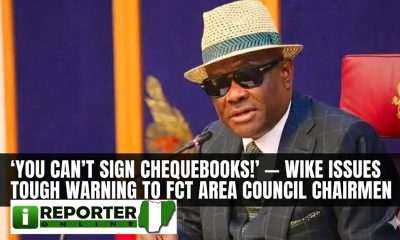
You Can’t Sign Chequebooks!’ — Wike Issues Tough Warning To FCT Area Council Chairmen
-

 Entertainment1 day ago
Dayo Amusa Blasts Peter Obi: “You Can’t Criticize Government And Hide Your Plans
-
 Latest News4 days ago
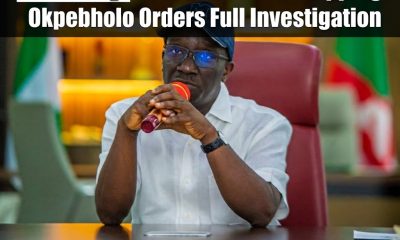
Benin Market Kidnapping: Okpebholo Orders Full Investigation
-

 Latest News1 week ago
No One Is Interested!’ – Aisha Yesufu Blasts NDC National Leader, Senator Dickson