

FG Unveils New Education Curriculum, Sets Fresh Rules For Colleges To Award Degrees
 Follow us on Google News
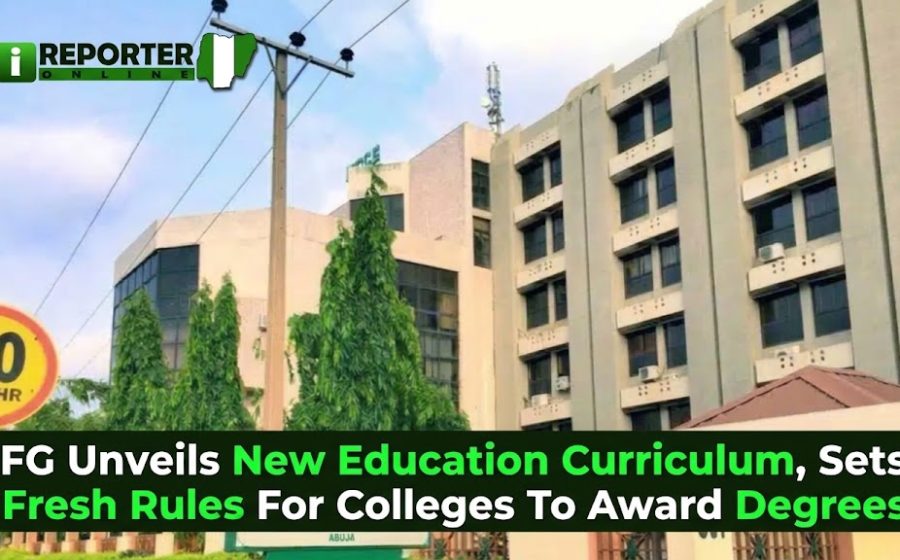
The Federal Government has unveiled a new curriculum and a five-year strategic plan for colleges of education, warning institutions against introducing or expanding degree programmes without adequate teaching staff, facilities and quality assurance systems.
The Minister of State for Education, Prof. Suwaiba Sa’id Ahmad, issued the warning on Tuesday in Abuja during the launch of the new curriculum and the National Commission for Colleges of Education (NCCE) Medium-Term Strategic Plan for 2026–2031.
Ahmad described the opportunity for colleges of education to award degrees alongside the Nigeria Certificate in Education (NCE) as a positive development but stressed that academic standards must not be compromised in the process.
She explained that institutions must have qualified lecturers, suitable classrooms, adequate learning facilities and effective quality assurance mechanisms before commencing or expanding degree programmes.
According to the minister, the success of the policy should be measured by the quality of teachers produced rather than the number of institutions offering degrees.
She urged the NCCE to ensure that colleges fully understand and properly implement the revised curriculum, adding that institutional budgets, recruitment strategies and infrastructure development plans must align with the broader reforms.
Ahmad also called for stronger collaboration among the Federal Ministry of Education, the NCCE, the National Universities Commission (NUC) and college managements to clarify regulatory responsibilities and prevent conflicting directives.
Speaking at the event, NCCE Executive Secretary, Dr Angela Ajala, said the reforms were designed to produce teachers equipped to meet the changing demands of schools and learners.
Ajala made the remarks during a national retreat and workshop focused on implementing the dual mandate of colleges of education and the commission’s strategic plan for 2026–2031.
She explained that the revised curriculum would expose trainee teachers to digital skills, inclusive education, entrepreneurship and contemporary teaching methods, preparing them to respond more effectively to the needs of modern classrooms.
According to her, the curriculum was developed with contributions from academics, curriculum specialists, professional bodies and relevant regulatory agencies.
Ajala added that the reforms would place greater emphasis on practical training to ensure that graduates acquire the skills and experience required for effective classroom teaching.
However, she cautioned that the curriculum could have limited impact without qualified lecturers, modern equipment, adequate funding and the administrative capacity needed for implementation.
She therefore urged provosts and other college administrators to assess their institutions’ readiness, particularly in staffing, infrastructure, financing and management.
The newly unveiled curriculum and strategic plan are expected to guide colleges of education in strengthening their academic programmes, improving teacher preparation and responding to emerging demands within Nigeria’s education sector.
Ahmad called on education officials, regulators and institutional leaders to work together to ensure that the reforms translate into improved teacher quality and better educational outcomes nationwide.





Comments
0 comments