

“Justice Is Losing Relevance” — Osinbajo Faults Supreme Court’s Inconsistency
 Follow us on Google News
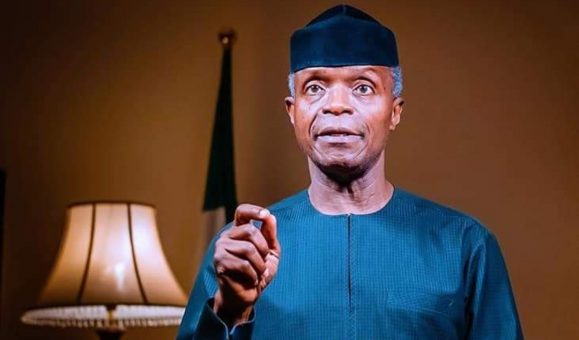
Former Vice President Yemi Osinbajo has criticised the Supreme Court and other Nigerian courts for what he described as a persistent inclination toward legal technicalities at the expense of substantive justice. According to Ireporter Online, Osinbajo made this observation during the second edition of the Professor Yusuf Ali Annual Lecture held at Kwara State University (KWASU), Malete, Ilorin.
The former Vice President, who is also a professor of law, emphasised that the ultimate purpose of any justice system is to serve the people rather than to glorify rigid procedures. He lamented that numerous judicial decisions in Nigeria, including those of the Supreme Court, often prioritise procedural formality over genuine justice.
Osinbajo noted that even the English legal system, from which Nigeria inherited much of its judicial structure, has evolved to prioritise justice over procedure. “Even English courts, whose practices we inherited, have evolved beyond such rigid technicalities by allowing amendments at any stage to ensure justice is done,” he remarked.
He further asserted that the country’s continuous adherence to outdated legal technicalities has not only weakened the pursuit of justice but also eroded public confidence in the judiciary. The former Vice President therefore urged legal practitioners, scholars, and policymakers to rethink and reform Nigeria’s legal education and judicial practice through a more critical and decolonised approach.
While acknowledging that the Supreme Court has occasionally demonstrated flexibility—especially in electoral cases—Osinbajo noted that inconsistency remains a troubling feature of the nation’s apex court. He warned that any justice system that exalts form over substance risks losing its legitimacy and effectiveness.
Also speaking at the event, Professor Chidi Odinkalu (SAN), the guest lecturer, urged Nigerian lawyers and law students to dismantle the colonial legacies that still dominate the nation’s legal system. Odinkalu, who spoke on the theme “Towards Decolonising Legal Briefs: Effective Implementation of the Local Content Law for the Benefit of Nigerian Lawyers,” maintained that while Nigeria has achieved political independence, its legal and occupational systems remain largely dependent on foreign ideologies.
He called for an urgent shift towards “ideation independence” by promoting indigenous legal content and strengthening judicial credibility as part of the decolonisation process.
The Vice Chancellor of KWASU, Professor Jimoh Shaykh-Luqman, expressed appreciation for the institution’s progress, particularly within the Faculty of Law, announcing that major infrastructural projects, including lecture theatres and departmental buildings, would be completed before the end of the year.
In his remarks, Professor Yusuf Ali underscored the need for Nigeria to identify a unifying national purpose, lamenting that the only time Nigerians display true unity is during international football matches—an ephemeral sense of togetherness that quickly dissipates. He urged citizens to confront the country’s systemic challenges with honesty rather than nostalgia, warning that Nigeria continues to exhibit the symptoms of a failing state.





Comments
0 comments