Lagos State House Of Assembly Approves ₦4.4 Trillion Budget For 2026
 Follow us on Google News
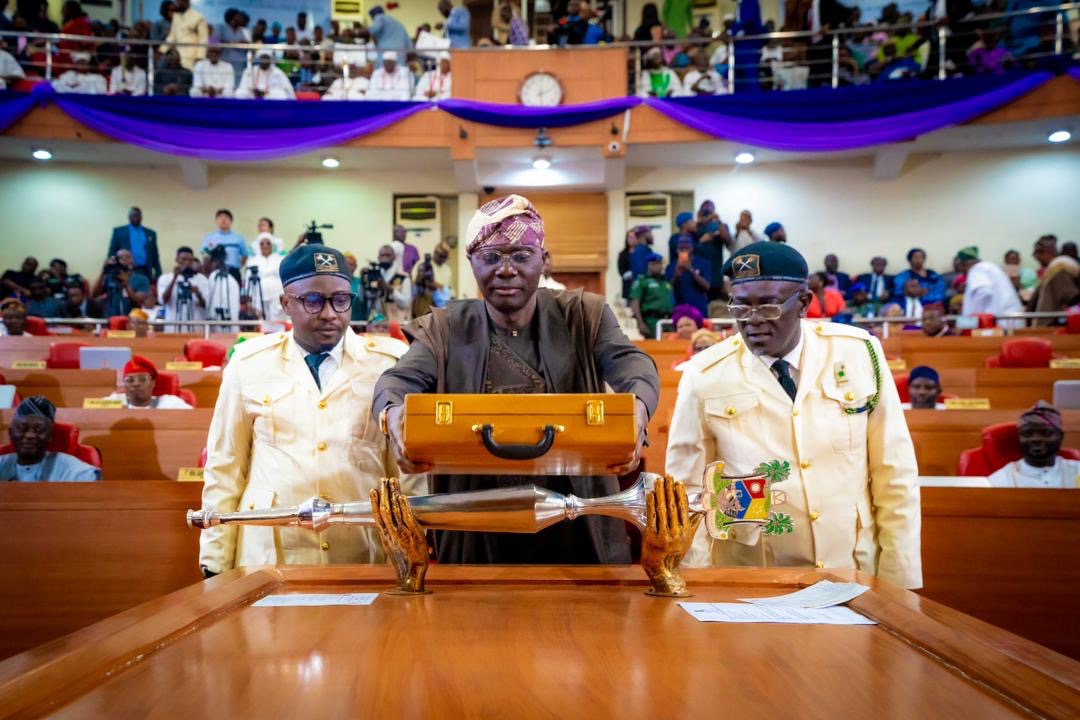
The Lagos State House of Assembly has approved the ₦4.4 trillion 2026 Appropriation Bill, officially christened the “Budget of Shared Prosperity,” following an upward adjustment of ₦171 billion to the initial proposal submitted by Governor Babajide Sanwo-Olu.
According to legislative sources, the approval came after the House adopted the report of its Committee on Economic Planning and Budget during plenary proceedings held on Thursday. The revised budget reflects the Assembly’s review and adjustments aimed at strengthening the state’s development priorities.
The 2026 fiscal plan places strong emphasis on infrastructure, education, healthcare, economic growth and social development, with capital expenditure accounting for more than 52 per cent of the total allocation. This structure is designed to promote inclusive growth and improved service delivery across Lagos State.
The approved budget stands at approximately ₦4.4 trillion, with ₦2.052 trillion earmarked for recurrent expenditure and ₦2.185 trillion allocated to capital projects. Lawmakers noted that the capital component underscores the state government’s resolve to sustain infrastructure expansion and enhance public services.
Presenting the committee’s findings, its chairman, Hon. Sa’ad Olumoh, explained that the 2026 budget represents the third budget cycle of the current administration and the final fresh-cycle budget of Governor Sanwo-Olu’s second term. He stated that the budget aligns with the administration’s long-term development agenda, built around four strategic pillars: human-focused development, modern and adaptable infrastructure, a vibrant 21st-century megacity economy, and effective governance that meets citizens’ expectations.
Olumoh disclosed that the budget framework was guided by key macroeconomic assumptions, including an exchange rate benchmark of ₦1,512 to the dollar, an inflation rate of 14.7 per cent, daily oil production of 2.06 million barrels, and a benchmark oil price of $64 per barrel.
The committee also reviewed the implementation of the 2025 budget, reporting an overall performance rate of 79 per cent as of November 2025. Capital expenditure implementation stood at 75 per cent, recurrent expenditure at 87 per cent, while revenue performance was also placed at 79 per cent.
Provisions were made in the 2026 budget for personnel costs, overheads, debt servicing and loan repayments, with a projected deficit of about ₦243 billion. The deficit, according to lawmakers, will be financed through approved deficit financing mechanisms.
Governor Sanwo-Olu had earlier presented a ₦4.237 trillion budget proposal to the 40-member Assembly in November 2025, describing it as a blueprint for shared prosperity and inclusive development in Lagos State. He reiterated the administration’s commitment to poverty reduction, economic expansion and people-centred governance.
During deliberations, lawmakers described the budget as realistic and growth-driven. The House confirmed that an additional ₦171 billion was introduced during the legislative review process to address critical needs.
Some legislators noted that the size and structure of the budget signaled Lagos State’s strong economic position, provided all stakeholders fulfilled their responsibilities. Others stressed the importance of sustained revenue reforms, prudent debt management and effective implementation to further strengthen the state’s fiscal stability.
The Assembly also received assurances from relevant officials that revenue-generating agencies would work collaboratively to ensure that projected revenues for the 2026 fiscal year are achieved and potentially surpassed.




Comments
0 comments