


Supreme Court Adopts E-System, Bans Manual Case Filing Nationwide
 Follow us on Google News
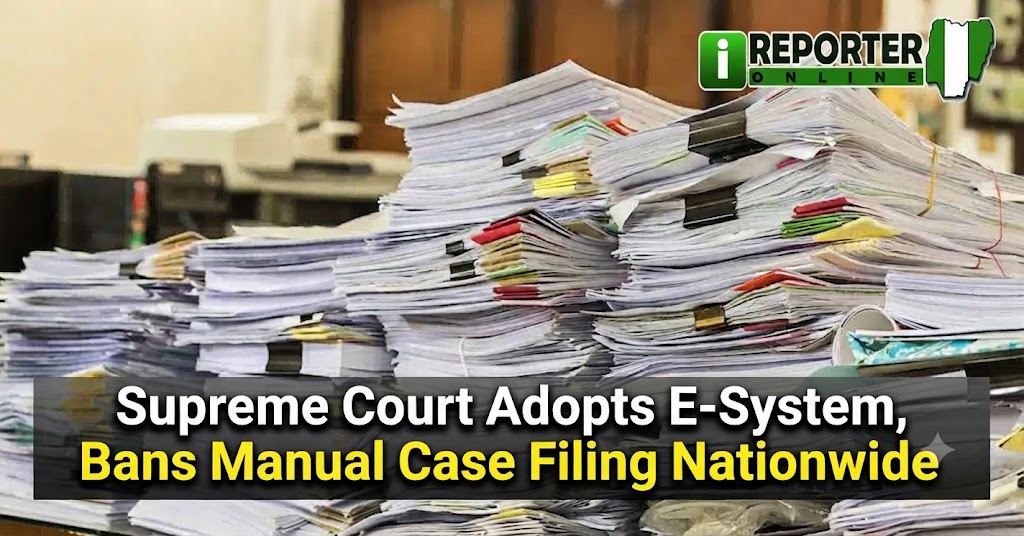
Nigeria’s judiciary has made a significant leap toward digital transformation with the introduction of an electronic case filing system, officially putting an end to manual case filing at the Supreme Court.
According to Ireporter Online, the Chief Justice of Nigeria (CJN), Justice Kudirat Kekere-Ekun, disclosed this development on Wednesday during the official unveiling of the Nigerian Case Management System held at the Supreme Court headquarters in Abuja.
She explained that the new electronic platform takes immediate effect and represents a major milestone in the ongoing modernization of Nigeria’s justice delivery system.
Justice Kekere-Ekun noted that the reform was necessary as judicial systems around the world increasingly adopt technology to boost efficiency, transparency, and accessibility in the administration of justice. She stressed that modern justice administration now goes beyond the strict interpretation of laws and requires institutions that are efficient, transparent, accountable, and responsive to court users.
She further emphasized that Nigeria’s judiciary must not lag behind global advancements in technology-driven justice delivery, adding that courts worldwide are leveraging digital tools to enhance case management, improve access to justice, safeguard records, and ensure faster resolution of disputes.
The CJN also revealed that the implementation of the Nigerian Case Management System would be supported by new Practice Directions titled the Supreme Court (Mandatory Upload of Electronic Copies of Processes, Records of Appeal and Other Matters) Practice Directions, 2026.
She expressed confidence that the initiative would significantly improve case handling, strengthen record preservation, and speed up the resolution of cases before the apex court.
Meanwhile, the Chief Registrar of the Supreme Court, Kabiru Akanbi, stated that the court would now operate a fully digital registry in line with the reform agenda. He urged lawyers, litigants, and other stakeholders to embrace the new system and align with the judiciary’s digital transformation drive.
The adoption of the electronic filing system is regarded as one of the most notable reforms in Nigeria’s judicial history in recent years, with expectations that it will reduce delays, enhance efficiency, and improve overall access to justice.







Comments
0 comments