


We Did Not Betray El-Rufai” — Former Allies Explain Return To APC
 Follow us on Google News
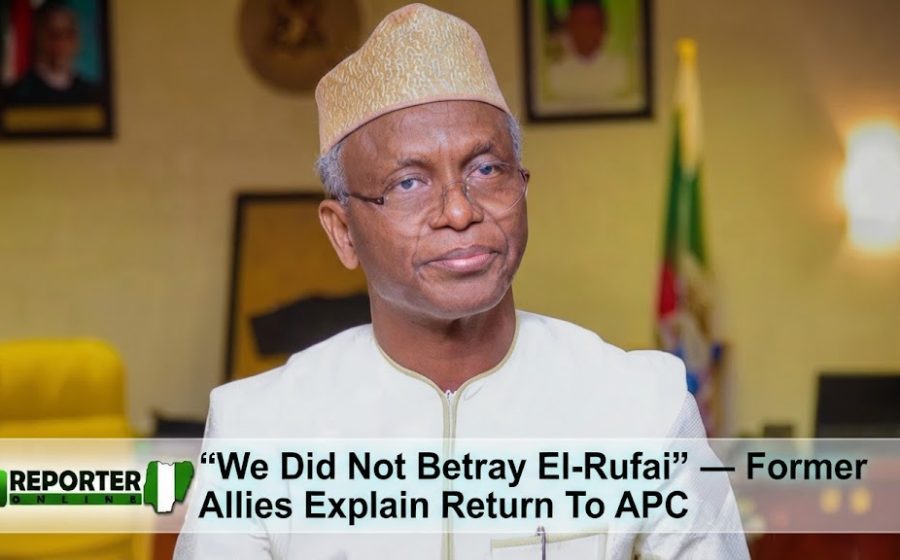
Former political associates and grassroots allies of former Kaduna State Governor Nasir El-Rufai have rejected claims that they betrayed him, explaining that their decision to return to the All Progressives Congress (APC) followed years of political disagreements and what they described as marginalisation.
According to Ireporter Online, the former allies, under the aegis of Kaduna De-Initiative, said they supported, campaigned for and defended El-Rufai while helping to build political structures across Kaduna State during his time in office.
The group, which includes former Deputy Speaker of the Kaduna State House of Assembly Mukhtar Isa Hazo, former Kaduna State Social Democratic Party chairman Nasiru Abdullahi Maikano, former commissioners Ja’afaru Sani, Shehu Usman Makarfi and Abdu Kwari, as well as former Chief of Staff Bashir Saidu, said their relationship with the former governor gradually deteriorated.
They said the decision to return to the APC followed Governor Uba Sani’s reconciliation initiative and was aimed at taking responsibility for their political future and that of their supporters.
The former allies rejected descriptions of them as disgruntled politicians seeking relevance, saying their members had contested elections, mobilised communities and built political networks across Kaduna State’s 23 local government areas.
They maintained that they did not abandon El-Rufai but believed he had abandoned the political understanding that previously bound them together.
According to the group, their differences with the former governor became more pronounced after his re-election in 2019, when some of his former political associates allegedly felt increasingly excluded from decision-making.
They also alleged that members of El-Rufai’s family gradually gained greater influence in government affairs.
The group stressed that its concern was not El-Rufai’s decision to rely on family members or trusted associates, but what it described as the growing influence of family interests and the weakening of the wider political structure that had supported his administration.
The former allies said their relationship with El-Rufai was already seriously strained by 2023 and deteriorated further after he left office.
They identified the politics surrounding the 2027 governorship contest on the platform of the African Democratic Congress (ADC) as the final point of disagreement.
According to the group, former commissioner Ja’afaru Sani was regarded by their political camp as the preferred successor and the figure around whom their political structure would be organised for the 2027 governorship election.
They alleged that El-Rufai, however, supported Isa Ashiru, whom they described as a former political rival of the ex-governor.
Ashiru subsequently emerged as the ADC governorship candidate, defeating Sani in the party’s primary. Sani later rejected the result and alleged irregularities.
The former associates argued that El-Rufai had the right to make his political choices, but maintained that they also had the right to determine their own political direction.
They said political loyalty should not be regarded as a permanent obligation and that their decision to realign was based on their assessment of their political interests and responsibilities to their supporters.
The group further rejected the suggestion that El-Rufai single-handedly built the political structures that supported his electoral victories in Kaduna, arguing that established politicians, grassroots organisers and political networks existed in the state before his emergence as a dominant political figure.
The former allies said their latest political realignment was not motivated by hatred or revenge but by what they described as the need to take responsibility for their future and that of their supporters.
They confirmed that they had accepted Governor Uba Sani’s reconciliation initiative and returned to the APC, with their political structures and grassroots supporters expected to form part of the realignment.
The group said it was not interested in turning its disagreement with El-Rufai into a personal conflict but insisted that its members would not apologise for exercising their political independence.
The claims and explanations regarding the breakdown of the former political alliance were made by the group and represent its account of the events.



Comments
0 comments