


2027 Race: Atiku, Obi, Amaechi Divide ADC as Power Struggle Intensifies
 Follow us on Google News
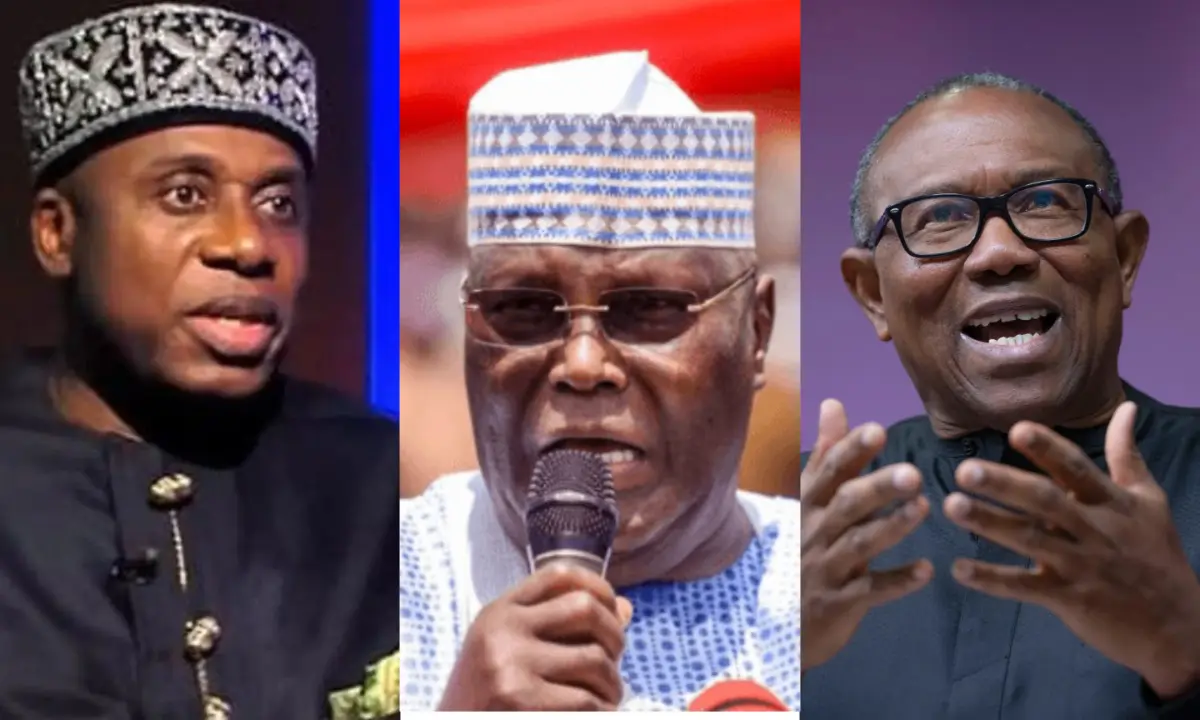
The unfolding presidential race within the African Democratic Congress (ADC) ahead of the 2027 elections has stirred internal discord as the ambitions of former Vice President Atiku Abubakar, ex-Anambra State Governor Peter Obi, and former Rivers State Governor Rotimi Amaechi continue to polarize supporters and stakeholders in the coalition. With just under two years to the polls, the coalition, designed to challenge the ruling All Progressives Congress (APC) and Peoples Democratic Party (PDP), is now battling internal fractures.
Although Atiku has not made an official declaration, Obi and Amaechi have publicly declared their interest in contesting the presidency. Obi recently reaffirmed his commitment to running for president in an interview, stressing that he was qualified and not in talks to be anyone’s running mate. Similarly, Amaechi has stated his intent to contest on the ADC platform, promising to serve only a single term to honor zoning expectations.
These declarations have led to growing division within the coalition. Party insiders reveal that factions are forming around each of the three prominent figures, with Obi’s supporters—largely composed of the Obidient Movement—insisting he must carry the flag, while Atiku loyalists argue that his national appeal and experience make him the most formidable opponent to President Tinubu.
Veteran journalist Dele Momodu threw his weight behind Atiku, citing his expansive network, investments in education and agriculture, and political consistency. He praised Obi as a friend and a good candidate but stressed that Atiku possesses the numbers to unseat Tinubu, particularly given the grievances currently brewing in the northern region.
Meanwhile, Amaechi’s ally, Chief Eze Chukwuemeka Eze, expressed confidence in his chances, depending on how ADC delegates cast their votes. On the other hand, Obi’s camp, led by Dr. Yunusa Tanko, emphasized his wide support base and suitability to unify the country, warning that the coalition risks collapse if it fails to present Obi as its candidate.
Tanko dismissed concerns about internal disputes, insisting the democratic contest will produce the best candidate. He stressed that Obi’s candidacy represents not just a political choice, but a moral and generational shift that resonates with Nigerians, especially youths dissatisfied with traditional politics.
The battle has spilled into social media, where fierce exchanges among loyalists have become common. Pro-Obi groups argue that failing to choose Obi would lead to the collapse of the coalition’s support base, while Atiku’s supporters cite his track record and readiness to govern.
Public affairs analyst Nduka Odo warned that while supporters can energize the coalition, they also pose a risk. He noted that Obi’s support base is largely independent and may not follow the party line if he’s not selected. In contrast, he believes Atiku’s support network—composed of traditional politicians—could be swayed through internal negotiations and patronage.
According to Odo, Obi’s supporters operate more as a movement than a typical political structure and cannot be easily redirected. He described the ADC coalition as a political marriage between strange bedfellows, where unity will be tested by competing ambitions. He cautioned that while Amaechi’s current support is minimal, Obi’s passionate base could become the greatest asset—or liability—depending on how the party handles its 2027 ticket.
As the debate rages, the ADC faces a critical decision point: whether to gamble on political experience and structure with Atiku, the promise of renewal with Obi, or the compromise candidacy of Amaechi. The stakes are high, and the path the coalition chooses could determine whether it remains a credible threat to the status quo—or fractures before it even begins.






Comments
0 comments