

Dangote Refinery to Build 1.6m Barrel Fuel Storage Facility in Namibia
 Follow us on Google News
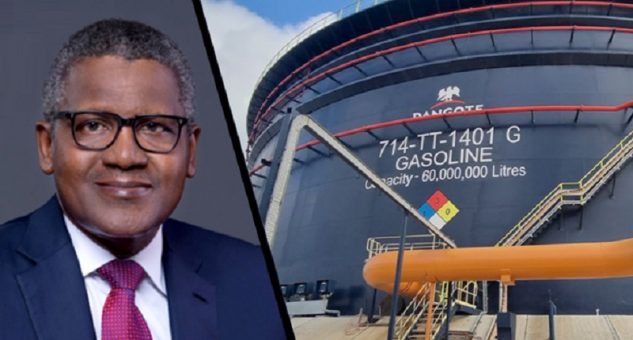
The Dangote Petroleum Refinery is set to construct fuel storage tanks in Namibia with a combined capacity of 1.6 million barrels of gasoline and diesel, according to insider sources. The development is part of a strategic effort to expand fuel distribution across southern Africa, including Botswana, Namibia, Zambia, Zimbabwe, and potentially southern Democratic Republic of Congo.
The plan, first reported by Reuters on Wednesday, signals the company’s intention to dominate Africa’s refined fuel market. The 650,000 barrels-per-day refinery, located in Nigeria and developed by Africa’s richest man, Aliko Dangote, began operations in 2024 and has been aggressively expanding its production capacity and market presence.
Though the cost of the Namibian storage tank project was not disclosed, construction is expected to begin soon in Walvis Bay, a critical port city in Namibia. Officials from the Namibia Ports Authority confirmed that the facility will be located within the Walvis Bay harbour.
A source also noted that a recent Dangote petrol shipment was headed to Asia, marking the refinery’s first gasoline export outside West Africa—a sign of its growing global reach.
Once at full operational capacity, the refinery is expected to meet Nigeria’s domestic fuel demand and export surplus to neighboring and overseas markets. Nigeria has already significantly reduced its importation of refined fuel, thanks to output from the Dangote plant.
The proposed Namibian storage facility reflects Dangote’s long-term strategy to reshape regional energy trade, reduce dependency on foreign refineries, and provide stable fuel access to underserved African markets.
This expansion also aligns with broader economic goals across the continent, including job creation, inflation control, and logistics improvement tied to regional energy self-sufficiency.
While the Dangote Group has not officially commented on the project, the move is seen as a pivotal step toward solidifying Nigeria’s leadership in Africa’s downstream oil sector and transforming the energy supply chain across the continent.






Comments
0 comments