

Local news
The Untold Story of General Sani Abacha’s Last Day: A Sudden End to a Controversial Reign

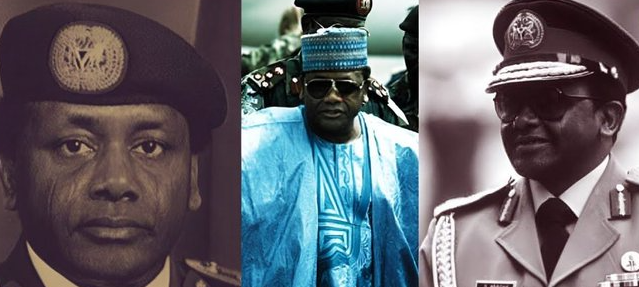
On June 8, 1998, Nigeria witnessed a significant turning point in its history with the sudden death of General Sani Abacha, a ruler whose tenure was marked by both controversy and stark challenges. As one of the country’s most notorious military dictators, Abacha’s death left behind a complex legacy that continues to shape Nigeria’s political landscape. This article explores the events leading to that fateful day, shedding light on Abacha’s last moments and the immediate aftermath of his passing.
The Context of Abacha’s Rule
General Sani Abacha seized power in November 1993 after the military annulled the June 12 elections, which were believed to have been won by MKO Abiola. Abacha’s regime was characterized by severe human rights abuses, suppression of dissent, and rampant corruption. His administration was also known for its heavy-handed approach towards political opponents, leading to widespread fear among the populace.
Despite his authoritarian rule, Abacha maintained a facade of governance. He implemented some economic reforms and infrastructure projects, yet these were overshadowed by accusations of embezzlement and oppression. As dissent grew, so did the opposition against him, culminating in heightened tensions within Nigeria.
The Final Days
In the days leading up to June 8, 1998, General Abacha’s health was reportedly deteriorating. There were whispers of his declining condition, though official reports downplayed these claims. On the morning of his death, he attended a meeting at the presidential villa in Abuja. According to accounts, he was seen engaging with officials, appearing to be in control of affairs.
However, later that day, reports emerged that Abacha had collapsed in his private residence. The circumstances surrounding his collapse were shrouded in secrecy, with conflicting narratives about what transpired. Some claimed he suffered a heart attack, while others speculated about foul play. Despite immediate medical attention, General Sani Abacha was pronounced dead shortly after his collapse.
The Aftermath
Abacha’s death sent shockwaves across Nigeria and the international community. The suddenness of his passing created a power vacuum, leading to a scramble among military leaders and political factions. Within hours, General Abdulsalami Abubakar was appointed as the new head of state. This transition marked the beginning of a delicate process aimed at restoring civilian rule in Nigeria.
In the wake of Abacha’s death, a wave of relief swept through many Nigerians who had lived under his oppressive regime. However, there were also concerns about the future direction of the country. The potential for instability loomed large as various factions vied for power, and uncertainty lingered about the direction of Nigeria’s governance.
The final day of General Sani Abacha marked the end of a tumultuous chapter in Nigeria’s history. His sudden death raised numerous questions and left a lasting impact on the nation. As Nigeria navigated the challenges of transitioning to democracy, Abacha’s legacy continued to influence political discourse. Understanding the events leading to his death is essential in grasping the complexities of Nigeria’s ongoing struggle for democratic governance and human rights.
The memory of that day serves as a reminder of the fragility of power and the profound changes that can unfold in an instant. As Nigeria continues to evolve, the lessons from Abacha’s reign remain crucial in the pursuit of a better future.


-

 Latest News2 weeks ago
Tinubu Govt Declares Nationwide Public Holiday For Nigerians
-
 Entertainment1 week ago
₦800,000, ₦5m, $11,000: Ogogo’s Daughter Accuses Nigerians Of Exploiting Father’s Cancer
-

 Latest News1 week ago
Uzodinma Won’t Market Tinubu To Igbos’ – Oshiomhole Reveals Who Should Help
-

 Latest News2 weeks ago
APC Chairman Collapses, D!es
-

 Latest News1 week ago
FG Announces New Appointment
-
 Latest News1 week ago
Tinubu Renews Appointments In NTA, NAN
-
 Latest News1 week ago
Tinubu Reviews APC Campaign Council Over ‘Corrupt’ Names — See Who Escaped the Shake-Up
-
 Entertainment1 week ago
‘Please Forgive Me’ – Ijebu Begs Colleagues After Ogogo’s D**th
-

 Latest News6 days ago
Malami Sends Strong Message To ADC Members Ahead Of 2027 Elections
-

 Latest News2 weeks ago
Full List: Meet Members Of New Fake Agency Uncovered By ICPC
-

 Latest News2 weeks ago
I Respect Tinubu’ – Dele Momodu Vows Not To Insult President
-

 Latest News2 weeks ago
TINUBU UNLEASHES 2027 CAMPAIGN MACHINE: YARI TAKES COMMAND, UZODIMMA GETS KEY ROLE, OSHIOMHOLE TO LEAD MOBILISATION