

What To Know As ECOWAS Defence Chiefs Agree ‘D-day’ For Niger Military Intervention
 Follow us on Google News
What To Know As ECOWAS Defence Chiefs Agree ‘D-day’ For Niger Military Intervention
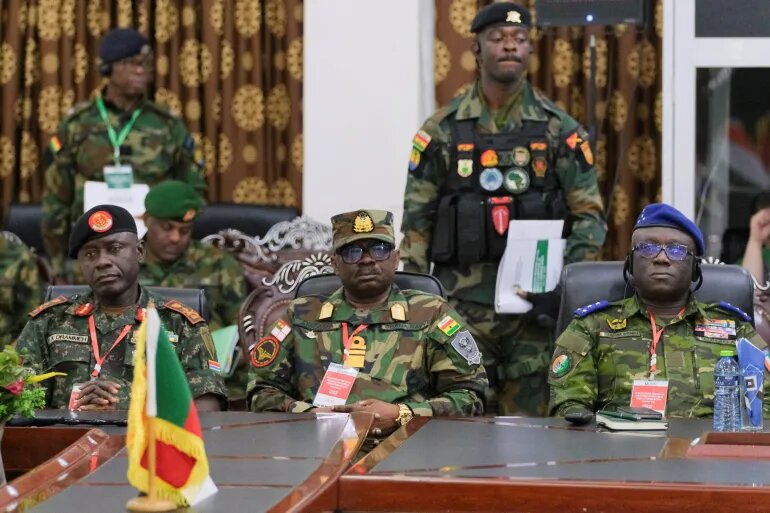
The primary regional group in West Africa has established a designated date, referred to as a “D-day,” for a potential military intervention aimed at restoring democracy in Niger.
This comes after military leaders overthrew and detained President Mohamed Bazoum last month.
The Economic Community of West African States (ECOWAS) decided on Friday to activate a standby force if diplomatic efforts do not yield results. The exact date of the “D-day” was not disclosed by a senior ECOWAS official.
ECOWAS Commissioner for Political Affairs, Peace, and Security, Abdel-Fatau Musah, conveyed during the closing of a two-day meeting of West African army chiefs in Accra, Ghana, that the organization is prepared to proceed with intervention if required.
Read Also Niger’s Military Leader Called Tinubu’s Nigerian Government ‘Illegitimate’? – Fact Emerge
He stressed that diplomatic engagement with Niger’s military leaders is ongoing and emphasized that mediation efforts have not been abandoned.
The army chiefs gathered to refine the details of a potential military operation to reinstate President Bazoum if ongoing negotiations with the coup leaders prove unsuccessful.
Read Also BREAKING: Government Declares Fresh Public Holiday (SEE DATE)
While the majority of ECOWAS member states are ready to contribute to the joint force for intervention, Cape Verde and countries currently under military rule—Mali, Burkina Faso, and Guinea—are exceptions, as indicated by a bloc official.
However, analysts note that any prospective military intervention faces considerable political and legal obstacles before implementation. Approvals from participating states’ parliaments and legislative bodies are necessary. Nigeria and other countries have already voiced opposition to such military action.
Mutaru Mumuni, executive director at the West Africa Centre for Counter-Extremism, highlighted the mixed signals from ECOWAS, with the organization maintaining both a focus on military intervention and an openness to dialogue and negotiation. Mumuni underscored that a military option could be unpopular within Niger and the broader region.
Niger’s coup has generated international concern, particularly regarding President Bazoum’s conditions in detention. ECOWAS has historically struggled to prevent coups in the region.
The ongoing situation raises dilemmas for the organization, as potential use of force could exacerbate instability in the Sahel, an impoverished region already grappling with armed groups.
Additionally, Niger’s strategic significance due to its uranium and oil reserves, as well as its role in the fight against armed groups associated with al-Qaeda and ISIS, adds complexity to the situation.



Comments
0 comments