


Latest News
What You Need To Know About Hezbollah, The Powerful Iran-backed Group On Israel’s Border

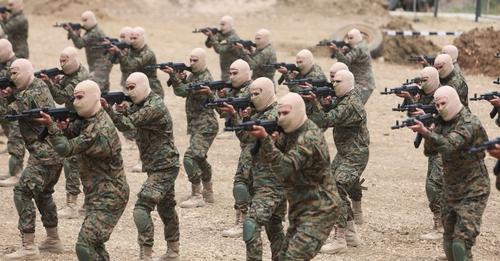
What You Need To Know About Hezbollah, The Powerful Iran-backed Group On Israel’s Border
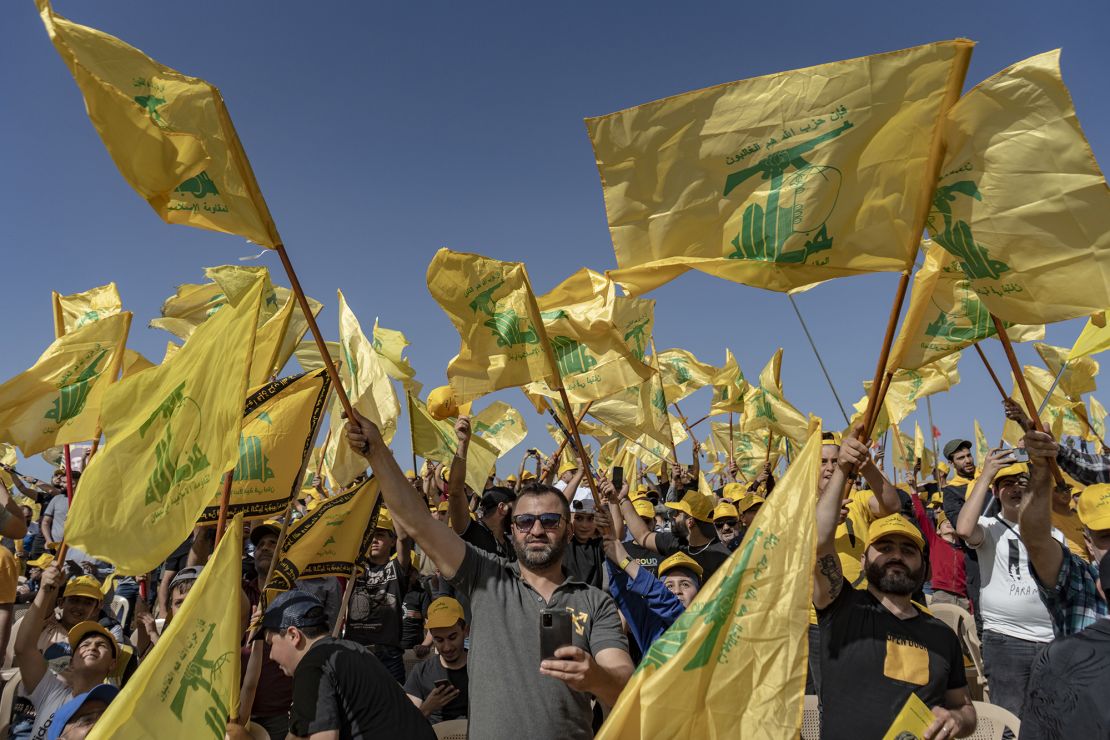
People with Hezbollah flags at a rally in Baalbek in Lebanon’s Bekaa Valley in May 2022.
Hezbollah, an Iran-backed Islamist movement, wields one of the most formidable paramilitary forces in the Middle East. Nestled along the Israel-Lebanon border, this group holds the potential to emerge as an unpredictable force in the ongoing conflict between Hamas and Israel. Moreover, their involvement could ignite a wider regional conflagration.
The initial spark for this conflict came from Hamas’ aggressive assaults on Israel, leading to a death toll that Israeli authorities estimate at 1,400 individuals. In retaliation, Israeli airstrikes have claimed the lives of over 3,500 people in Gaza, according to reports from Palestinian health officials.
This escalating violence has sent shockwaves reverberating along the Lebanon-Israel border. Hezbollah and Israel have been locked in a simmering cycle of retaliatory exchanges since the onset of the conflict, creating an atmosphere of heightened tension across the entire region.
In light of these developments, it is imperative to grasp additional key facets about Hezbollah’s role and impact in the broader geopolitical landscape.
Read Also BREAKING: US Navy Intercepts Three Missiles Fired From Yemen ‘Potentially’ At Israel (DETAILS)
The origins of the group
Hezbollah emerged in the aftermath of Israel’s extensive incursion into Lebanon in 1982, a campaign that resulted in the occupation of nearly half of Lebanon’s territory, including its capital, Beirut. In the city, Israeli forces, in collaboration with right-wing Christian Lebanese militias aligned with Israel, laid siege to the western district to expel Palestinian militants.
Israel’s military endeavor led to a devastating toll, with reports at the time estimating over 17,000 casualties. A subsequent Israeli inquiry, known as the Kahan Commission of Inquiry, investigated a horrific massacre at the Beirut refugee camps of Sabra and Shatila—an event etched as one of the bloodiest in recent regional history. The commission held Israel indirectly accountable for the atrocity, carried out by right-wing Christian Lebanese combatants.
Estimates regarding the death toll at Sabra and Shatila range from 700 to 3,000.
As a multitude of Palestinian fighters exited Lebanon, a contingent of Shia Islamist combatants, trained by the nascent Islamic Republic of Iran, emerged on the country’s intricate political scene. Despite their modest origins, this faction wielded a disproportionately forceful and violent influence. In 1983, two suicide bombers linked to this group targeted a US marine barracks in Beirut, claiming the lives of nearly 300 US and French personnel, along with some civilians.
The following year, fighters linked to Iran carried out a bombing at the US Embassy in Beirut, resulting in 23 casualties. By 1985, these militants coalesced around a newly established entity: Hezbollah.
Hezbollah openly professed its ideological alignment with Tehran and received a steady stream of financial support from the Islamic Republic. This bolstered Hezbollah’s prominence, positioning it as an active participant in Lebanon’s civil war, which concluded in 1990. The group also led a campaign against Israeli forces that had occupied southern Lebanon, ultimately compelling their withdrawal in 2000.
A terror designation
In Lebanon, Hezbollah holds an official status as a “resistance” organization tasked with countering Israel, an entity classified by Beirut as an adversary. However, in much of the Western world, Hezbollah has been labeled a terrorist group, largely due to Argentina attributing the 1992 attack on the Israeli Embassy in Buenos Aires—resulting in 29 deaths—and the 1994 bombing of a Jewish community center in the same city, causing 85 casualties, to the group.
Both Iran and Hezbollah have consistently denied responsibility for these assaults.
In the wake of the 2011 pro-democracy Arab Spring uprisings, the region plunged into proxy conflicts that spread across a substantial part of the Middle East. Hezbollah actively engaged in these conflicts, aligning with Iran-backed forces in Syria and Iraq. Consequently, it found itself designated as a terrorist organization by numerous Arab nations.
However, this designation did little to diminish the group’s influence. Throughout the protracted proxy confrontations, Hezbollah underwent a remarkable transformation, transitioning from guerrilla insurgents into a formidable regional fighting force.
How Hezbollah relates to Hamas
Hezbollah and Hamas have not always shared the same stance. These two Islamist groups found themselves on opposing sides during Syria’s uprising-turned-civil war. Hezbollah supported Syrian leader Bashar al-Assad, while Hamas militants backed the predominantly Sunni opposition.
It’s important to note that Hezbollah follows the Shia branch of Islam, while Hamas identifies as Sunni.
As the Syrian conflict started to wind down in most regions of the country toward the latter part of the previous decade, Hamas and Hezbollah chose to put their differences aside. Hassan Nasrallah, the leader of Hezbollah, has frequently commended the growing alliance between the two organizations.
Leaders of Hamas have held multiple meetings with Nasrallah over the past year, and it’s widely acknowledged that Hamas has strengthened its ties with Tehran.
A growing regional power isolated at home
As Hezbollah engaged in battles beyond its borders, internal challenges arose in Lebanon. The nation experienced recurring cycles of economic and political crises over the past two decades, eroding the group’s popularity beyond its Shia support base.
Hezbollah found itself grappling with broader economic issues that it struggled to rectify. It positioned itself as a barrier against Lebanese protests calling for change in a political establishment widely accused of corruption. At times, it even deployed its supporters to confront peaceful demonstrators.
Furthermore, Hezbollah has been largely successful in thwarting a judicial inquiry into the devastating Beirut port explosion that wreaked havoc on large parts of the city in August 2020.
However, these developments might not significantly impact the group’s objectives. Hezbollah arguably stands as Iran’s most effective non-state ally. As its regional influence continues to grow, it could potentially become an even more formidable adversary to its longstanding rival, Israel.
Why Hezbollah could become embroiled in the Hamas-Israel war
Hezbollah, an Iran-backed militant group, emerged in the aftermath of Israel’s invasion of Lebanon in 1982. During this conflict, Israeli forces seized a significant portion of Lebanese territory, including parts of the capital, Beirut. The operation led to a considerable loss of life, with estimates exceeding 17,000 deaths. Additionally, an Israeli inquiry, known as the Kahan Commission, held Israel indirectly responsible for the Sabra and Shatila massacre, a brutal event in the region’s recent history, which claimed the lives of hundreds, possibly thousands. This period marked the genesis of Hezbollah.
Following the withdrawal of many Palestinian fighters from Lebanon, a faction of Shia Islamist combatants, trained by Iran, emerged on the country’s political scene. This group, while initially modest in size, wielded significant influence through violent means. In 1983, two suicide bombers linked to this faction attacked a US marine barracks in Beirut, resulting in nearly 300 casualties. Subsequent incidents, including the bombing of the US Embassy, further established Hezbollah’s presence.
Hezbollah openly aligns itself with Tehran and receives substantial financial support from Iran. This bolstered the group’s prominence, enabling it to actively participate in Lebanon’s civil war and spearhead efforts against Israeli forces occupying southern Lebanon, ultimately driving them out in 2000. This period marked Hezbollah’s evolution from a guerrilla insurgency into a regional fighting force. Despite being officially classified as a “resistance” group against Israel by Lebanon, many Western countries designate Hezbollah as a terrorist organization, citing their involvement in various acts of terror, including the 1992 attack on the Israeli Embassy in Buenos Aires and the 1994 bombing of a Jewish community center.
In recent years, Hezbollah’s influence and power have expanded, primarily due to its active involvement in proxy wars across the Middle East. This led to its designation as a terror organization by several Arab nations. While internal and external pressures have weighed on the group, including cycles of economic and political crises in Lebanon, Hezbollah remains a formidable force. Its role in the broader geopolitical landscape and its potential impact on the Hamas-Israel conflict could have significant implications for the region.
Never Miss Any News, Join Our WhatsApp Group With This Link Below

-
 Latest News7 days ago
Tinubu Summons 76 Osun APC Leaders Over Ribadu’s Explosive Intelligence Report
-

 Latest News1 week ago
Tinubu Picks Gbajabiamila, Soludo, Zulum, Others For Canada Investment Mission
-
 Latest News2 weeks ago
Presidency Fires Back At Catholic Bishops
-

 Latest News1 week ago
Tinubu Approves Fresh Civil Service Recruitment Exercise
-

 Latest News1 week ago
Tinubu Launches ₦216bn Osun–Oyo Road Projects
-

 Latest News2 weeks ago
Tinubu Govt Rolls Out Fresh Rules For Ministers, Top Officials
-

 Latest News2 weeks ago
Fuel Price Drops As MRS, Others Slash Petrol Pump Price
-
 Latest News6 days ago
Army Orders Abuja Residents To Vacate Homes Over Security Threat
-

 Latest News4 days ago
Okpebholo Sacks SUBEB Chairman, Names Immediate Replacement
-

 Latest News2 weeks ago
Breaking: Jonathan Holds Closed-Door Meeting With Tinubu At Aso Rock
-

 Latest News3 days ago
Tinubu Approves New Ports Regulator For Nigeria
-

 Latest News2 weeks ago
EFCC Moves To Take Over Abubakar Malami-Linked Properties