

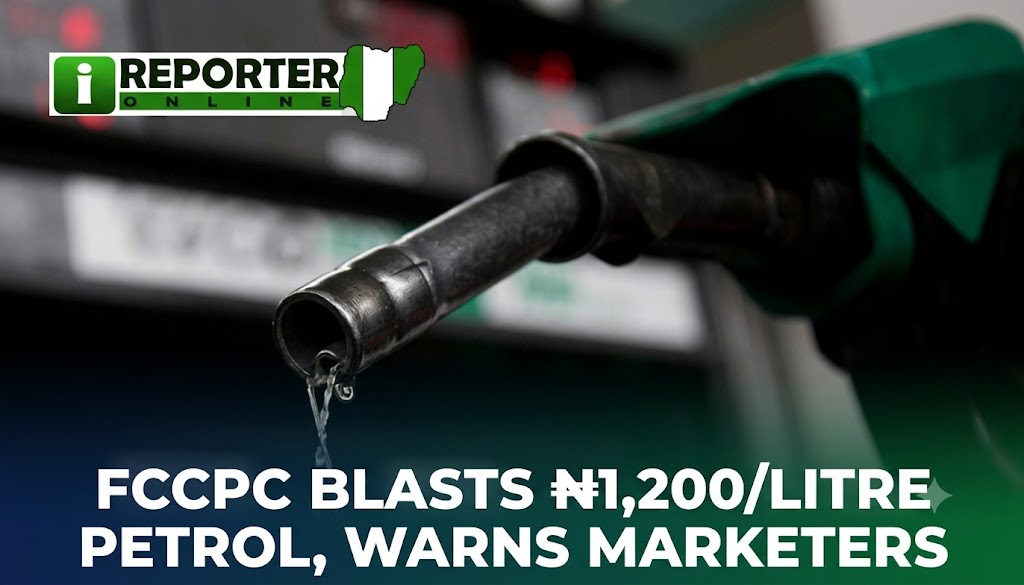
FCCPC Blasts ₦1,200/Litre Petrol, Warns Marketers
 Follow us on Google News
The Federal Competition and Consumer Protection Commission (FCCPC) has raised concerns over the persistent high cost of petrol at filling stations across Nigeria despite a decline in global crude oil prices.
According to reports, the Commission noted that fuel marketers responded swiftly by increasing pump prices when international crude prices surged during heightened tensions in the Middle East earlier this year. During that period, the price of petrol reportedly rose from between ₦800 and ₦900 per litre to as high as ₦1,350 and ₦1,500, while diesel sold for nearly ₦2,000 per litre.
However, the FCCPC observed that although global oil prices have fallen following the easing of geopolitical tensions and the reopening of the Strait of Hormuz, consumers are yet to experience corresponding reductions in petrol prices. The Commission stated that petrol is still being sold for an average of ₦1,200 per litre nationwide, with some local refiners maintaining gantry prices ranging between ₦1,025 and ₦1,075 per litre.
The agency warned that it would not tolerate unfair pricing practices, stressing that its review of pricing across local refiners, depot operators, marketers and retail outlets showed only marginal reductions that do not reflect the significant drop in global crude oil prices.
In a statement issued by the Commission’s Director of Corporate Affairs, Ondaje Ijagwu, the Executive Vice Chairman and Chief Executive Officer of the FCCPC, Tunji Bello, questioned why the benefits of lower international oil prices had not been passed on to Nigerian consumers.
While acknowledging that domestic fuel prices are influenced by several factors, including refining costs, foreign exchange fluctuations, logistics, financing and distribution expenses, Bello maintained that a competitive market should ensure that any reduction in operational costs is quickly reflected in pump prices.
He further warned that market liberalisation does not exempt businesses from complying with fair competition laws or respecting consumers’ rights. Bello said the Commission would investigate and sanction any company found engaging in anti-competitive practices, consumer exploitation or any other violations of the Federal Competition and Consumer Protection Act.
The FCCPC also encouraged Nigerians to report suspected cases of unfair pricing, anti-competitive conduct and other exploitative market practices through its official complaint channels, reaffirming its commitment to protecting consumers and promoting fair competition in the downstream petroleum sector.







Comments
0 comments