


Latest News
BREAKING: ‘I Have Made The Decision To Step Down As President Effective August’


BREAKING: ‘I Have Made The Decision To Step Down As President Effective August’
The president of Stanford University has stepped down in the wake of an independent investigation that found “substandard practices” in research papers he was involved in.
Marc Tessier-Lavigne, the leader of the prestigious California university, issued a statement on Wednesday saying he would leave his post, effective August 31.
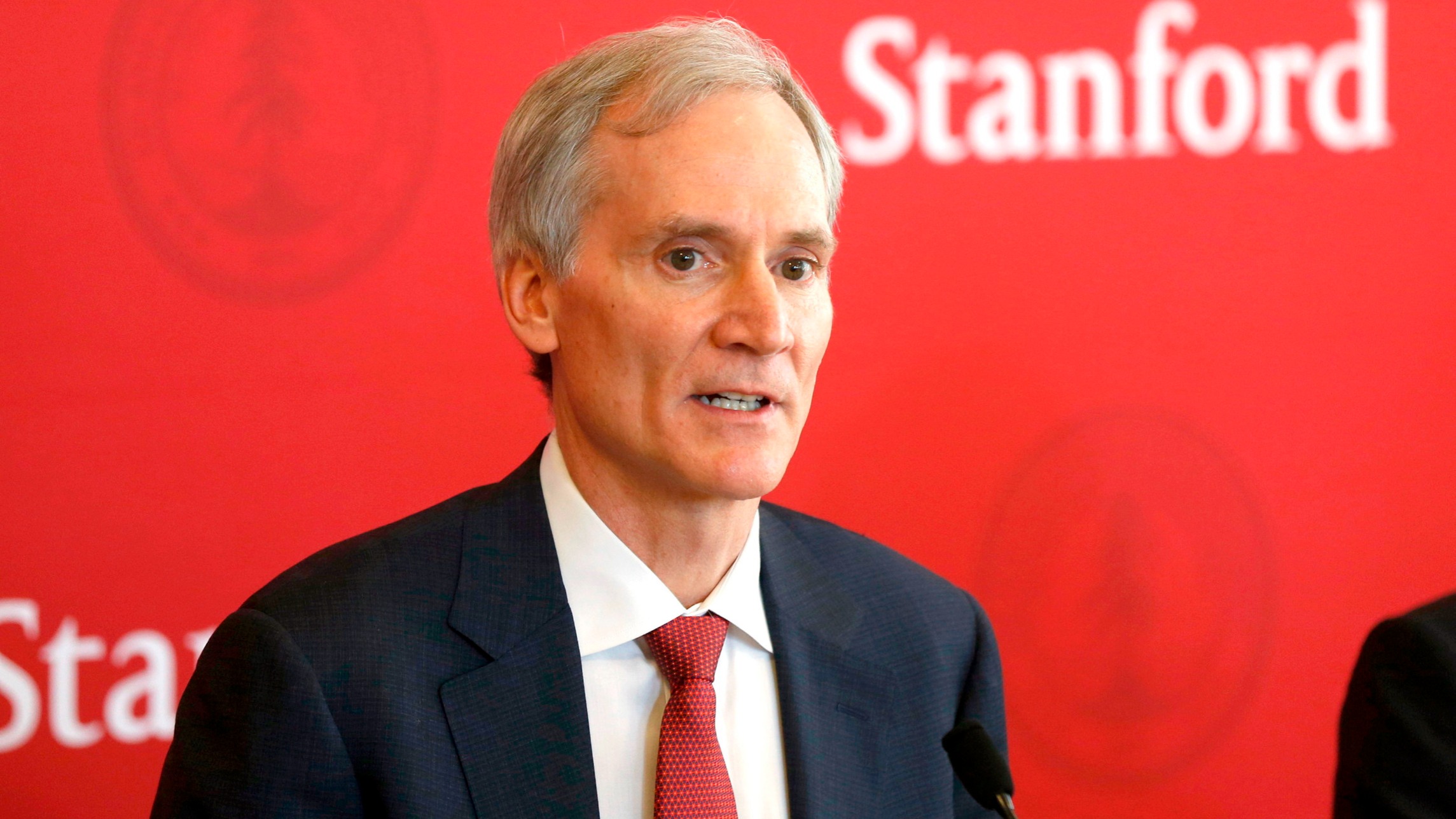
Media reports in the United States had raised questions about “falsified data” in research linked to Tessier-Lavigne, a prominent neuroscientist from Ontario, Canada.
But on Monday, a scientific panel commissioned by Stanford’s Board of Trustees cleared Tessier-Lavigne of participating in any misconduct, though it did find “serious flaws” in the research papers reviewed.
“The Panel has identified evidence of manipulation of research data in at least four of the five primary papers at issue,” it wrote in a report.
“But the Panel did not find evidence to conclude that Dr Tessier-Lavigne engaged in, directed or knew of the misconduct when it occurred.”
The group also found that “a scientist exercising reasonable care could not have been expected” to detect the research flaws at the time, though it did fault Tessier-Lavigne for failing to “decisively and forthrightly correct mistakes in the scientific record”.
The Stanford Daily, a campus newspaper, published a series of articles about the allegations of research falsification [File: Jeff Chiu/AP Photo]
The panel — comprised of neuroscientists, biologists and one Nobel laureate — examined 12 research papers Tessier-Lavigne participated in, seven in which he was a “non-principal author” and five where he was listed among the leads.
The review, it said, involved filtering through 50,000 documents and holding more than 50 meetings with witnesses and individuals involved in the scandal.
Questions about Tessier-Lavigne’s scientific work started to emerge on the platform PubPeer, where scientists can discuss and evaluate research online.
There, commenters like scientist Elisabeth Bik raised concerns as far back as 2015 about images in Tessier-Lavigne’s research that appeared to be digitally altered.
One research paper in particular, published in the journal Nature in 2009, sought to identify causes for brain degeneration in Alzheimer’s patients.
Tessier-Lavigne’s employer at the time, the biotech company Genentech, hailed the paper as “groundbreaking research” that offered “an entirely new way of looking at the cause of Alzheimer’s disease, the sixth leading cause of death in the United States”.
“Because of this research, we are working to develop both antibodies and small molecules that may attack Alzheimer’s from a novel entry point and help the millions of people who currently suffer from this devastating disease,” the company wrote in its annual report.
But scientists struggled to reproduce the results documented in the 2009 paper, leading to questions about the accuracy of its data — or whether it had been falsified altogether.
The Stanford Daily, a student-run campus newspaper, helped bring these concerns to light with a series of articles over the last year, quoting Bik and other scientists, some of whom chose to remain anonymous.
While Monday’s independent review ultimately found Tessier-Lavigne was “not reckless” in his scientific practice, it did affirm that “there was apparent manipulation of research data by others”.
Timely corrections, retractions and “forthright and transparent actions” would have “better served science and all concerned”, the panel said.
It called for “significant action” to “correct the scientific record”. It also noted that Tessier-Lavigne now plans to retract several of the publications.
For his part, Tessier-Lavigne has continued to deny allegations of unethical behaviour, noting that his career spans three decades and hundreds of research papers.
“I am gratified that the Panel concluded I did not engage in any fraud or falsification of scientific data,” he said in his resignation statement on Wednesday.
“As I have emphatically stated, I have never submitted a scientific paper without firmly believing that the data were correct and accurately presented. Today’s report supports that statement.”
One of the most selective private research universities in the US, located in the heart of Silicon Valley, Stanford has a history of pumping out notable alumni, from world leaders like the United Kingdom’s Prime Minister Rishi Sunak to tech entrepreneurs like Elon Musk, who reportedly dropped out after two days.
Tessier-Lavigne has served in his role as president for nearly seven years. He will be replaced by interim president Richard Saller, starting in September.
Credit: Al Jazeera

-

 Politics6 days ago
Tinubu Makes Fresh Appointment
-

 Latest News4 days ago
Breaking: Okpebholo Backs Words With Action As Edo Moves To Establish Special Court For Cultism And Kidnapping Cases, Writes Chief Judge
-

 Latest News2 weeks ago
Abubakar Momoh Engages CCECC President At Global Infrastructure Forum In China
-

 Politics1 week ago
APC Rules Out Any Review Of 2027 Primary Election Results
-

 Latest News4 days ago
Bandits’ Captivity Death: Widow Rejects Illness Claims, Reveals What K!lled General Rabe
-

 Politics6 days ago
36 Governors Reveal Their Stance On State Police
-

 Latest News1 week ago
Obasanjo Teases Abdulsalami: “I And Gowon May Not Be Alive When You Hit 100
-

 Politics3 days ago
VIDEO: Shettima, Atiku, Masari, Governors Storm Special Prayer For Tinubu’s Late Mother
-

 Entertainment6 days ago
Dayo Amusa Blasts Peter Obi: “You Can’t Criticize Government And Hide Your Plans
-

 Latest News2 weeks ago
Kidnap Suspects Reveal How They Abducted Adelabu’s Sister And Twin Sons
-

 Latest News1 week ago
You Can’t Sign Chequebooks!’ — Wike Issues Tough Warning To FCT Area Council Chairmen
-

 Latest News20 hours ago
Ojirami Shines at Night: Akoko-Edo Residents Hail Engr. Abubakar Momoh Over NDDC Solar Street Light Project