

Latest News
Concerns Grow As FIFA Bans Refillable Water Bottles At 2026 World Cup Venues

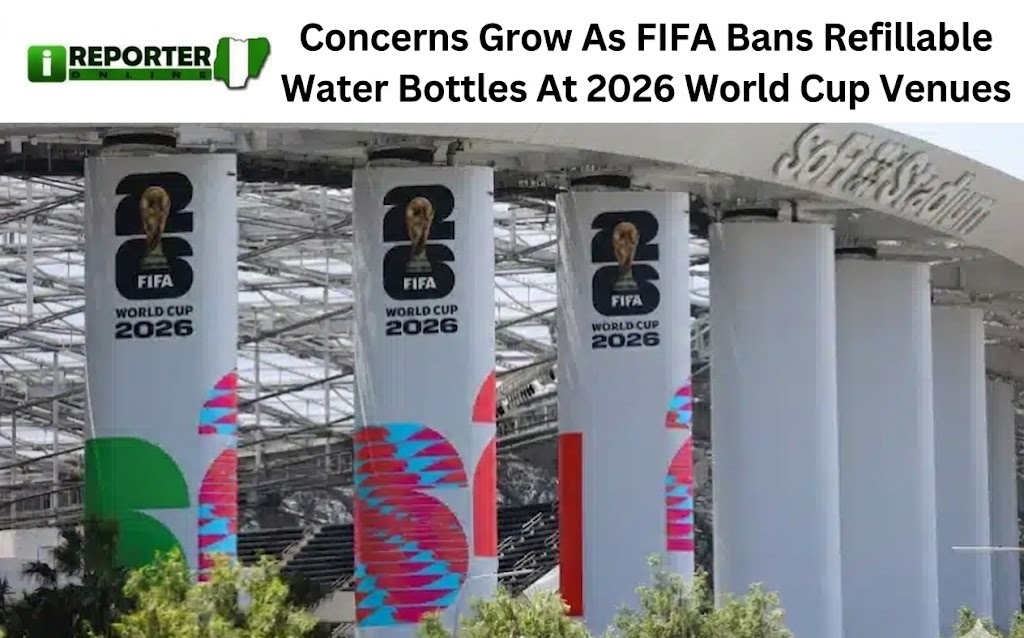
According to IReporter Online, FIFA has introduced a last-minute policy change prohibiting fans from bringing refillable water bottles into stadiums for the 2026 World Cup, a move that could compel spectators to purchase bottled water inside match venues.
The development, reported by Reuters, comes just days before the tournament, which will be jointly hosted by the United States, Canada, and Mexico.
The updated rule marks a reversal of FIFA’s earlier stadium code of conduct, which had permitted supporters to enter venues with empty, transparent, reusable plastic bottles of up to one litre in capacity. The previous guideline explicitly stated that such bottles were allowed inside stadiums.
However, the revised policy now clearly prohibits reusable water bottles altogether, stating that they are not permitted within stadium grounds.
The decision means fans attending matches may now depend on purchasing bottled water inside stadiums or using designated hydration points provided within venues.
The change has raised concerns, particularly as several fixtures are expected to take place under high temperatures in open-air stadiums.
Explaining the decision, a FIFA spokesperson told AFP that the measure was taken on safety grounds, noting that some venues already restrict outside bottles and that a uniform policy had been adopted across all stadiums. The spokesperson added that FIFA remains committed to ensuring the safety and wellbeing of players, officials, fans, volunteers, and staff, while stating that the ban is intended to reduce potential risks and injuries.
FIFA further assured that hydration support systems such as misting stations, cooling areas, fans, and water points would be available within stadium environments. It also stated that bottled water sold inside venues would be priced in line with rates at other events hosted in those stadiums.
Despite these assurances, the policy change is expected to draw criticism from supporters who may view it as an additional financial burden, especially given the already high costs associated with travel, accommodation, and match tickets.
The decision also comes amid growing concerns about extreme heat during the tournament. A recent report by the World Weather Attribution group estimated that a significant number of matches could be played under conditions exceeding dangerous heat stress levels, measured by Wet Bulb Global Temperature.
Similar concerns were raised during the FIFA Club World Cup in the United States, where spectators experienced intense heat and were also restricted from bringing water bottles into stadiums.

-

 Latest News1 week ago
Presidency Moves Against VDM Over Fake Tinubu Audio Allegation
-

 Latest News2 weeks ago
List Of APC Governorship Candidates Who Have Emerged For The 2027 Elections
-

 Politics1 week ago
Wike’s PDP Camp Unveils 2027 Presidential Candidate
-

 Latest News3 days ago
Shake-Up At CBN: Deputy Governors Redeployed, Full List Released
-

 Politics2 days ago
June 12: Tinubu Set For Nationwide Broadcast, NASS Address
-

 Politics2 weeks ago
BREAKING: Tinubu Sweeps Zulum’s Ward With 2,175 Votes In APC Primary
-

 Politics1 week ago
APC Drops Full List Of Lagos Assembly, Reps Candidates For 2027 Elections
-

 Education6 days ago
NELFUND Refutes Claims Of Suspending Students’ Upkeep Allowance
-

 Politics6 days ago
Ganduje Fires At Kwankwaso: “He Was Once My Political Boy
-

 Latest News1 week ago
Jibrin Breaks Silence On Dumping Kwankwaso For Tinubu: “It Wasn’t Betrayal
-

 Latest News2 weeks ago
Court Rules On Disqualification Of Senator Kingibe From ADC
-

 Latest News2 weeks ago
Bola Tinubu Speaks On Reported Plan To Change Nigeria’s Name, Abolish Sharia Law