


Latest News
I Told Obasanjo To Forget Presidency After Jail Release” — Abdulsalami

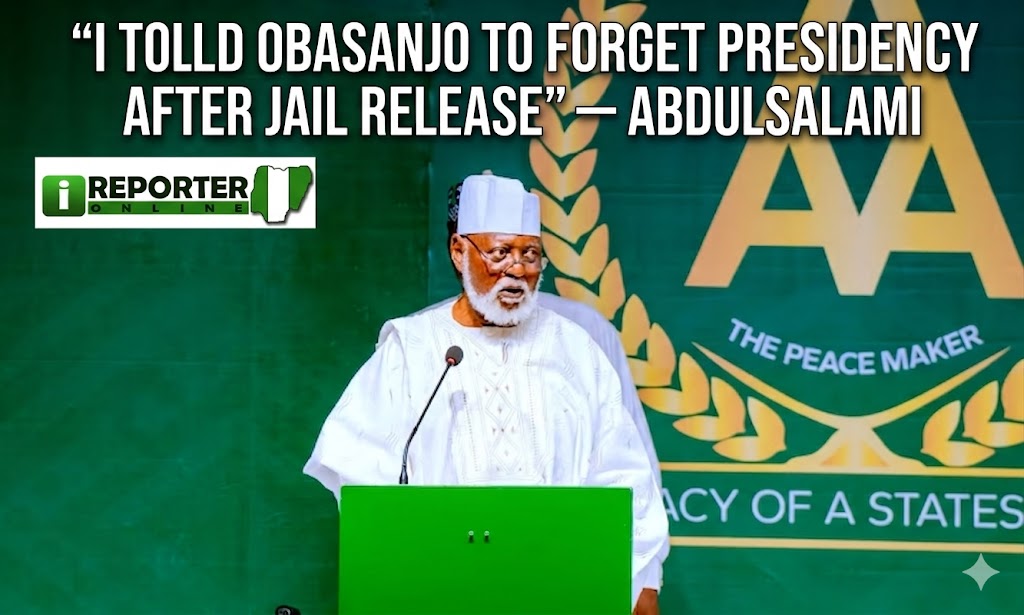
Former Head of State, Gen. Abdulsalami Abubakar (retd.), has disclosed that he advised former President Olusegun Obasanjo to abandon his presidential ambition following his release from prison in 1998.
According to Ireporter Online, Abdulsalami made the revelation in Chapter 22 of his autobiography, Call of Duty, launched in Abuja as part of activities marking his 84th birthday. He stated that upon Obasanjo’s release, he encouraged him to return home, give thanks for his survival, and disregard calls to contest the 1999 presidential election.
He further explained that he also discouraged Obasanjo from taking legal action against the Federal Government over his incarceration, noting that the judicial process could be lengthy and uncertain. Abdulsalami said he assured him that the government would consider alternative forms of compensation, which he said Obasanjo eventually accepted.
On the question of politics, Abdulsalami recounted that Obasanjo was approached by the Peoples Democratic Party (PDP) to run for president, but he advised him against entering the race, urging him instead to focus on gratitude after his years of detention. He added that Obasanjo did not immediately respond and never reverted to him on the matter.
The former military leader, however, clarified that Obasanjo’s eventual emergence as president in 1999 should not be interpreted as a product of endorsement or political backing from his administration. He maintained that his government did not promote or support any candidate but only facilitated the release and pardon of several political detainees as part of a broader national reconciliation effort.
Abdulsalami also addressed claims that some retired military officers and political actors influenced Obasanjo’s candidacy, describing such efforts as private initiatives independent of his administration.
In his memoir, he further detailed the processes surrounding Nigeria’s transition to civilian rule, including the registration of political parties and the adjustments made to accommodate the Alliance for Democracy (AD), as well as the decision to shift the handover date to May 1999 following consultations with the judiciary.
He maintained that the transition process was guided by a commitment to national stability, equity, and a swift return to democratic governance, adding that he left office without hesitation after fulfilling his mandate.

-

 Latest News2 weeks ago
Tinubu Announces New Appointment, Sends Nominee To Senate For Confirmation
-
 Politics1 week ago
BREAKING: Tinubu Inaugurates New Ministers
-

 Politics2 weeks ago
Wike Clears Air On Chinda, Says INEC Candidate List Drops In July
-

 Politics2 weeks ago
June 12: Tinubu Set For Nationwide Broadcast, NASS Address
-

 Latest News1 week ago
INEC Drops Final List Of Candidates For June 2026 Bye-Elections
-

 Latest News5 days ago
Abubakar Momoh Engages CCECC President At Global Infrastructure Forum In China
-

 Latest News2 weeks ago
Police Provide Fresh Update On Release Of Abducted Oyo Pupils, Teachers
-

 Politics2 days ago
APC Rules Out Any Review Of 2027 Primary Election Results
-

 Latest News2 weeks ago
Sh*ck Defection: House Minority Leader Chinda Dumps PDP For APC
-

 Latest News2 days ago
Obasanjo Teases Abdulsalami: “I And Gowon May Not Be Alive When You Hit 100
-

 Sports2 weeks ago
Arsenal Announce Exit Of 15 Players As Contract Discussions Continue With Three Others
-

 Entertainment2 weeks ago
Love In Ghana! Peller Proposes To Jarvis As Romantic Video Goes Viral