

Latest News
How Insufficient Research Funding Hinders National Development


How Insufficient Research Funding Hinders National Development
LAGOS – Nigeria’s attempts to close the development gap between itself and more advanced nations through research and development (R&D) have been hindered by poor funding. Researchers at universities and institutes are not only facing the challenge of inadequate financial support, but also expressing frustration over the politicization of accessing the limited funds available to them…READ MORE…
Vanguard’s findings reveal that Nigeria’s research funding significantly lags behind not only Western universities but also some on the African continent.
For instance, Johns Hopkins University in the United States allocated over $3.1 billion to R&D in 2020. Harvard University spent around $1.24 billion on R&D in 2020, with an additional $976 million in sponsored research funds and $384 million in university funds in 2022. Meanwhile, in South Africa, the University of Cape Town commits over $100 million annually to research and development.
Nigeria’s Research Landscape:
In Nigeria, the Federal Ministry of Innovation, Science and Technology (FMIST) is tasked with promoting the development and utilization of scientific research and technology to drive socio-economic progress. However, in 2024, FMIST was allocated just N11.05 billion (approximately $6.7 million), with a proposed increase to N69.2 billion ($30 million) for 2025. This allocation, which includes capital and overhead costs, remains significantly low compared to global standards.
Tertiary institutions, which should play a crucial role in R&D, also face the challenge of receiving insufficient support for research. Public institutions rely heavily on the Tertiary Education Trust Fund (TETFund) for research funding, which spent about N3.4 billion ($2.5 million) on National Research Fund in 2024. However, this is only a fraction of what is required to meet the research demands of the country.
Frustrations within the System:
Dr. Gever Verlumun, a researcher at the University of Nigeria, Nsukka, highlights the challenges of sourcing funding for research in Nigeria. With limited resources and intense competition for grants, many researchers feel the process is politicized, leaving them frustrated. Additionally, the lack of proper compensation for research efforts is a significant challenge, with researchers often left with no direct financial benefit from the grants they receive.
State-Level Support and Challenges:
Some states, like Lagos, have made strides in supporting research and innovation. The Lagos Science, Research and Innovation Council (LASRIC), for example, was set up with an initial seed capital of N500 million in 2017 and recently increased to N1 billion. However, many other state governments still lack a concrete plan to support research.
The Way Forward:
Despite the challenges, experts like Prof. Emmanuel Osodeke, National President of ASUU, stress the need for increased government and corporate support for research. While TETFund plays a vital role, it cannot shoulder the entire responsibility. A more comprehensive approach, including collaboration between different sectors, is needed to advance Nigeria’s research and development goals.
For More Information And News Update, Join Ireporteronline WhatsApp Channel With Link Below: https://whatsapp.com/channel/0029VaV4jB6DuMRgwqnJCF32 For advertisement inquiries only, kindly send a message to 09010649814 on Whatsapp

-
 Latest News2 weeks ago
Breaking Political Barriers: Okpebholo Names Enugu-born Igbo Leader to Edo Cabinet
-
 Latest News1 week ago
APC Submits National Assembly Candidates’ Names To INEC Portal
-
 Latest News1 day ago
New Appointment Announced For Former VP Osinbajo
-

 Sports2 weeks ago
Full List: Every Team Eliminated From The 2026 World Cup So Far
-

 Latest News2 weeks ago
APC Dismisses Viral List Of Primary Election Winners
-
 Latest News1 week ago
Uzodimma, Fintiri, Abdurazaq, Other Governors Appear On APC NASS List
-

 Latest News2 weeks ago
Shake-Up In Nigerian Army As COAS Redeploys Top Officers — Full List Emerges
-
 Latest News2 days ago
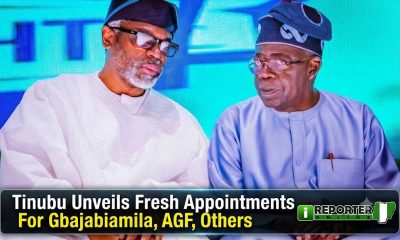
Tinubu Unveils Fresh Appointments For Gbajabiamila, AGF, Others
-
 Politics2 days ago
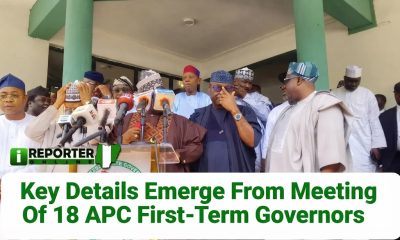
Key Details Emerge From Meeting Of 18 APC First-Term Governors
-
 Latest News2 weeks ago
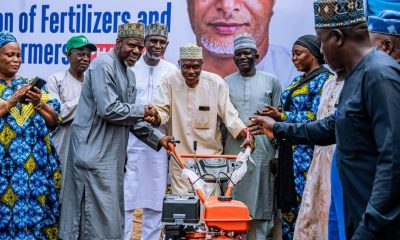
N1.5 BILLION FARM BOOST: Senator Saliu Mustapha Launches Massive Agricultural Intervention, Distributes Fertilisers, Power Tillers, Water Pumps to Thousands of Kwara Farmers
-

 Politics2 weeks ago
Rochas: “I Feel Sorry For Those Peter Obi Misled Into Wasting Money On NDC
-
 Latest News1 week ago
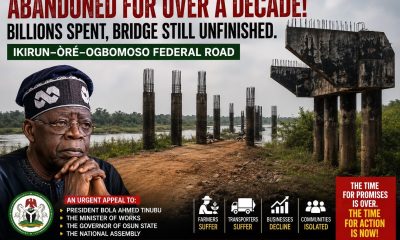
After Billions Spent, Bridge Still Abandoned: Citizens Issue Open Letter to Tinubu, Works Minister, Osun Governor, National Assembly Over ÒRÉ Bridge