


Latest News
Experts Warn: Fiscal Discipline And Import Substitution Key To Tackling Soaring Inflation

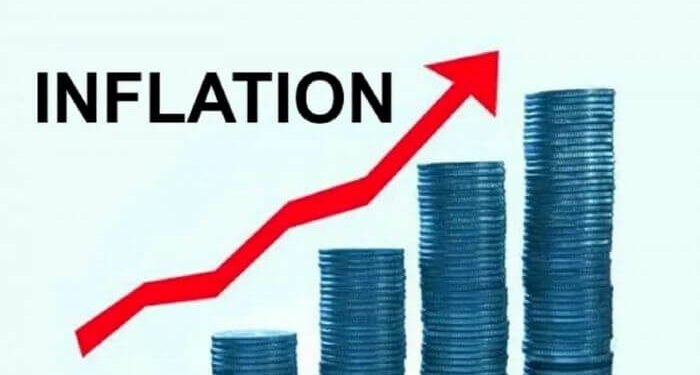
Experts Warn: Fiscal Discipline And Import Substitution Key To Tackling Soaring Inflation
Economist Prof. Bright Eregha has advised both Federal and State Governments to prioritize fiscal discipline and promote import substitution as effective strategies to combat the escalating inflation rates…READ MORE…
Eregha, who teaches in the Economics Department at Pan-Atlantic University, shared these insights during an interview with the News Agency of Nigeria in Lagos on Monday.
He observed that allocations from the Federal Accounts Allocation Committee to state governments have significantly increased over the past year, a result of the government’s economic reforms.
Eregha explained that this rise in allocations has expanded the money supply within the economy.
He cautioned that if these funds are not directed towards productive sectors, they may worsen the current inflation crisis.
To address the ongoing food insecurity, he emphasized the necessity for government investment in mechanized agriculture.
“Increasing budget allocations for mechanized agriculture is vital to enhance food production, irrespective of the harvest season,” he stated.
He argued that such investments could lead to self-sufficiency in food production and help reduce food-related inflation.
Similarly, Prof. Tunde Adeoye, a senior lecturer in the Economics Department at the University of Lagos, supported the idea of import substitution as a means to decrease inflation.
He remarked, “The government should implement macroeconomic policies that encourage domestic companies to produce previously imported goods locally, fostering greater consumer support for these local products.”
He noted that this would strengthen local capacities and gradually lessen the dependency on imports, which is significantly impacting foreign exchange rates.
Adeoye pointed out that the rising inflation is largely a structural issue within the economy.
“The current situation has surpassed the Central Bank’s assumption that merely raising interest rates will control inflation,” he commented.
“Our inflation problem stems from economic dislocation, exacerbated by the government’s ongoing economic reforms.”
He also underscored the necessity for innovative solutions to address security issues that impede food production in the country.
“Addressing the ongoing herders-farmers conflicts in food-producing regions could greatly enhance the situation,” Adeoye suggested.
According to the National Bureau of Statistics, Nigeria’s inflation rate climbed to 34.6 percent in November, up from 33.8 percent in October.
The recent Consumer Price Index report, released on December 16, indicated a 0.72 percent rise in inflation over the month.
Additionally, the NBS documented a significant year-on-year increase of 6.4 percent compared to the 28.2 percent inflation rate recorded in November 2023.
On a month-to-month basis, inflation increased by 2.638 percent in November, experiencing a slight decrease of 0.002 percentage points from October’s 2.64 percent.
For More Information And News Update, Join Ireporteronline WhatsApp Channel With Link Below: https://whatsapp.com/channel/0029VaV4jB6DuMRgwqnJCF32 For advertisement inquiries only, kindly send a message to 09010649814 on Whatsapp

-
 Latest News2 days ago
BREAKING: Tinubu Appoints New NIPC, NEPZA Board Chairpersons
-
 Latest News7 days ago
Zulum Speaks On Gubio’s Running Mate Choice
-

 Politics4 days ago
Seyi Makinde Makes Big 2027 Move, Names Running Mate
-
 Latest News1 week ago
New Appointment Announced For Former VP Osinbajo
-

 Latest News1 week ago
Tinubu Unveils Fresh Appointments For Gbajabiamila, AGF, Others
-
 Politics1 week ago
Key Details Emerge From Meeting Of 18 APC First-Term Governors
-

 Latest News6 days ago
BREAKING: 8 Kidnappers Arrested, Others Eliminated As Oyo Pupils, Teachers Rescued
-

 Entertainment3 days ago
We Tried” — Diamond Platnumz’s Wife Announces End Of Marriage
-

 Politics2 weeks ago
2027: APC Set To Upload Tinubu, Running Mate This Week
-
 Latest News6 hours ago
El-Rufai Makes Major Move, Withdraws Three Applications In Corruption Case
-
 Politics6 days ago
BREAKING: APC Unveils Tinubu’s 2027 Running Mate
-

 Latest News1 week ago
Female Journalist Reportedly Taken Into DSS Custody