


Latest News
CBN Attributes Decline In Oil Revenue To Aging Pipelines


CBN Attributes Decline In Oil Revenue To Aging Pipelines
The Central Bank of Nigeria (CBN) has identified the aging pipeline infrastructure and operational inefficiencies as key factors contributing to the significant drop in oil revenue during the third quarter of 2024…READ MORE…
In its latest economic report, the CBN revealed that oil revenue plummeted by 24.72 percent to N1.30 trillion compared to the second quarter of the year. This decline was primarily due to decreased receipts from petroleum profit tax and royalties.
Furthermore, the revenue fell short of the quarterly target by 75.39 percent, largely because of frequent production shut-ins caused by deteriorating pipelines and facilities.
The report stated, “Oil revenue dropped by 24.72 percent to N1.30 trillion compared to Q2 2024, driven by lower receipts from petroleum profit tax and royalties. It also fell 75.39 percent below the quarterly target due to shut-ins related to aging oil pipelines and installations.”
Despite a slight increase in crude oil production—from 1.27 million barrels per day to 1.33 million barrels per day—issues such as theft, vandalism, and infrastructure deficits continued to hinder Nigeria’s oil revenue performance. The aging infrastructure has not only hampered operational efficiency but has also limited the country’s ability to meet its OPEC production quotas.
Additionally, global factors exacerbated the situation, as the average spot price for Nigeria’s Bonny Light crude decreased by 5.45 percent, landing at $82.23 per barrel, reflecting lower demand in the international market. Similar declines were seen in other crude benchmarks, including Brent and the OPEC Reference Basket.
While the oil sector struggled, Nigeria’s overall economy grew by 3.46 percent in Q3 2024, up from 3.19 percent in the previous quarter, largely driven by the non-oil sector, which added 3.18 percentage points to total GDP growth.
The oil sector’s growth rate slowed to 5.17 percent year-on-year, down from 10.15 percent in the previous quarter, negatively impacted by operational inefficiencies and falling crude oil prices.
The fiscal implications were significant, with federally collected revenue falling 23.71 percent short of the budget benchmark, despite a quarter-on-quarter increase of 7.48 percent. While the fiscal deficit narrowed by 22.51 percent compared to the prior quarter, it widened by 43.88 percent relative to the quarterly target, indicating ongoing fiscal challenges.
The report concluded that Nigeria’s target of achieving 2 million barrels per day in oil production by the end of 2024 remains at risk due to these persistent challenges.
For More Information And News Update, Join Ireporteronline WhatsApp Channel With Link Below: https://whatsapp.com/channel/0029VaV4jB6DuMRgwqnJCF32 For advertisement inquiries only, kindly send a message to 09010649814 on Whatsapp

-

 Politics1 week ago
Tinubu Makes Fresh Appointment
-
 Latest News1 day ago
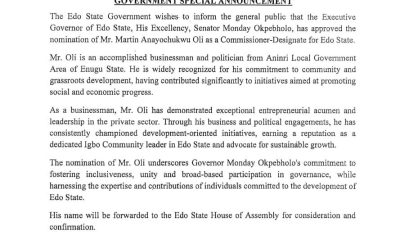
Breaking Political Barriers: Okpebholo Names Enugu-born Igbo Leader to Edo Cabinet
-

 Politics3 days ago
Tinubu Makes New Ambassadorial Appointments, Seeks Senate Confirmation
-
 Latest News1 week ago
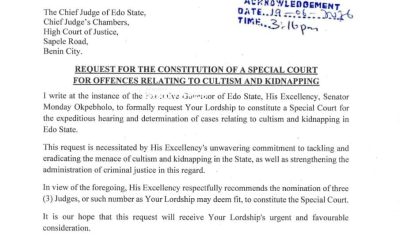
Breaking: Okpebholo Backs Words With Action As Edo Moves To Establish Special Court For Cultism And Kidnapping Cases, Writes Chief Judge
-

 Politics2 weeks ago
APC Rules Out Any Review Of 2027 Primary Election Results
-

 Latest News1 week ago
Bandits’ Captivity Death: Widow Rejects Illness Claims, Reveals What K!lled General Rabe
-

 Latest News4 days ago
Ojirami Shines at Night: Akoko-Edo Residents Hail Engr. Abubakar Momoh Over NDDC Solar Street Light Project
-

 Politics1 week ago
36 Governors Reveal Their Stance On State Police
-

 Latest News2 weeks ago
Obasanjo Teases Abdulsalami: “I And Gowon May Not Be Alive When You Hit 100
-

 Politics6 days ago
VIDEO: Shettima, Atiku, Masari, Governors Storm Special Prayer For Tinubu’s Late Mother
-

 Entertainment1 week ago
Dayo Amusa Blasts Peter Obi: “You Can’t Criticize Government And Hide Your Plans
-

 Latest News2 weeks ago
You Can’t Sign Chequebooks!’ — Wike Issues Tough Warning To FCT Area Council Chairmen