Connect with us

Business

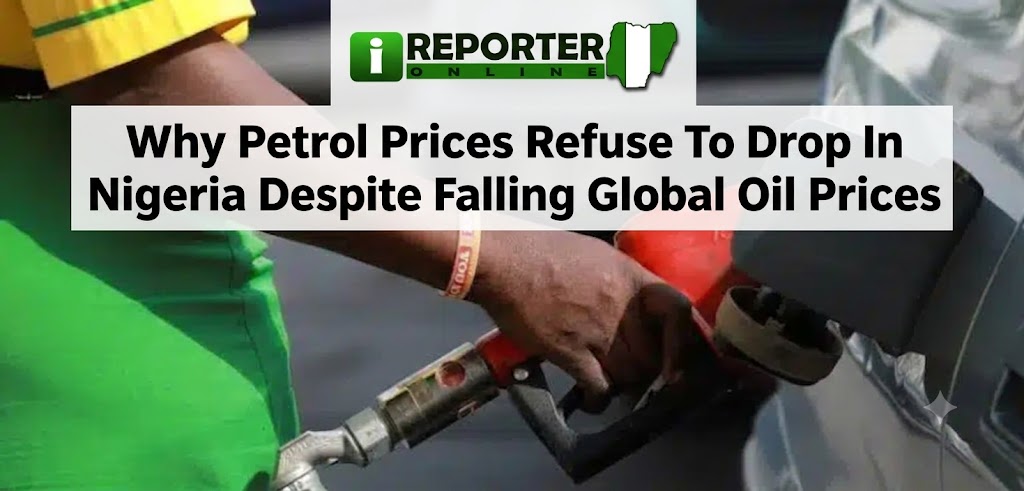
Why Petrol Prices Refuse To Drop In Nigeria Despite Falling Global Oil Prices

Published

on

0086a6ac a845 4e17 ae27 d4c130820884

According to Ireporter Online, global crude oil prices have declined to levels close to those recorded before the recent US-Iran tensions, raising renewed expectations that petrol prices in Nigeria may also experience a reduction.

However, despite the downturn in the international oil market, pump prices across Nigeria have remained largely unchanged, fueling public concern over the slow transmission of global price movements into the domestic fuel market.

Brent crude, the international benchmark, dropped to $73.14 per barrel on Wednesday, while West Texas Intermediate (WTI) slipped to $69.85 per barrel. Prior to the escalation of hostilities between the United States and Iran, petrol in Nigeria sold between ₦770 and ₦800 per litre in several parts of the country.

Following the conflict and heightened supply uncertainties linked to tensions around the Strait of Hormuz, fuel prices surged significantly. Current market checks show that petrol now sells between ₦1,200 and ₦1,300 per litre depending on location.

Advertisement

Although crude oil prices have continued to ease following a peace agreement between Washington and Tehran, the reduction in the price of Premium Motor Spirit (PMS) within Nigeria has been marginal, estimated at about ₦75.

Market analysts argue that the sustained decline in crude prices should ordinarily lead to lower costs of refined petroleum products, provided other market conditions remain stable. A petroleum marketer, speaking to Daily Trust, stated that the ex-depot price of petrol should currently not exceed ₦700 per litre, compared to prevailing rates of around ₦1,180, insisting that improved supply and lower crude costs ought to reflect in retail prices.

However, oil and gas analyst Dr. Ayodele Oni noted that falling crude prices do not automatically translate into lower pump prices in Nigeria’s deregulated downstream market. He explained that beyond global crude movements, the exchange rate plays a critical role in determining local fuel prices.

According to him, since petrol imports are priced in dollars, fluctuations in the naira significantly influence landing costs. He added that while lower crude prices may ease inflationary pressure, meaningful relief for consumers depends heavily on currency stability.

Advertisement

Industry watchers believe that if crude prices remain subdued and the naira maintains relative stability, marketers may face increasing pressure to adjust pump prices downward in the coming weeks, offering potential relief to consumers already grappling with rising transport and living costs.

Advertisement
Click to comment
Subscribe
Notify of
guest
0 Comments
Oldest
Newest Most Voted

Trending

0
Would love your thoughts, please comment.x
()
x