


Latest News
List 5 Institutions Named After Tinubu In 11 months

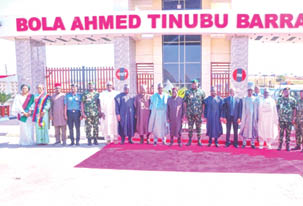
List 5 Institutions Named After Tinubu In 11 months
The recent inauguration of Bola Ahmed Tinubu Barracks in Asokoro, Abuja, has ignited a wave of criticism, marking the fifth institution named after President Bola Ahmed Tinubu since he assumed office in May 2023…….READ MORE
Commissioned on January 23, 2025, the barracks followed closely on the heels of the establishment of Bola Ahmed Tinubu Polytechnic in Gwarinpa, Abuja, designed to foster technological and vocational education. However, the practice of naming institutions after a sitting president has stirred widespread disapproval, with many calling it politically motivated.
The trend began in March 2024 when the Niger State Government renamed Abubakar Imam International Airport in Minna to Bola Ahmed Tinubu International Airport. This move angered residents of Rafi Local Government Area, home of the late Abubakar Imam Kagara, a celebrated figure in northern Nigeria’s literary and political history. The airport had only been named after Imam in June 2023, making the swift change controversial.
In May 2024, the National Assembly Library and Resource Centre was inaugurated as the Bola Tinubu Building. By December, the Nigeria Immigration Service christened its cutting-edge technology complex in Tinubu’s honor, citing his commitment to innovation.
Further proposals are also in motion, including the Bola Ahmed Tinubu Federal University of Nigerian Languages in Aba, Abia State. The bill for its creation was introduced in the House of Representatives in October 2024, aimed at advancing the study of Nigerian languages and cultures.
Though no legal statutes have been violated, critics argue the trend raises ethical and moral issues. The practice of naming institutions after sitting presidents is often seen as self-promotional and undemocratic.
Seun Onigbinde, co-founder of BudgIT, voiced his disapproval on X (formerly Twitter), stating, “In less than a year, four public institutions have been named after President Bola Tinubu. This abuse of norms is rooted in a sycophantic culture. The president should put a stop to this as it signals an unacceptable trend.”
Others echoed similar sentiments, warning that this practice might set a precedent where public infrastructure undergoes frequent name changes with each new administration, incurring unnecessary costs to the public.
Dr. Moses Paul, convener of the Free Nigeria Movement, particularly criticized the naming of military barracks after Tinubu. “Military barracks symbolize sacrifice and discipline. Naming one after a sitting president dishonors the soldiers who have paid the ultimate price for our nation,” he said.
Traditionally, military barracks in Nigeria were named after significant battles or military leaders, especially from the Nigerian Civil War and peacekeeping missions. This changed when the military cantonment in Kaduna was renamed after Alhaji Muhammadu Ribadu, Nigeria’s first Minister of Defence. However, President Umar Musa Yar’adua’s administration reversed this, returning many barracks to their original names to depersonalize military assets.
Prominent civil society groups have condemned the trend. Auwal Musa Rafsanjani, Executive Director of CISLAC and Head of Transparency International Nigeria, warned that this pattern could politicize public institutions. He called on the National Assembly to pass legislation prohibiting the naming of institutions after sitting officials.
“Public assets should reflect the collective history and values of a nation, not serve as tools for political glorification,” Rafsanjani stated.
Efforts to obtain comments from the Presidency were unsuccessful, as key spokesmen, including Sunday Dare and Bayo Onanuga, did not respond.
Prof. Sylvester Odion, a Lagos-based political scientist, criticized the practice, asserting that “celebrating oneself while in power undermines democratic values. True legacy should be recognized post-tenure, based on merit.” As the controversy continues, many Nigerians are left questioning whether the country’s public institutions should serve as monuments to current leaders or be reserved to honor those whose contributions have been tested by time.

-
 Latest News5 days ago
Tinubu Summons 76 Osun APC Leaders Over Ribadu’s Explosive Intelligence Report
-

 Latest News1 week ago
Tinubu Picks Gbajabiamila, Soludo, Zulum, Others For Canada Investment Mission
-

 Latest News2 weeks ago
BREAKING: Tinubu Makes Fresh Appointment
-
 Latest News2 weeks ago
Presidency Fires Back At Catholic Bishops
-

 Latest News2 weeks ago
Wike Breaks Silence On ₦750m Campaign Billboard Fee
-

 Latest News1 week ago
Tinubu Approves Fresh Civil Service Recruitment Exercise
-

 Latest News1 week ago
Tinubu Launches ₦216bn Osun–Oyo Road Projects
-

 Latest News2 weeks ago
Tinubu Govt Rolls Out Fresh Rules For Ministers, Top Officials
-

 Latest News2 weeks ago
‘Football Is Not For Sale’ – FIFA Fires Back Amid World Cup Investment Backlash
-

 Latest News2 weeks ago
Fuel Price Drops As MRS, Others Slash Petrol Pump Price
-

 Latest News4 days ago
Army Orders Abuja Residents To Vacate Homes Over Security Threat
-

 Latest News2 weeks ago
Breaking: Jonathan Holds Closed-Door Meeting With Tinubu At Aso Rock