


Latest News
New Curriculum For JSS To SS Students Set To Shape Future Leaders

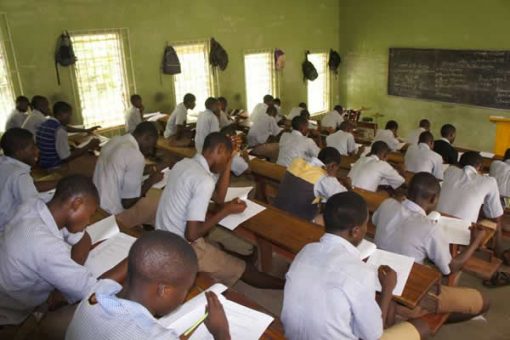
The Federal Government has rolled out a new school curriculum that requires Junior Secondary School (JSS 1) students to select at least one trade subject, aimed at enhancing practical skills and preparing students for future careers.
According to a framework developed by the Nigerian Education Research and Development Council (NERDC), students can choose from six vocational options: Solar Photovoltaic installation and maintenance, Fashion Design and Garment Making, Livestock Farming, Beauty and Cosmetology, Computer Hardware and GSM Repairs, and Horticulture and Crop Production. The new curriculum emphasizes a balance between academic learning and practical skill development.
The Ministry of Education further explained that at the primary level, pupils in Primary 1–3 will study 9–10 subjects, while those in Primary 4–6 will take 10–12 subjects. Junior Secondary students will offer 12–14 subjects, Senior Secondary School pupils will take 8–9, and technical schools will offer 9–11 subjects.
For Primary 1–3, the subjects include English Studies, Mathematics, Nigerian Languages (one), Basic Science, Physical and Health Education, Christian Religious Studies (for Christian pupils) or Islamic Studies (for Muslim pupils), Nigerian History, Social and Citizenship Studies, Cultural and Creative Arts, and Arabic (optional). In Primary 4–6, the curriculum adds Basic Digital Literacy, Pre-vocational Studies, and French (optional).
At the Senior Secondary level, students are expected to take five compulsory subjects, including one trade subject alongside courses aligned with their chosen specialization in sciences, humanities, or business. The mandatory subjects are English Language, General Mathematics, one Trade subject, Citizenship and Heritage Studies, and Digital Technologies.
The full curriculum list has been publicly shared online, with the Special Assistant to the President on Social Media confirming that it will take effect in September 2025.
For Junior Secondary students, core subjects cover Mathematics and Measurement, English Language, Integrated Science, Digital Literacy and Coding, Social Studies, Languages, Creative Arts, and Physical and Health Education. The curriculum spans practical and theoretical concepts, including coding, robotics, scientific experiments, and entrepreneurship basics.
Senior Secondary students will engage in advanced studies across Mathematics, English, Sciences, Technology and Innovation, Social Sciences, Languages, Creative Arts, Physical and Health Education, and Research & Project Work. These programs include programming languages, AI, data science, biotechnology, global history, advanced creative arts, mental health education, and final-year research projects, reflecting a comprehensive approach to preparing students for higher education and the modern workforce.

-
 Latest News2 weeks ago
No Excuse For This “Shameful Act” — APC Fires Back At Makinde Over Controversial Oba Coronation
-
 Latest News2 weeks ago
Sh*ck Move: Cameroon’s President Biya Names His Son Vice President
-
 Latest News1 week ago
Presidency Fires Back At ADC: ‘We Won’t Close Shop Because You’re Struggling
-
 Latest News3 days ago
Iyabo Obasanjo Responds As Senator Yayi Emerges Ogun APC Consensus Candidate
-
 Latest News5 days ago
It’s Obvious I Don’t Own What You Have” – Lamido Blasts Malami Over ‘Thief’ Claims
-
 Latest News1 week ago
APC Blocks Bala Mohammed’s Defection — Here’s Why
-

 Latest News1 week ago
A Birthday Fit For A Legend : Watch Abubakar Momoh Make A Grand Entrance At Adams Oshiomhole’s Residence
-
 Latest News1 week ago
Keyamo Slams Peter Obi, Kwankwaso: ‘They Think They Can Blackmail Everyone
-
 Latest News2 weeks ago
Sh*ck Exit: Akinwumi Steps Down As ADC Secretary
-
 Latest News1 week ago
Former VP Osinbajo Lands Powerful Global Appointment
-
 Latest News5 days ago
Tony Akiotu Has Been Appointed As The New Chairman Of The Broadcasting Organisations Of Nigeria
-
 Latest News1 day ago
Why We’re Tolerating Wike – APC Chair Yilwatda Speaks Out