

Latest News
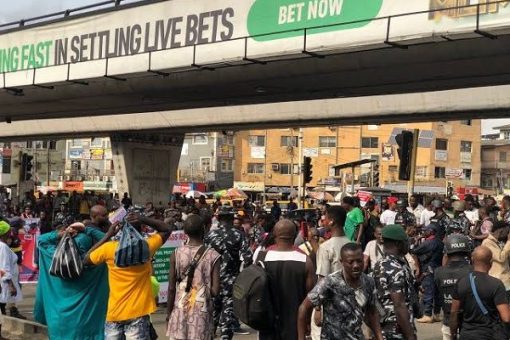
Protest Crisis: Minister’s Quick Actions Preserve Trade And Industry Operations

Protest Crisis: Minister’s Quick Actions Preserve Trade And Industry Operations
It was Petyr ‘Littlefinger’ Baelish, who said in a remarkable American drama series: Game of Thrones, that “Chaos isn’t a pit. Chaos is a ladder. Many who try to climb it fail and never get to try again. The fall breaks them”. Nigeria’s polity experienced tremendous overheating in the last 35 days through subconscious and conscious efforts of diverse interests to instigate a nationwide protest or even mass revolt against policies of President Bola Tinubu. The preparations and strategies to attain the protest which eventually commenced on August 1 were so sophisticated and consciously orchestrated by some persons obsessed with their selfish agenda but mischievous enough to take advantage of peoples’ sensitivities.
These “obsessed” groups, spanning North and South, are still yet to fathom the reality of seeing Tinubu as President and petty enough to drag Nigeria further into a pit of chaos. Interestingly, these sinister motives and plans orchestrated prior to the August protest were to disrupt and derail strategic sectors of the economy. The motives were to tactically fuel instability in Nigeria’s critical trade and industrial sectors to de-market the Federal Government, paint a picture of instability and scare away foreign investors.
As a Yoruba adage goes “An elder cannot be present in a market and the head of an infant inconveniently bent”. The mischievous antics to frustrate the economy through manipulation of protest prompted Minister of Industry, Trade and Investment, Dr Doris Uzoka-Anite, to play the “elderly” role by strategically intervening to protect and insulate the trade and industrial sectors from disruptions that may have cost Nigeria over N5 trillion.
Regardless of the calm mien of Dr Uzoka-Anite and her indifference to over-blowing of trumpet, it will be unfair not to document or mention the selfless and timely roles she played before and during the protest, especially in protecting the trade, industries and business governance ecosystem. The minister, foreseeing the catastrophe the protest can drag the economy into, strategically masterminded timely dialogue and engagement with organisations, pressure groups, civil society, the media, student groups, entertainment industry stakeholders and others, who could partake in grassroot mobilisation and opinion moulding.
Uzoka-Anite’s interventions were multifaceted and far-reaching. In addition to engaging with student organisations and civil society, she extended her outreach to Southeast groups, recognising the importance of addressing regional concerns. Her efforts in Southeast were crucial in abating protests in those states, demonstrating her understanding of Nigeria’s diverse political landscape.
The minister’s approach was not limited to dialogue. Recognising immediate needs of citizens, she oversaw distribution of palliatives to communities. This support alleviated some pressures faced by the vulnerable, further reducing the impetus for protest.
Understanding the power of media in shaping public opinion, Uzoka-Anite commissioned documentaries, vox pops, and jingles. These were strategically designed to promote peaceful dialogue over violent protest through various channels. This media campaign helped to shift public sentiment and encouraging constructive engagement with the government.
For example, the minister organised engagement with National Association of Nigerian Students (NANS), from national to zonal, encouraging them to choose intellectual dialogue and exposing them to efforts by the President in rescuing the economy to favour young population. She extended her engagement to reputable civil society, social crusaders and progressive stakeholders yearning for explanations about how government is ameliorating the hardship.Most of them were convinced and persuaded by verifiable facts and data presented by her, that continuous engagements of that nature be sustained. She, with her team, stressed the need for youths to take advantage of some laudable policies as National Youths Talent Export Programme (NATEP), Skill up Artisans (SUPA) and Presidential Conditional Cash Transfer Grant and loans scheme. Others, such as Nigerian Youths Investment Fund (NYIF), MSME Investment Funds, Manufacturing Sector Funds showcase the fact that the government was poised to empower youths, regardless of status, connections or political affiliation.
As a result, most of the organisations, including NANS, youth groups, former students leaders and CSOs, not only announced their withdrawal from the protest, they also encouraged others to do same and give the Federal Government time for the people-friendly policies to mature. Dr Uzoka-Anite was consistent in her remarks that petty traders, artisans, factory workers and those whose livelihoods are daily would be first economic casualties, unless we avert the protest by dialogue. Their businesses would come to a halt without alternatives, thereby doubling their hardship. This would have defeated the aim with which the protest was conceived.
The minister also facilitated dialogue sessions with the media, social media influencers and opinion leaders on the need for the protest to be aborted and why the economy must not be further frustrated, to avoid job losses.
The protest is undeniably a pointer to many social-economic realities and the people retain the right to express their views lawfully, peacefully and most importantly in an organised manner, such that it doesn’t infringe on the right of others. Despite manipulative tendencies of persons with ulterior motives, economic activities have picked up and normalcy returned.
The shortened lifespan of the protest can be attributed to the last-minute withdrawal of viable national mobilisation structures, including NANS, civil society, social media influencers, youths groups and ethnic nationalities, principally because they were persuaded by a highly cerebral minister, who deployed her motherly instinct and native intelligence in ensuring they redirect their energies to more productive ventures by participating in empowerment programmes and attain economic stability, while giving the President time to deliver on his Renewed Hope Agenda.
This approach by Dr Uzoka-Anite serves is a model for effective crisis management in a diverse and complex nation as Nigeria. By addressing regional concerns, providing immediate relief, and fostering long-term dialogue, she has contributed to maintaining stability in a challenging period of necessary but difficult reforms.


-

 Latest News2 weeks ago
APC Submits National Assembly Candidates’ Names To INEC Portal
-
 Latest News2 days ago
New Appointment Announced For Former VP Osinbajo
-

 Latest News2 weeks ago
APC Dismisses Viral List Of Primary Election Winners
-

 Latest News1 week ago
Uzodimma, Fintiri, Abdurazaq, Other Governors Appear On APC NASS List
-
 Latest News3 days ago
Tinubu Unveils Fresh Appointments For Gbajabiamila, AGF, Others
-

 Politics4 days ago
Key Details Emerge From Meeting Of 18 APC First-Term Governors
-
 Latest News2 weeks ago
N1.5 BILLION FARM BOOST: Senator Saliu Mustapha Launches Massive Agricultural Intervention, Distributes Fertilisers, Power Tillers, Water Pumps to Thousands of Kwara Farmers
-

 Latest News1 week ago
After Billions Spent, Bridge Still Abandoned: Citizens Issue Open Letter to Tinubu, Works Minister, Osun Governor, National Assembly Over ÒRÉ Bridge
-
 Latest News2 days ago
Zulum Speaks On Gubio’s Running Mate Choice
-

 Politics2 weeks ago
Rochas: “I Feel Sorry For Those Peter Obi Misled Into Wasting Money On NDC
-

 Politics5 days ago
2027: APC Set To Upload Tinubu, Running Mate This Week
-

 Latest News13 hours ago
BREAKING: 8 Kidnappers Arrested, Others Eliminated As Oyo Pupils, Teachers Rescued