

Latest News
Tinubu Unveils Powerful ₦50bn Seed Fund To Rewrite Nigeria’s Food Security Story

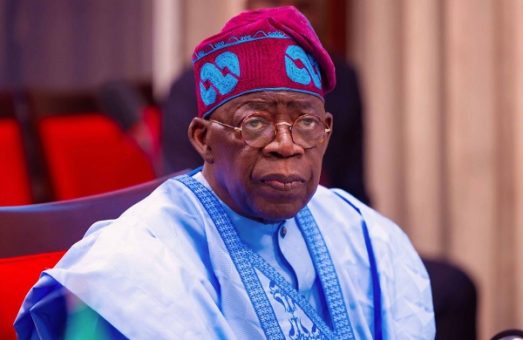
According to Ireporter Online, President Bola Ahmed Tinubu has approved the creation of a ₦50 billion Presidential Catalytic Seed Fund, a major intervention designed to rejuvenate Nigeria’s seed industry, strengthen food security, and stimulate private-sector-driven growth across the agricultural value chain.
The announcement was made by Vice President Kashim Shettima yesterday in Abuja during the opening session of the eighth SeedConnect Africa Conference and Exhibition, which also marked the 50th anniversary of the National Agricultural Seeds Council (NASC). At the event, the Vice President also launched the Seeds for Renewed Hope Programme (S-RHP), positioned as the backbone of the country’s new seed transformation strategy.
Represented by his Senior Special Adviser on Food Security, Dr. Kingsley Uzoma, the Vice President explained that the fund is expected to deliver broad socio-economic and environmental gains while tackling long-standing structural challenges within the seed subsector. He described seed as the “first technology” and the fundamental determinant of success in agricultural production.
As part of the programme’s rollout, both government and private-sector players distributed improved varieties of rice, maize, and vegetable seeds to farmers nationwide.
Information obtained by Ireporter Online indicates that the Federal Government is targeting a 10 percent annual increase in seed availability for major crops between 2025 and 2027, in an effort to close the persistent seed supply gap. The ₦50 billion fund, activated under Section 45 of the NASC Act 2019, will strengthen private-sector-led seed production, broaden access to certified seeds for farmers, and eliminate major bottlenecks affecting the seed industry.
Shettima also disclosed plans to upgrade seed testing labs, intensify the fight against counterfeit seeds, and expand opportunities for youth and women in seed entrepreneurship.
Minister of Agriculture and Food Security, Senator Abubakar Kyari, described the seed sector’s five-decade evolution as proof of Nigeria’s determination to fortify its agricultural foundation. He reaffirmed that high-quality seeds remain central to President Tinubu’s food security agenda, noting that agriculture serves as a pillar of national resilience and stability.
Kyari highlighted key sectoral gains, including the expansion of the National Agricultural Growth Scheme–Agro-Pocket (NAGS-AP), rising wheat production in multiple states, the successful introduction of rain-fed wheat in Plateau State, the recapitalisation of the Bank of Agriculture with ₦1.5 trillion, an additional ₦250 billion funding window, and the full activation of the National Agricultural Development Fund (NADF). He added that food prices have begun to ease in several markets, indicating progress in ongoing interventions.
NASC Director-General, Fatuhu Muhammed, outlined the agency’s transformation into a regional leader in seed regulation and digital certification. He listed achievements such as the release of more than 60 improved climate-resilient crop varieties, deployment of the Digital Seed Certification System, updated crop variety registration guidelines, third-party certification mechanisms, and Nigeria’s growing influence in international seed regulatory bodies including ISTA, UPOV, OECD Schemes, and ECOWAS COASEM.
He noted that Nigeria exported over 4,000 metric tonnes of certified seeds in 2023, generating more than $8 million in revenue. In celebration of its Golden Jubilee, the NASC unveiled the Nigeria Seed Industry Book, the Seeds for Renewed Hope Programme, the Nigeria Seed System Strategy Document supported by AGRA, and its official 50th anniversary logo.
Muhammed added that the newly approved ₦50 billion seed fund—domiciled at the Bank of Industry at a concessional interest rate of 6 percent—will significantly boost breeding programmes, early-generation seed supply, quality control, and large-scale commercial seed production over the next four years.

-

 Latest News4 days ago
Tinubu Govt Declares Nationwide Public Holiday For Nigerians
-

 Latest News2 weeks ago
Okpebholo Sacks SUBEB Chairman, Names Immediate Replacement
-

 Latest News2 weeks ago
Tinubu Approves New Ports Regulator For Nigeria
-

 Latest News6 days ago
Tinubu Meets Akpabio, Doguwa, Oyetola, Alake At Aso Rock
-

 Latest News1 week ago
INEC Makes Fresh Announcement After Declaring Adeleke Winner Of Osun Election
-

 Entertainment2 days ago
₦800,000, ₦5m, $11,000: Ogogo’s Daughter Accuses Nigerians Of Exploiting Father’s Cancer
-

 Latest News3 days ago
APC Chairman Collapses, D!es
-

 Latest News2 weeks ago
Edo Gov Reshuffles Cabinet, Creates New Ministry — Full List
-
 Latest News1 day ago
Tinubu Renews Appointments In NTA, NAN
-

 Gist1 week ago
Your Uncle Adeleke Is The Real Arindin’ – Sowore Fires Back At Davido
-

 Latest News1 day ago
Uzodinma Won’t Market Tinubu To Igbos’ – Oshiomhole Reveals Who Should Help
-

 Entertainment7 days ago
Ogogo’s Family Breaks Silence, Debunks Viral D**th Rumour