

Latest News
Profile: Mojtaba Khamenei, Iran’s Powerful New Supreme Leader

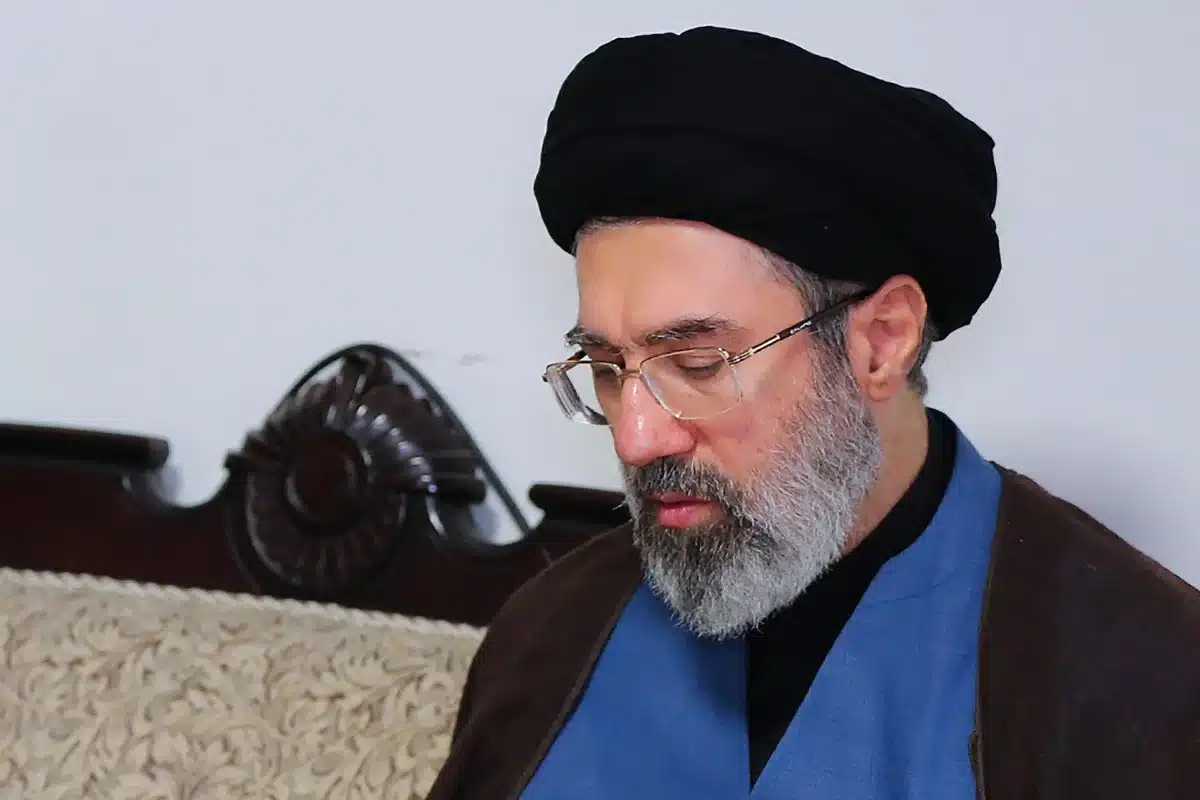
Mojtaba Khamenei has been appointed as the new Supreme Leader of Iran following the death of his father, Ali Khamenei.
According to reports monitored by Ireporter Online, the decision was announced shortly after midnight on Monday by the Assembly of Experts, the influential council tasked with selecting the country’s top religious and political authority. The body disclosed that its decision came after internal deliberations on who should succeed the late leader, who governed the Islamic Republic for more than three decades.
The council noted that several prominent figures were considered during the selection process, including Alireza Arafi, hardline cleric Mohsen Araki, and Hassan Khomeini. However, the assembly ultimately settled on the 56-year-old Mojtaba Khamenei, a development that observers say represents a rare hereditary-style transfer of authority in the Islamic Republic.
The move has drawn significant attention given that the Iranian Revolution ended centuries of monarchical rule under the Shah and was founded on principles that rejected dynastic leadership.
Born on September 8, 1969, in the holy city of Mashhad, Mojtaba Khamenei is one of six children of the late leader who ruled Iran from 1989 until his death in 2026. Despite maintaining a relatively low public profile, he has long been viewed by analysts as an influential figure within the country’s political structure, with much of his authority exercised discreetly behind the scenes.
The cleric is widely believed to have strong ties with the Islamic Revolutionary Guard Corps, relationships that reportedly date back to the final stages of the Iran–Iraq War, during which he is said to have served in a combat unit. He is also known to maintain close connections with conservative factions within Iran’s political establishment.
In 2019, Mojtaba Khamenei was sanctioned by the United States Department of the Treasury during the administration of Donald Trump. At the time, U.S. authorities accused him of representing the authority of the supreme leader while holding no elected government position, alleging he worked closely with Iranian security institutions to advance policies associated with his father’s leadership.
He has also faced allegations from critics linking him to the crackdown that followed the disputed re-election of Mahmoud Ahmadinejad in 2009, which sparked widespread protests across the country. Western intelligence sources have further claimed that Mojtaba accumulated wealth exceeding $100 million through international investments involving oil revenues and offshore companies used to purchase luxury real estate in the United Kingdom, hotels in Europe and property assets in Dubai. Iranian authorities have not publicly confirmed those claims.
On the religious front, Mojtaba studied Islamic theology in Qom, one of the most prominent centers of Shiite scholarship globally, where he later taught religious studies. He holds the clerical rank of Hujjat al-Islam, a mid-level title below the rank of Ayatollah held by both his father and the founder of the Islamic Republic, Ruhollah Khomeini.
Authorities in Iran also confirmed that his wife, Zahra Haddad-Adel and daughter of a former parliamentary speaker, was killed during U.S.–Israeli airstrikes that also claimed the life of Ali Khamenei. The strikes targeted leadership sites in Tehran, escalating tensions across the Middle East.
Following the announcement of the new leadership, Israeli officials issued a stern warning to Mojtaba Khamenei and those who backed his appointment, declaring that the “hand of the State of Israel will continue to follow any successor and anyone who seeks to appoint a successor.” The statement suggests that the regional conflict surrounding the death of Ali Khamenei could continue to influence Iran’s political direction.
The Assembly of Experts, made up of 88 clerics elected every eight years, has previously overseen only one leadership transition in Iran’s modern political history. That occurred in 1989 when Ali Khamenei was chosen to succeed Ruhollah Khomeini after the revolutionary leader’s death. Mojtaba Khamenei’s emergence as supreme leader therefore represents only the second such transition since the establishment of the Islamic Republic, coming at a time of heightened geopolitical tension in the region.

-

 Latest News2 weeks ago
 -
 Latest News2 weeks ago
El-Rufai Makes Major Move, Withdraws Three Applications In Corruption Case
-

 Latest News1 week ago
APC Kicks Off 2027 Candidate Upload On INEC Portal
-
 Politics2 weeks ago
Malami Makes Political Move, Names ADC Deputy Gov Candidate In Kebbi
-
 Gist1 week ago
Tinubu Appoints Three Oyo Indigenes To Key Federal Positions
-
 Latest News1 week ago
BREAKING: Okpebholo Suspends Edo Commissioner, LPRES Coordinator
-

 Latest News2 weeks ago
Full List: Edo Governor Announces 20 New Appointments
-
 Politics1 week ago
Ikeja Bomb Blast Linked Tinubu, Pedro, Sanwo-Olu — Ex-Aide
-
 Latest News2 weeks ago
Lukman Walks Away From ADC, Faults El-Rufai
-

 Gist21 hours ago
Davido Fires Back At MC Oluomo Over Osun NURTW Crisis
-

 Latest News13 hours ago
Full List: 10 AIGs Moved As IGP Disu Reshuffles Police Top Brass
-

 Latest News6 days ago
Tinubu Steps In To End Oyo APC Crisis, Meets Folarin