


Latest News
Federal Government and Civil Society Organizations Advocate for Special Protection Programme for Vulnerable Nigerians


The federal government, in collaboration with civil society organizations (CSOs), has called for the urgent implementation of a Special Protection Programme aimed at supporting vulnerable populations, including internally displaced persons (IDPs), to alleviate poverty in Nigeria’s rural areas.
The appeal was made during a dialogue held in Abuja, organized under the ACT NAIJA Project—a civil society initiative focused on enhancing social protection and strengthening civil society’s role in Nigeria. The two-day National Dialogue brought together government officials, development partners, civil society representatives, and private sector stakeholders to discuss strategies for accelerating poverty reduction efforts across the country.
The forum serves as a platform to review national progress, exchange best practices, and identify pathways to build inclusive and resilient social protection systems. The Poverty Reduction initiative is co-funded by the European Union and implemented by a consortium comprising Brot für die Welt (BfdW) and the Africa Network for Environment and Economic Justice (ANEEJ).
Dr. David Ugolor, Executive Director of ANEEJ, emphasized the country’s urgent need to achieve zero tolerance for poverty, particularly among disadvantaged groups and unemployed youth. He underscored the importance of improving access to basic needs such as food, education, healthcare, clean water, and employment, while addressing income disparities and regional inequalities.
According to Dr. Ugolor, poverty reduction must go beyond statistics to empower individuals and communities towards economic self-reliance. He advocated for initiatives focused on job creation, entrepreneurship, financial inclusion for women and youth, and social safety nets including welfare support, food assistance, and cash transfers for vulnerable groups such as widows and single mothers.
Highlighting the need for collaboration among all levels of government and civil society, Dr. Ugolor called for an updated and credible national social register to ensure effective targeting of social protection programs. He noted that the government is currently reviewing the National Social Protection Policy to enhance inclusive development ahead of the National Social Protection Summit scheduled for October 2025.
Valentine Ezulu, Director of Social Development representing the Minister of State for Humanitarian Affairs and Poverty Reduction, stressed that social protection is a right rather than charity. He acknowledged ongoing humanitarian challenges and affirmed government efforts to address multidimensional poverty through a revised social protection policy aligned with the current administration’s Renewed Hope Agenda.
Ezulu noted the significance of empowering local governments to independently implement poverty alleviation programs, recognizing their critical role in rural development. He reiterated President Bola Ahmed Tinubu’s commitment to strengthening local councils’ autonomy as mandated by recent Supreme Court rulings.
Stakeholders expressed optimism that with enhanced cooperation and accurate data management, many barriers to poverty alleviation can be overcome, paving the way for more inclusive and effective social protection in Nigeria.

-
 Latest News2 weeks ago
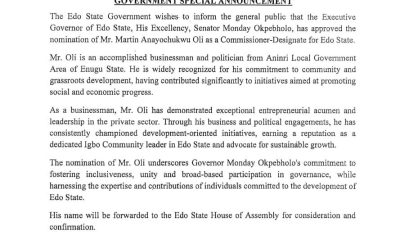
Breaking Political Barriers: Okpebholo Names Enugu-born Igbo Leader to Edo Cabinet
-

 Latest News1 week ago
APC Submits National Assembly Candidates’ Names To INEC Portal
-

 Sports2 weeks ago
Full List: Every Team Eliminated From The 2026 World Cup So Far
-

 Latest News1 week ago
APC Dismisses Viral List Of Primary Election Winners
-

 Latest News1 week ago
Uzodimma, Fintiri, Abdurazaq, Other Governors Appear On APC NASS List
-

 Latest News2 weeks ago
Shake-Up In Nigerian Army As COAS Redeploys Top Officers — Full List Emerges
-

 Latest News24 hours ago
Tinubu Unveils Fresh Appointments For Gbajabiamila, AGF, Others
-

 Politics1 day ago
Key Details Emerge From Meeting Of 18 APC First-Term Governors
-
 Latest News1 week ago
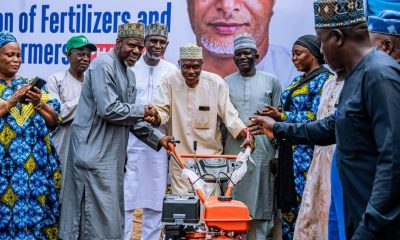
N1.5 BILLION FARM BOOST: Senator Saliu Mustapha Launches Massive Agricultural Intervention, Distributes Fertilisers, Power Tillers, Water Pumps to Thousands of Kwara Farmers
-

 Politics2 weeks ago
Rochas: “I Feel Sorry For Those Peter Obi Misled Into Wasting Money On NDC
-
 Latest News8 hours ago
New Appointment Announced For Former VP Osinbajo
-
 Latest News1 week ago
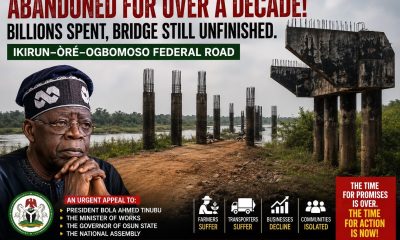
After Billions Spent, Bridge Still Abandoned: Citizens Issue Open Letter to Tinubu, Works Minister, Osun Governor, National Assembly Over ÒRÉ Bridge