


Latest News
“Tinubu’s 15% Fuel Tariff Sparks Praise As Experts Say It Will Shield Local Refineries From Collapse”

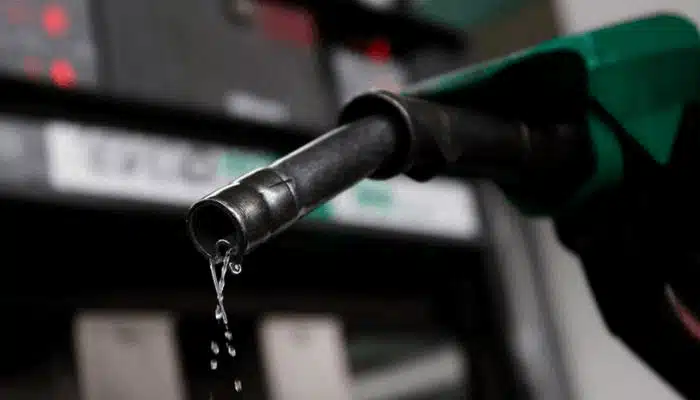
According to Ireporter Online, a former National Operations Controller of the Independent Petroleum Marketers Association of Nigeria (IPMAN), Mike Osatuyi, has applauded President Bola Tinubu for approving a 15 per cent import duty on petrol and diesel, describing the move as a strategic intervention to safeguard Nigeria’s local refining sector and attract new investments.
Osatuyi, in a recent interview in Lagos, commended the administration’s decision, noting that the policy would strengthen the competitiveness of domestic refineries, sustain emerging modular facilities, and rekindle investor confidence in the nation’s downstream oil sector.
He explained that the new tariff, which was approved on October 29, 2025, may slightly raise the landing cost of imported fuel but would yield far-reaching economic benefits, including job creation, increased government revenue, foreign exchange savings, and a more stable naira.
According to him, the measure is not designed as a revenue-generating tool but rather as a protective economic policy to ensure that locally refined petroleum products remain viable in the market.
Osatuyi described the Dangote Refinery in Lekki, Lagos, as a “national asset and a cornerstone of Nigeria’s energy security,” noting that the 650,000 barrels per day (bpd) facility—currently the seventh-largest refinery in the world—is on course to expand to 1.4 million bpd, which would make it the biggest globally.
He also highlighted other significant private refinery projects such as the BUA Refinery in Akwa Ibom (200,000 bpd) and various modular refineries including OPAC, Duport, Aradel Holdings, Waltersmith, Azikel, Ogbele, Edo, and Abia, which collectively contribute around 150,000 bpd to Nigeria’s refining capacity.
However, Osatuyi expressed dismay over the persistent non-performance of state-owned refineries in Port Harcourt, Warri, and Kaduna, lamenting that over ₦11 trillion had been expended on maintenance and rehabilitation from 2010 to 2023 with no tangible output. He recalled that resistance to the privatisation of these facilities in 2007 cost the nation approximately ₦264 billion annually in upkeep without production returns.
He urged the government to promote accountability and operational efficiency while supporting private-sector-led refinery initiatives capable of driving sustainable growth in the oil industry.
Addressing concerns over possible fuel shortages following the introduction of the new import duty, Osatuyi assured Nigerians that the Dangote Refinery alone could meet domestic demand and still have a surplus for export. He revealed that the facility boasts a storage capacity of 4.6 billion litres, 200 loading gantries, and the capability to produce 57 million litres of petrol, 25 million litres of diesel, and 20 million litres of jet fuel daily at full capacity.
“The Dangote Refinery can adequately supply Nigeria’s fuel needs without any basis for scarcity fears,” he stated.
Osatuyi also cautioned marketers and refiners against exploiting the import duty to inflate pump prices, urging the Nigerian Midstream and Downstream Petroleum Regulatory Authority (NMDPRA) to enforce transparency and market stability.
He further commended the Federal Government’s plan to introduce a centralised revenue collection system by January 2026, saying it would enhance transparency and regulatory compliance in the downstream sector.
The former IPMAN executive equally praised President Tinubu’s directive allowing local refineries to purchase crude oil in naira, describing it as a major policy reform that would ease operations and reduce pressure on foreign exchange demand.
“President Tinubu has once again shown courage and patriotism by putting national interest first,” Osatuyi declared. “The 15 per cent import duty on petrol and diesel is a bold step towards protecting Nigeria’s economic sovereignty and empowering local industry.”

-

 Latest News2 weeks ago
 -

 Latest News2 weeks ago
El-Rufai Makes Major Move, Withdraws Three Applications In Corruption Case
-

 Latest News1 week ago
APC Kicks Off 2027 Candidate Upload On INEC Portal
-
 Gist1 week ago
Tinubu Appoints Three Oyo Indigenes To Key Federal Positions
-
 Politics2 weeks ago
Malami Makes Political Move, Names ADC Deputy Gov Candidate In Kebbi
-
 Latest News1 week ago
BREAKING: Okpebholo Suspends Edo Commissioner, LPRES Coordinator
-

 Latest News2 days ago
Full List: 10 AIGs Moved As IGP Disu Reshuffles Police Top Brass
-

 Politics1 week ago
Ikeja Bomb Blast Linked Tinubu, Pedro, Sanwo-Olu — Ex-Aide
-

 Gist2 days ago
Davido Fires Back At MC Oluomo Over Osun NURTW Crisis
-
 Latest News2 weeks ago
Lukman Walks Away From ADC, Faults El-Rufai
-

 Latest News1 week ago
Tinubu Steps In To End Oyo APC Crisis, Meets Folarin
-

 Latest News2 days ago
2027 Elections: APC Uploads 27 Governorship Candidates To INEC Portal