

health
Nigeria’s Healthcare Requires AI-Driven Telemedicine for Efficiency, Prof. Ekwueme Advocates


Nigeria’s Healthcare Requires AI-Driven Telemedicine for Efficiency, Prof. Ekwueme Advocates
The Nigerian government has been urged to adopt Artificial Intelligence (AI)-powered telemedicine solutions to enhance healthcare delivery across the country…….READ MORE
Prof. Chuks Ekwueme, Chairman of Uniccon, made this call on Thursday while addressing journalists in Abuja. He emphasized that integrating AI-driven telemedicine into the healthcare system would significantly transform medical services and improve accessibility for Nigeria’s over 200 million citizens.
Ekwueme underscored the need for expanding healthcare access, particularly in rural areas, where medical facilities are often scarce or underfunded. He highlighted that AI-powered telemedicine would simplify healthcare processes, making it more convenient and affordable while ensuring patients receive quality medical advice regardless of their location or financial capacity.
According to him, such a system would provide users with a comprehensive healthcare application capable of facilitating virtual consultations, analyzing symptoms, and bridging the gap in medical service delivery across Africa.
“The implementation of AI in healthcare will lower costs, address manpower shortages, enhance efficiency, extend medical reach, and alleviate pressure on government-owned healthcare facilities,” Ekwueme explained.
He further suggested that public hospitals should collaborate with telemedicine providers to integrate AI-driven solutions into their hospital management systems. Given Nigeria’s doctor-to-patient ratio, which falls below the World Health Organization (WHO) recommendations, AI technology could significantly reduce consultation times and improve diagnostic accuracy.
Ekwueme noted that while telemedicine does not replace physical consultations—particularly in emergency cases—it remains one of the fastest, most affordable, and most effective ways to deliver essential healthcare services, especially in underserved regions.

-
 Latest News2 weeks ago
Breaking Political Barriers: Okpebholo Names Enugu-born Igbo Leader to Edo Cabinet
-

 Latest News1 week ago
APC Submits National Assembly Candidates’ Names To INEC Portal
-

 Sports2 weeks ago
Full List: Every Team Eliminated From The 2026 World Cup So Far
-

 Latest News1 week ago
APC Dismisses Viral List Of Primary Election Winners
-

 Latest News1 week ago
Uzodimma, Fintiri, Abdurazaq, Other Governors Appear On APC NASS List
-

 Latest News2 weeks ago
Shake-Up In Nigerian Army As COAS Redeploys Top Officers — Full List Emerges
-

 Politics22 hours ago
Key Details Emerge From Meeting Of 18 APC First-Term Governors
-
 Latest News1 week ago
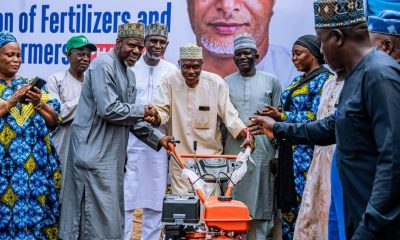
N1.5 BILLION FARM BOOST: Senator Saliu Mustapha Launches Massive Agricultural Intervention, Distributes Fertilisers, Power Tillers, Water Pumps to Thousands of Kwara Farmers
-

 Latest News11 hours ago
Tinubu Unveils Fresh Appointments For Gbajabiamila, AGF, Others
-

 Politics2 weeks ago
Rochas: “I Feel Sorry For Those Peter Obi Misled Into Wasting Money On NDC
-

 Latest News1 week ago
After Billions Spent, Bridge Still Abandoned: Citizens Issue Open Letter to Tinubu, Works Minister, Osun Governor, National Assembly Over ÒRÉ Bridge
-

 Latest News2 weeks ago
Ozekhome Suspended From SAN Status By LPPC