


Latest News
Chaos on Lagos-Ibadan Expressway: FG, Ogun Under Fire for Negligence

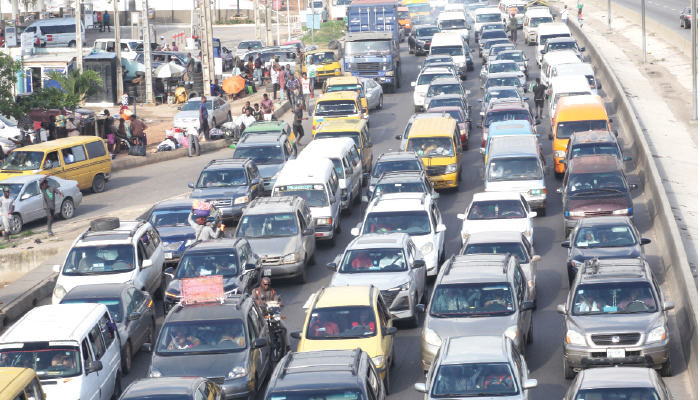
Widespread outrage trailed the Federal and Ogun State governments on Thursday following the catastrophic traffic paralysis on the Lagos-Ibadan Expressway. The gridlock, triggered by multiple accidents and a petrol tanker explosion, exposed serious lapses in Nigeria’s emergency response systems and the long-running neglect of one of the country’s most vital transport corridors.
The crisis began midweek with a tragic chain of events: a trailer collided with a bus near KM44, while two additional crashes occurred around the Ogere Interchange. Matters escalated dangerously when a petrol tanker crashed and exploded near the NASFAT area en route to Ibadan, setting nearby vehicles ablaze. The inferno left at least two people dead and shut down both lanes of the highway.
Over 24 hours later, the expressway—Nigeria’s busiest—remained in complete gridlock. With no visible presence of emergency agencies or law enforcement, motorists and commuters were left stranded. Many spent the night on the road or in nearby offices. Some had to cancel their journeys altogether as chaos spread from Berger to NASFAT, worsened by reckless drivers flouting traffic rules with impunity.
Observers have condemned the absence of prompt intervention from federal authorities, Ogun State officials, the police, and the Federal Road Safety Corps (FRSC). The expressway, which connects Lagos—the commercial nerve center of Nigeria—to Ibadan and the wider South-West region, is widely regarded as the nation’s most strategic highway.
Originally inaugurated in 1978 under the military regime of Olusegun Obasanjo, the Lagos-Ibadan Expressway was once a model of modern infrastructure. Over the past two decades, however, it has become a symbol of poor governance and endless delays. A major reconstruction launched by the Obasanjo administration in 2004 remains incomplete 21 years later, having passed through the hands of five presidents: Obasanjo, Umaru Yar’Adua, Goodluck Jonathan, Muhammadu Buhari, and now Bola Tinubu.
Though significant progress has been made on the reconstruction, critical segments, including interchanges at MFM, Lotto, Aiyetoro, and the Ojoo axis in Ibadan, remain unfinished. Recent damage at the Lotto Interchange and persistent failures at Ibafo, Mowe, and Ogere highlight the fragility of the completed portions.
The federal government’s excuses of insufficient funding have been widely dismissed. Critics point to recent allocations, including N90 billion spent on hajj subsidies in 2024 and a N15 trillion commitment to the Lagos-Calabar Coastal Highway, as evidence that lack of funds is not the issue but rather poor prioritization.
The Ministry of Works, under current minister David Umahi, has faced backlash for stalling completion due to contractual wrangling and an overemphasis on tolling revenues rather than road delivery. His predecessor, Babatunde Fashola, also came under fire during the Buhari administration for prolonged delays despite the road’s urgent importance.
Equally criticized is Ogun State Governor Dapo Abiodun, accused of complacency and weak emergency response planning. While neighboring Lagos is noted for swiftly addressing accidents and clearing traffic, Ogun’s inaction during the gridlock drew widespread frustration. Analysts argue that the governor should deploy traffic marshals, expand footbridge infrastructure, and enforce pedestrian safety measures across the state’s portion of the expressway.
Law enforcement agencies, especially the FRSC and police, have also been faulted for their absence and inability to prevent reckless driving. Dangerous practices such as one-way driving and overloaded motorcycles continue unchecked, with minimal deterrence.
Experts have urged President Tinubu to take decisive action. Comparisons with India and China—countries building highway networks at rates of up to 30 km per day—highlight Nigeria’s underperformance. In contrast, the 127.6 km Lagos-Ibadan Expressway has taken over two decades and remains incomplete.
Among recommended measures are the immediate release of funds to finish the project this year, prioritizing interchange completion, and deploying permanent patrol teams to maintain order. The FRSC is urged to ban unfit trucks and tankers from the highway, while security forces must curb rising traffic indiscipline.
Calls have also intensified for stronger state-level policing to support national law enforcement in managing emergencies more effectively.
The Lagos-Ibadan Expressway must not continue to be a national embarrassment. With Nigeria’s expanding population and industrial growth along the corridor, timely, efficient road infrastructure is no longer a luxury but a necessity.

-

 Latest News3 days ago
Olisa Metuh, Tunde Rahman, Abike Dabiri, Others Appointed As Tinubu’s Renewed Hope Ambassadors
-
 Latest News6 days ago
Iyabo Obasanjo Responds As Senator Yayi Emerges Ogun APC Consensus Candidate
-
 Latest News2 weeks ago
Presidency Fires Back At ADC: ‘We Won’t Close Shop Because You’re Struggling
-
 Latest News1 week ago
It’s Obvious I Don’t Own What You Have” – Lamido Blasts Malami Over ‘Thief’ Claims
-
 Latest News2 weeks ago
APC Blocks Bala Mohammed’s Defection — Here’s Why
-
 Latest News2 weeks ago
A Birthday Fit For A Legend : Watch Abubakar Momoh Make A Grand Entrance At Adams Oshiomhole’s Residence
-
 Latest News2 weeks ago
Keyamo Slams Peter Obi, Kwankwaso: ‘They Think They Can Blackmail Everyone
-
 Latest News1 week ago
Tony Akiotu Has Been Appointed As The New Chairman Of The Broadcasting Organisations Of Nigeria
-
 Latest News1 day ago
ADC Crisis Worsens As Binani Allies Defect In Adamawa
-
 Latest News5 days ago
Why We’re Tolerating Wike – APC Chair Yilwatda Speaks Out
-
 Latest News2 weeks ago
Former VP Osinbajo Lands Powerful Global Appointment
-
 Latest News2 weeks ago
Iyabo Obasanjo Visits Bola Tinubu, Reveals Meeting Details