
Latest News
CBN Rolls Out New Regulations For Card Issuers And Payment Operators

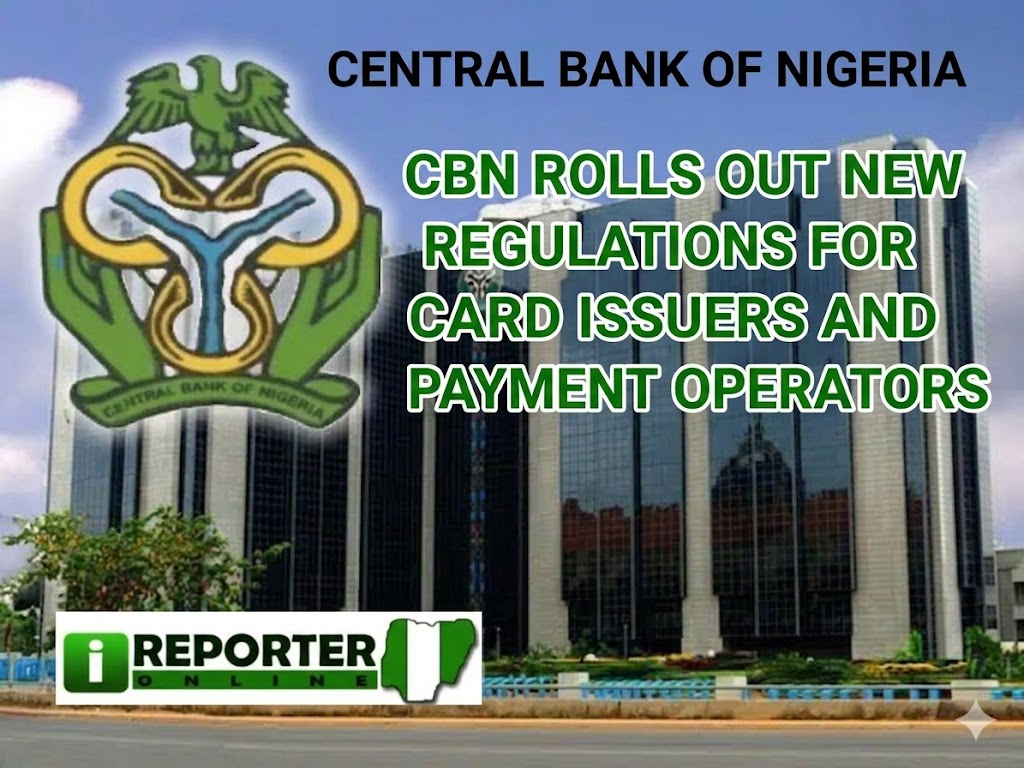
The Central Bank of Nigeria (CBN) has issued new directives mandating banks, fintech firms, and other payment service providers to ensure that all transaction data generated within the country is stored and managed locally in Nigeria.
According to Ireporter Online, the apex bank also unveiled additional regulatory measures designed to enhance transparency, curb excessive market dominance, and strengthen supervisory oversight within the nation’s rapidly expanding payments ecosystem. The new policy framework was outlined in a circular dated June 15, 2026, titled “Introduction of Market Structure Requirements, Data Localisation, Ultimate Beneficial Ownership Disclosure, and Systemic Oversight Measures in the Nigerian Payments System.”
The CBN stated that all financial institutions involved in processing payments in Nigeria must comply with the data localisation requirement, in line with existing data protection laws. It further directed that all payment transaction data generated within the country must be stored and managed locally.
The circular added that full compliance with the directive will take effect from January 1, 2027.
In a move aimed at improving transparency and strengthening anti-money laundering controls, the apex bank also ordered Deposit Money Banks, Payment Service Providers, and other digital financial operators to disclose the ultimate beneficial owners of significant shareholders. Institutions were further instructed to maintain accurate and updated records of such ownership structures and present them to the CBN upon request.
The regulator explained that the reforms were necessary due to the rapid expansion of Nigeria’s digital payments sector, which has seen increased adoption of electronic financial services and the emergence of dominant market players. However, it noted that this growth has also raised concerns around market concentration, operational risks, ownership opacity, and systemic vulnerabilities.
To address these concerns, the CBN introduced market structure limits for card issuers and merchant acquirers. Under the new rule, any financial institution holding more than 25 percent market share in card issuing will not be allowed to exceed 15 percent market share in merchant acquiring, and vice versa.
The apex bank also mandated all regulated institutions to submit monthly market share reports to enable continuous monitoring of the sector and early detection of systemic risks. It further set December 31, 2026, as the deadline for full compliance with the new market structure requirements.
The new regulatory framework is expected to significantly reshape operations across Nigeria’s banking sector, fintech industry, and digital payment landscape.

-

 Latest News2 weeks ago
BREAKING: FG Makes Fresh Appointment
-

 Latest News2 weeks ago
Tinubu Shelves UNGA Trip, Shettima To Lead Nigerian Delegation
-

 Entertainment1 week ago
Nollywood Actress, Nimmy Ferrari Buried In Newly Built House
-

 Business2 weeks ago
Cement Price Update: Current Prices Of Dangote, BUA, Others
-

 Latest News2 weeks ago
Kwankwaso Breaks Silence After Meeting Peter Obi, NDC Candidates
-

 Latest News2 weeks ago
NDC Rejects INEC List: ‘We Did Not Submit The Names Published
-

 Latest News2 weeks ago
ICPC Sacks Officer After Sneaking El-Rufai’s Wife Into Facility
-

 Latest News2 weeks ago
Atiku’s Fuel Subsidy Plan: Yuguda Reveals What He Discovered In 2009
-

 Latest News2 weeks ago
After 12 Years, Uber Pulls Out Of Nigeria — Full Details Emerge
-

 Business2 weeks ago
Food Prices This Week: See Cost Of Rice, Beans, Tomatoes & More
-

 Business2 weeks ago
Cooking Gas Price: See How Much Nigerians Pay To Refill 1kg
-

 Latest News4 hours ago
BREAKING: Akpabio, Oshiomhole, Uzodimma, 1,300 Others Named In INEC List