


Latest News
Dangote Doubts Viability of NNPC Refineries Despite $18bn Spent

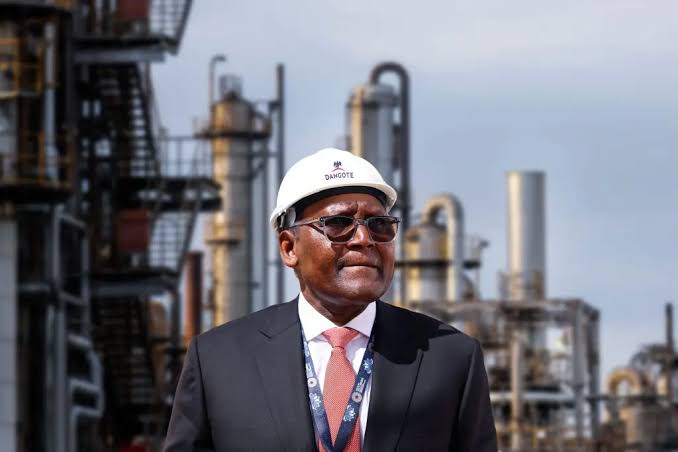
Aliko Dangote, Africa’s richest man and President of the Dangote Group, has raised serious concerns over the viability of Nigeria’s state-owned refineries, declaring that despite consuming over $18 billion, the Port Harcourt, Warri, and Kaduna facilities may never function again.
Speaking at his Lekki refinery complex while hosting members of the Global CEO Africa group from Lagos Business School, Dangote said he “doubts very much” if the government-run refineries will ever work.
“They’ve spent about $18 billion on those refineries and they are still not working. I don’t think they ever will,” Dangote stated.
He compared Nigeria’s continued investment in the outdated refineries to attempting to modernize a 40-year-old car: even if you replace the engine, the body can’t withstand the demands of new technology.
Dangote recalled how his team had purchased the refineries in January 2007 under President Olusegun Obasanjo, only to return them months later under President Umaru Musa Yar’Adua following political interference. He noted that the facilities at the time operated at only 22% petrol production, unlike his new private refinery, which is already producing over 50% PMS (petrol).
His comments echoed those of former President Obasanjo, who has also criticized the management and corruption within NNPC. Obasanjo previously revealed that international oil companies like Shell had refused to manage the refineries, deeming them economically unviable.
“NNPC knew they couldn’t fix them, but corruption made them pretend they could,” Obasanjo said earlier in 2025, adding that the government should have sold the facilities off years ago, even as scrap.
The former president likened the exaggerated performance claims surrounding the refineries to a Yoruba proverb: “After harvesting 100 heaps of yams, the farmer adds 100 heaps of lies.”
Both leaders’ statements come as the country grapples with soaring fuel import bills, even as Nigeria boasts some of Africa’s largest refining capacities—on paper. Their remarks renew urgent calls for transparency, reform, and accountability in Nigeria’s oil and gas sector.

-
 Latest News2 weeks ago
No Excuse For This “Shameful Act” — APC Fires Back At Makinde Over Controversial Oba Coronation
-
 Latest News2 weeks ago
Sh*ck Move: Cameroon’s President Biya Names His Son Vice President
-
 Latest News1 week ago
Presidency Fires Back At ADC: ‘We Won’t Close Shop Because You’re Struggling
-
 Latest News3 days ago
Iyabo Obasanjo Responds As Senator Yayi Emerges Ogun APC Consensus Candidate
-
 Latest News5 days ago
It’s Obvious I Don’t Own What You Have” – Lamido Blasts Malami Over ‘Thief’ Claims
-
 Latest News1 week ago
APC Blocks Bala Mohammed’s Defection — Here’s Why
-

 Latest News1 week ago
A Birthday Fit For A Legend : Watch Abubakar Momoh Make A Grand Entrance At Adams Oshiomhole’s Residence
-
 Latest News1 week ago
Keyamo Slams Peter Obi, Kwankwaso: ‘They Think They Can Blackmail Everyone
-
 Latest News2 weeks ago
Sh*ck Exit: Akinwumi Steps Down As ADC Secretary
-
 Latest News1 week ago
Former VP Osinbajo Lands Powerful Global Appointment
-
 Latest News5 days ago
Tony Akiotu Has Been Appointed As The New Chairman Of The Broadcasting Organisations Of Nigeria
-
 Latest News2 days ago
Why We’re Tolerating Wike – APC Chair Yilwatda Speaks Out