

Latest News
Niger Coup: How Ordinary People Are Paying The Price

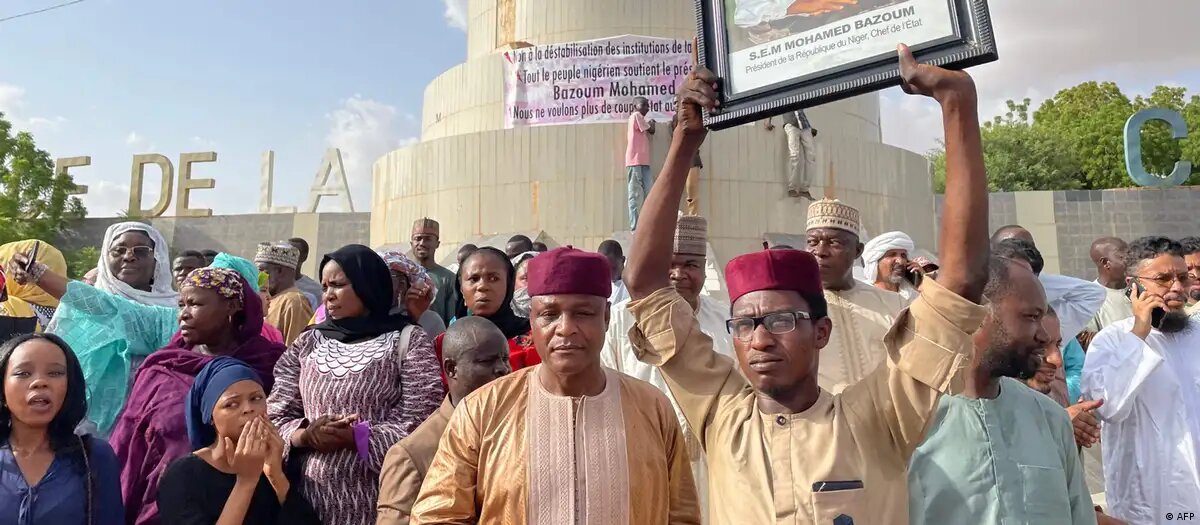
Niger Coup: How Ordinary People Are Paying The Price
After the coup in Niger, the country is facing economic hardships and rising food prices… CONTINUE READING
The closure of key borders due to sanctions by the Economic Community of West African States (ECOWAS) has severely impacted trade and imports.
Borders to some neighbors have been reopened, but the ones with Benin and Nigeria remain closed, affecting the import and export of goods.
Niger also heavily depends on Nigeria for electricity, which has been cut off. Many districts in Niger already suffered from frequent power cuts even before the coup, and less than one out of five people had access to electricity, according to the World Bank.
The situation worsened as Nigeria’s decision to cut off electricity delivery is affecting the majority of Niger’s power supply.
Read Also BREAKING: West African Military Leaders Reach Agreement Over Niger Coup (DETAILS)
ECOWAS sanctions have suspended financial transactions and frozen Niger’s assets, creating further economic challenges.
In addition, the 15-member bloc has threatened to use force if President Mohamed Bazoum isn’t returned to power. The political instability and economic pressures are causing uncertainty and anxiety among the population.
As one of the world’s poorest countries, Niger relies on aid to sustain its people.
The country was already experiencing its worst humanitarian crisis in a decade before the military coup.
With two-thirds of the country being desert, Niger suffers from intense droughts and has limited arable land. Approximately 4.3 million people, or 17% of the population, are dependent on food aid to survive.
United Nations humanitarian operations have continued, but some of Niger’s biggest donors, including the European Union, Germany, France, and the United Kingdom, have cut various types of development and budgetary aid to the government since the coup.
The country receives close to $2 billion a year in official development assistance, with some 40% of the Nigerien government’s budget reportedly coming from outside aid.
The situation is exacerbating the existing humanitarian crisis, and the people of Niger are struggling to afford rising prices and cope with the instability in the region.
Despite the challenges, the UN has authorized road movements for humanitarian purposes, aiming to provide aid to those in need. However, the uncertainty surrounding the political and economic future of Niger remains a cause for concern.

-
 Latest News1 week ago
Breaking Political Barriers: Okpebholo Names Enugu-born Igbo Leader to Edo Cabinet
-

 Politics2 weeks ago
Tinubu Makes New Ambassadorial Appointments, Seeks Senate Confirmation
-

 Latest News5 days ago
APC Submits National Assembly Candidates’ Names To INEC Portal
-

 Latest News2 weeks ago
Ojirami Shines at Night: Akoko-Edo Residents Hail Engr. Abubakar Momoh Over NDDC Solar Street Light Project
-

 Sports1 week ago
Full List: Every Team Eliminated From The 2026 World Cup So Far
-

 Latest News6 days ago
APC Dismisses Viral List Of Primary Election Winners
-
 Latest News4 days ago
Uzodimma, Fintiri, Abdurazaq, Other Governors Appear On APC NASS List
-
 Politics2 weeks ago
VIDEO: Shettima, Atiku, Masari, Governors Storm Special Prayer For Tinubu’s Late Mother
-

 Latest News1 week ago
Shake-Up In Nigerian Army As COAS Redeploys Top Officers — Full List Emerges
-

 Politics1 week ago
Rochas: “I Feel Sorry For Those Peter Obi Misled Into Wasting Money On NDC
-
 Latest News6 days ago
N1.5 BILLION FARM BOOST: Senator Saliu Mustapha Launches Massive Agricultural Intervention, Distributes Fertilisers, Power Tillers, Water Pumps to Thousands of Kwara Farmers
-

 Latest News2 weeks ago
Ozekhome Suspended From SAN Status By LPPC