

Latest News
UBEC, ICPC Join Forces To Tackle Corruption In Basic Education Funding

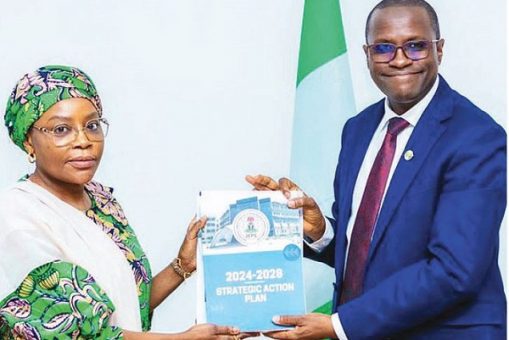
According to Ireporter Online, the Universal Basic Education Commission (UBEC) has reaffirmed its commitment to deepening transparency and accountability in Nigeria’s basic education system through a strengthened collaboration with the Independent Corrupt Practices and Other Related Offences Commission (ICPC).
At a strategic meeting in Abuja, both agencies emphasized the need for enhanced cooperation to ensure that funds allocated for basic education are utilized strictly for their intended purposes. The renewed partnership forms part of ongoing efforts to entrench integrity, improve service delivery, and restore public confidence in line with President Bola Tinubu’s Renewed Hope Agenda.
UBEC, which oversees the implementation of Universal Basic Education across the 36 states and the Federal Capital Territory, reiterated its determination to guarantee free and quality education for every child of school age. Executive Secretary, Dr. Aisha Garba, highlighted that corruption and financial mismanagement remain major obstacles to achieving this goal, noting that the collaboration with ICPC would further strengthen anti-corruption mechanisms within the system.
She explained that the establishment of Anti-Corruption and Transparency Units (ACTUs) within UBEC would promote compliance with financial and procurement laws, uphold ethical conduct, and curb misuse of education funds. “This partnership will help strengthen the delivery of free, quality education from pre-primary to junior secondary levels, ensuring that resources are used solely for their intended purposes,” Garba said.
She added that through continuous capacity-building, strict adherence to financial regulations, and the digitization of key operational processes, UBEC continues to champion integrity and accountability in public service.
The Commission has intensified efforts to digitize its monitoring and evaluation systems to enable real-time reporting and minimize human interference. UBEC has also expanded its engagement with civil society groups, community-based organizations, and development partners to foster transparency and encourage community ownership of education projects.
The ICPC, established in 2000, has remained a key player in enforcing anti-corruption laws and promoting ethical standards within government institutions. Its collaboration with UBEC aligns with the Federal Government’s broader anti-corruption drive and supports the goal of strengthening internal control systems, encouraging whistleblowing, and enhancing ethical compliance among public servants.
Education experts have observed that while Nigeria has recorded progress in expanding access to basic education, corruption—particularly in project execution and fund management—continues to slow the pace of improvement. The UBEC-ICPC partnership is therefore seen as a strategic measure to address these lingering challenges.
UBEC’s data show that billions of naira are disbursed annually to state governments as matching grants for infrastructure, teacher training, instructional materials, and other education needs. However, the impact of these interventions depends largely on transparency and efficiency at the state and local government levels.
Both agencies reaffirmed that their ultimate goal is to ensure that no Nigerian child is left behind in the pursuit of education and national development. They concluded the meeting with a joint resolution to sustain their partnership through regular audits, public sensitization, and continuous training for staff on ethical standards and financial compliance.

-

 Latest News2 weeks ago
 -

 Latest News2 weeks ago
El-Rufai Makes Major Move, Withdraws Three Applications In Corruption Case
-

 Latest News1 week ago
APC Kicks Off 2027 Candidate Upload On INEC Portal
-
 Gist1 week ago
Tinubu Appoints Three Oyo Indigenes To Key Federal Positions
-
 Politics2 weeks ago
Malami Makes Political Move, Names ADC Deputy Gov Candidate In Kebbi
-
 Latest News1 week ago
BREAKING: Okpebholo Suspends Edo Commissioner, LPRES Coordinator
-

 Latest News2 days ago
Full List: 10 AIGs Moved As IGP Disu Reshuffles Police Top Brass
-

 Politics1 week ago
Ikeja Bomb Blast Linked Tinubu, Pedro, Sanwo-Olu — Ex-Aide
-

 Gist2 days ago
Davido Fires Back At MC Oluomo Over Osun NURTW Crisis
-
 Latest News2 weeks ago
Lukman Walks Away From ADC, Faults El-Rufai
-

 Latest News1 week ago
Tinubu Steps In To End Oyo APC Crisis, Meets Folarin
-

 Latest News2 days ago
2027 Elections: APC Uploads 27 Governorship Candidates To INEC Portal