

Latest News
Why Government Cannot Fund Political Parties – Gbajabiamila

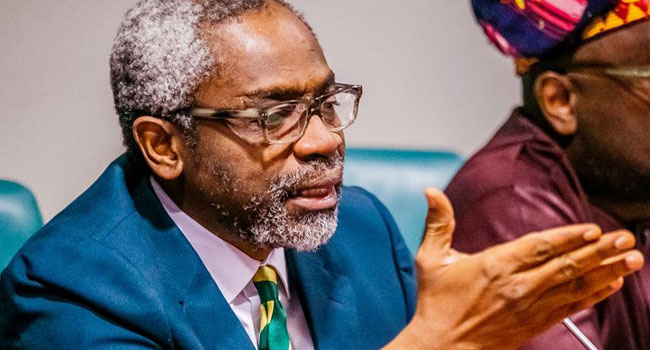
Why Government Cannot Fund Political Parties – Gbajabiamila
The Speaker of the House of Representatives, Femi Gbajabiamila, says it is not fashionable to expect the Federal Government to fund political parties at this critical period of Nigeria’s democratic advancement.
For him, using the government’s money to run the parties is an indirect invitation for it to assume control of the political parties by dictating choices and policies that might be in conflict with the tenets of democracy.
Gbajabiamila, who argued that the international best practice was for parties to be self-funded, added that using the government’s money would also lead to the proliferation of political parties.
He made the remarks on Wednesday while receiving a delegation of the Inter-Party Advisory Council (IPAC) at the National Assembly in Abuja.
The speaker stated that people would simply abuse the process by registering hundreds of political parties in the hope of cashing out on free government money.
“I am not sure how many countries fund their political parties; we will have to do research and to be sure that it’s international best practice …Government is an interested party if it will be providing the funds,” he was quoted as saying in a statement by his media aide, Lanre Lasisi.
“That will also mean they can compromise the system. There is also proliferation (of parties) that will become a problem if the government begins to fund the parties since there will be free money.”
Gbajabiamila, who also reacted to requests for fresh amendments to the Electoral Act 2022, said it was not advisable to do so a few months before the 2023 general elections.
He explained that making new amendments to the law during this period could disorganise election planning, create unnecessary tension in the polity, and raise credibility questions.
The Speaker said the safest route would be to further amend the Act after the elections if a need arose, or in the alternative, aggrieved persons could approach the judiciary to seek an interpretation of any contentious provisions.
He called for patience, urging parties to seize the opportunity of the upcoming polls to fully test the Act and determine the success of innovations, such as the electronic transmission of results, and the deployment of the BIVAS, among others.
Read Also See What Just Happened To Gov Ortom
Gbajabiamila added that upon a successful poll, other innovations such as electronic collation of results and diaspora voting could also be considered.
The IPAC delegation was led by the body’s national chairman, Yabagi Sani, who told the speaker the purpose of the visit was to seek synergy and a good working relationship between IPAC and the National Assembly.
Among the issues, he tabled before Gbajabiamila were the alleged flouting of Section 31 of the Electoral Act by the Independent National Electoral Commission (INEC), the funding of political parties, the urgency to establish the electoral offences commission, electronic collation of election results in addition to the electronic transmission of results, and the call for a change in the process of appointing the chairman of INEC.
For instance, he complained that while the law allowed political parties to replace candidates 90 days before the election, INEC opted to shut its portal when the days had yet to elapse, preferring to use its rules and regulations in determining the fate of the political parties and their candidates.
“A lot of people are being disenfranchised because INEC says we can’t substitute anybody even though the 90 days haven’t elapsed,” Sani said. “Do the INEC rules and regulations supersede the Electoral Act?”
The IPAC chairman said since it was the legislature that made the Act, the body was reporting INEC to the House so that lawmakers could caution the commission or invite the leadership of the electoral umpire for questioning.
He expressed concern that the issue had led to much litigation against INEC already, saying that if not resolved quickly, some of the cases could cause a setback to the electoral system in the future.
On electronic collation of results, Sani said while it was commendable that the results would be transmitted electronically, the collation would still be done manually, which he feared might be compromised.
Get The News When It Drops By Joining Our WhatsApp Group With This Link Below

-

 Latest News2 weeks ago
Tinubu Shelves UNGA Trip, Shettima To Lead Nigerian Delegation
-

 Entertainment1 week ago
Nollywood Actress, Nimmy Ferrari Buried In Newly Built House
-

 Latest News2 weeks ago
ICPC Sacks Officer After Sneaking El-Rufai’s Wife Into Facility
-

 Latest News2 days ago
BREAKING: Akpabio, Oshiomhole, Uzodimma, 1,300 Others Named In INEC List
-
 Latest News3 days ago
2027 Politics: Two Lawmakers Defect To APP
-

 Latest News2 weeks ago
Kano: Only Opposition Senator Dumps Party For APC With 136,000 Supporters
-

 Latest News2 weeks ago
15 Northern States Will Collapse Within 3 Months” — Ogunyemi Hits Atiku Over Subsidy Promise
-
 Latest News2 days ago
Tinubu Sends Strong Warning To Regional Commissions: ‘No More Wasting Funds’
-

 Latest News2 weeks ago
Human Trafficking: NSCDC Rescues 15 Minors Allegedly Sold For ₦2m Each
-

 Latest News1 week ago
Student Loan Demand Overwhelming — NELFUND Raises Alarm
-

 Entertainment1 week ago
Nollywood Mourns: Five Things To Know About Late Actress Nimmy Ferrari
-

 Latest News4 days ago
BREAKING: Gov. Adeleke’s Ally, ‘Emir Ajagungbade,’ Sh*t D**d