


Latest News
Grim Toll: States Move to Evacuate Flood Zones Amid Rising Deaths, Disease Fears

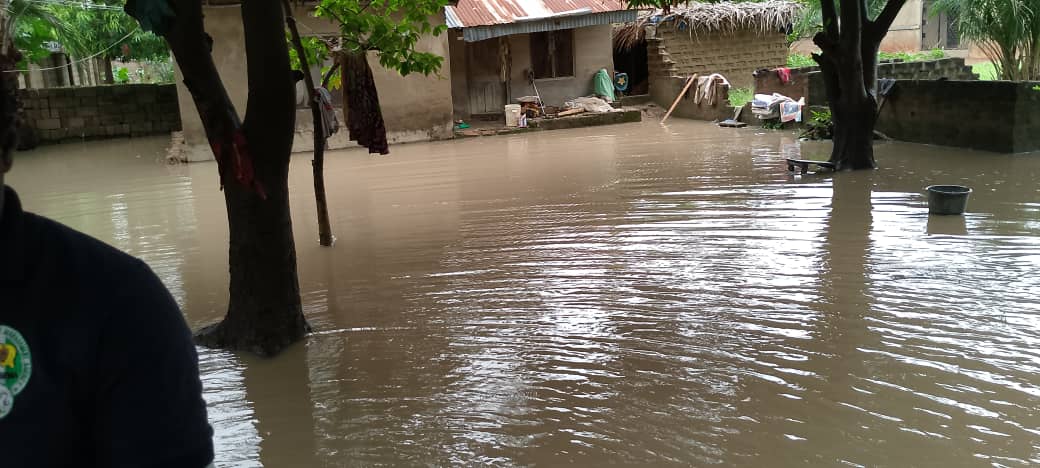
As torrential rains continue to batter several parts of Nigeria, state governments have begun large-scale evacuations of residents from flood-prone areas in a desperate bid to prevent further loss of lives and property.
The flood situation has turned dire in Niger State, where the death toll from last week’s Mokwa disaster has risen to 153. The community continues to unearth bodies from beneath collapsed bridges and submerged lands, sparking fears of a potential disease outbreak due to the stench of decaying corpses.
“We are still recovering bodies. The water has gone down, but now we’re digging up the sand and finding corpses and personal property,” said Alhassan Kolo, a resident of Mokwa. “The smell is unbearable. We need immediate government intervention to prevent disease.”
Health authorities have assured residents that preparations are underway to combat any outbreak. Dr. Idris Ibrahim, Director of Public Health, Niger State Ministry of Health, confirmed ongoing collaboration with the State Emergency Management Agency (NSEMA), and the deployment of cholera test kits to camps sheltering displaced persons.
NSEMA Director General, Abdullahi Baba-Arah, confirmed that three bridges have been destroyed and over 3,000 residents affected. “The situation is severe. More corpses were recovered from under a collapsed bridge, bringing the total deaths to 153,” he stated.
Widespread Evacuation Begins
Elsewhere across Nigeria, state governments are taking preemptive steps following an April forecast by the Federal Government, which warned that over 1,249 communities in 176 local governments across 30 states, including the FCT, would face severe flooding between April and November 2025.
In Anambra, residents along the River Niger plains have begun moving out of their homes, while the State Emergency Management Agency has identified 10 high-risk local government areas and alerted residents to evacuate. Camps set up for Internally Displaced Persons (IDPs) during past flooding incidents are being reopened.
Nasarawa State has initiated sensitisation campaigns in all 13 LGAs and is setting up temporary shelters. “Nasarawa is among the states expected to experience severe flooding. We are preparing to assist victims with relief materials,” said Danladi Obagu, Director of Planning at Nasarawa SEMA.
Bayelsa residents, still haunted by previous flood episodes, have also begun relocating. “I’d rather relocate than go to the IDP camps. Last time, people were treated like beggars,” said Victor Igudu, a resident of Asa in Yenagoa.
National Preparedness and Concerns
States such as Borno, Kebbi, Delta, Edo, Kano, Cross River, and Plateau are implementing various measures — from sensitisation and drainage clearing to demolition of illegal structures blocking waterways.
In Borno, which experienced catastrophic flooding last year after the collapse of the Alau Dam, contingency plans have been rolled out. “We have a permanent committee on flood control working in partnership with NiMET,” said Acting Director General of Borno SEMA, Ali Abdullahi.
Kebbi has activated a rapid response team and issued warnings to residents in lowland areas. But poverty remains a barrier to relocation. “We can’t afford to move upland. We have nowhere else to go,” said Hajia Mariya Saidu, a resident of Birnin Kebbi.
In the south, residents of Oko Kingdom in Delta State say they are tired of repeated flooding and lack of lasting solutions. “Every year we suffer. We’re calling on the Federal Government to dredge the River Niger,” lamented the traditional ruler, HRM Osita I.
Sanitation and Enforcement
Kwara and Gombe states are focusing on prevention through waste management and environmental education. “We warn residents against dumping refuse in water channels,” said Nafisat Buge, Kwara’s Commissioner for Environment.
The Cross River government, under Governor Bassey Otu, said it is enforcing monthly sanitation and clearing of drainage to mitigate flood impact, while the Plateau State Government is demolishing structures on waterways and clearing channels in high-risk LGAs such as Jos North, Shendam, and Mangu.
Rural Voices Echo Pleas
In Kano’s Warawa LGA, prayers and appeals are rising from flood-weary residents. “We need the government to help us before it’s too late,” said Malam Lawan Abubakar.
Similarly, in Gombe and Jigawa states, local agencies are increasing community sensitisation and urging adherence to safety measures.
With the rainy season intensifying, millions across Nigeria’s flood-prone regions remain in limbo—caught between nature’s fury and the government’s preparedness. For many, relocation is not a choice, but a desperate last resort.
“Every year, we are told to relocate—but how do we do that with no help and no means?” asked Emma Anene of Delta State. “Until something changes, we’ll just keep suffering.”

-

 Latest News3 days ago
Olisa Metuh, Tunde Rahman, Abike Dabiri, Others Appointed As Tinubu’s Renewed Hope Ambassadors
-
 Latest News7 days ago
Iyabo Obasanjo Responds As Senator Yayi Emerges Ogun APC Consensus Candidate
-

 Latest News2 weeks ago
Presidency Fires Back At ADC: ‘We Won’t Close Shop Because You’re Struggling
-
 Latest News1 week ago
It’s Obvious I Don’t Own What You Have” – Lamido Blasts Malami Over ‘Thief’ Claims
-

 Latest News2 weeks ago
APC Blocks Bala Mohammed’s Defection — Here’s Why
-

 Latest News11 hours ago
Senator Abbo Quits ADC In Sh*ck Political Move
-

 Latest News2 days ago
ADC Crisis Worsens As Binani Allies Defect In Adamawa
-

 Latest News2 weeks ago
Keyamo Slams Peter Obi, Kwankwaso: ‘They Think They Can Blackmail Everyone
-

 Latest News1 week ago
Tony Akiotu Has Been Appointed As The New Chairman Of The Broadcasting Organisations Of Nigeria
-

 Latest News7 hours ago
Tinubu Greenlights New Police Academy Campus, Releases ₦15B Boost
-
 Latest News6 days ago
Why We’re Tolerating Wike – APC Chair Yilwatda Speaks Out
-

 Latest News2 weeks ago
Former VP Osinbajo Lands Powerful Global Appointment