Connect with us

Latest News

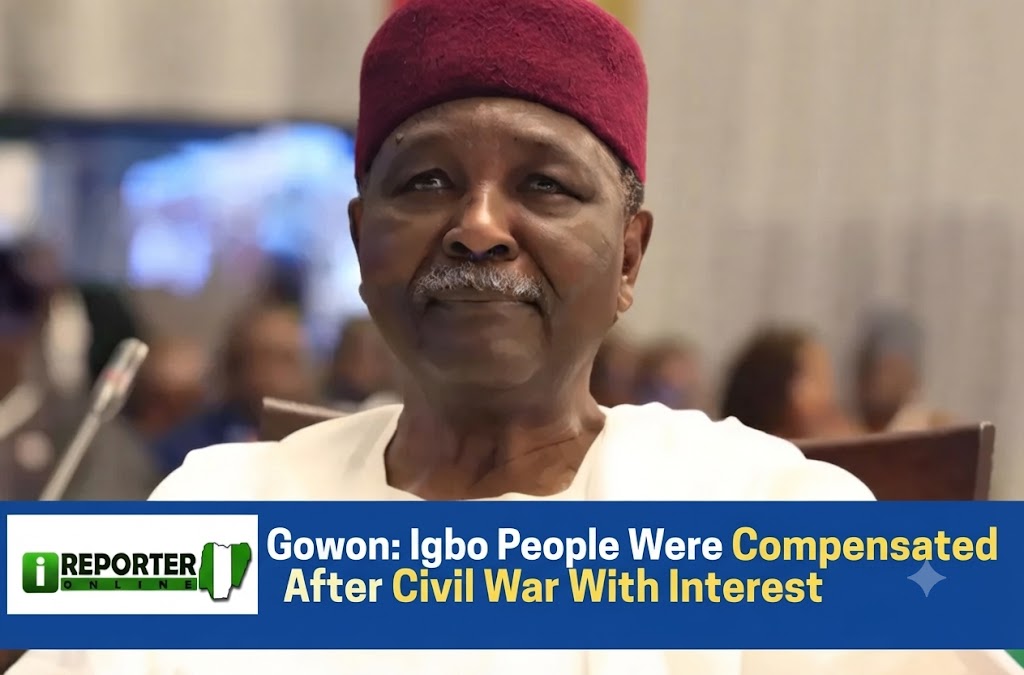
Gowon: Igbo People Were Compensated After Civil War With Interest

Published

on

28b9f0fb 20bc 4af3 a084 ef5b4f2f16b8

Former Nigerian Head of State, General Yakubu Gowon, has explained that Igbo people who had verifiable deposits in Nigerian banks before the civil war received full payment of their funds alongside accrued interest after the conflict.

According to Ireporter Online, Gowon made the clarification while addressing long-standing controversies surrounding the post-civil war financial policies of his administration, particularly the decision to limit payments for former Biafran currency holders.

In his memoir, My Life of Duty and Allegiance, the former military leader stated that the controversial £20 payment given to former Biafran adults was not a personal decision of the late Chief Obafemi Awolowo, who served as Federal Commissioner for Finance during the war.

Gowon explained that the policy was approved collectively by the Federal Executive Council after careful consideration of the economic challenges facing the country following the 1967–1970 civil war.

Advertisement

He said the government introduced currency reforms after the war partly because of the large amount of money looted from Central Bank facilities in places such as Benin and Enugu, which affected the financial system.

According to him, the former Biafran currency was not recognised as legal tender by the Federal Government and could not be exchanged internationally.

Gowon stated that the government considered several options through a Central Bank panel but rejected exchanging Biafran currency at full value because officials could not determine the actual volume of notes in circulation.

He explained that economic advisers warned that accepting all Biafran currency at equal value with Nigerian currency could create serious financial instability and further weaken the country’s economy after the 30-month conflict.

Advertisement

The former head of state said experts recommended a fixed payment of approximately £20 for each former Biafran adult regardless of the amount of Biafran currency presented.

However, Gowon stressed that the policy did not apply to people who had legitimate deposits in Nigerian banks before the war, noting that such individuals received the full value of their money with accumulated interest.

He maintained that businessmen and other depositors with valid banking records were treated differently from holders of Biafran currency.

Gowon also defended Awolowo, stating that blaming the late politician solely for the policy was inaccurate because the decision was reached by the Federal Executive Council in the interest of protecting Nigeria’s economy.

Advertisement

He argued that the government had to follow economic recommendations to prevent further financial damage at a time when the nation was struggling to recover from the effects of the war.

The former leader added that his administration committed significant resources toward rebuilding areas affected by the conflict, especially the former East Central State.

He said the government’s reconstruction, rehabilitation and reconciliation efforts were designed to restore economic activities and promote national unity after the war.

Gowon further explained that the implementation of the Second National Development Plan was delayed from April to October 1970 to allow the affected region to participate effectively in the country’s recovery programme.

Advertisement

Advertisement
Click to comment
Subscribe
Notify of
guest
0 Comments
Oldest
Newest Most Voted

Trending

0
Would love your thoughts, please comment.x
()
x